Strung along in Dinas

I wonder how many of us have a little corner in the knickernsock drawer, or perhaps an old cigar box on the desk, that acts as a final repository for small sad broken items with sentimental value: dad’s gold fountain pen, mum’s wind-up watch or old beads unstrung.

P1010187I was recently encouraged to do something about my accumulations by this card, pinned to the community notice board in Kiel House. A phone call promised me an appointment the next day and my little bags of beads were assessed with a professional eye.

Within a couple of days the job had been done and I returned to the house in Bwlchmawr, Dinas, to collect.

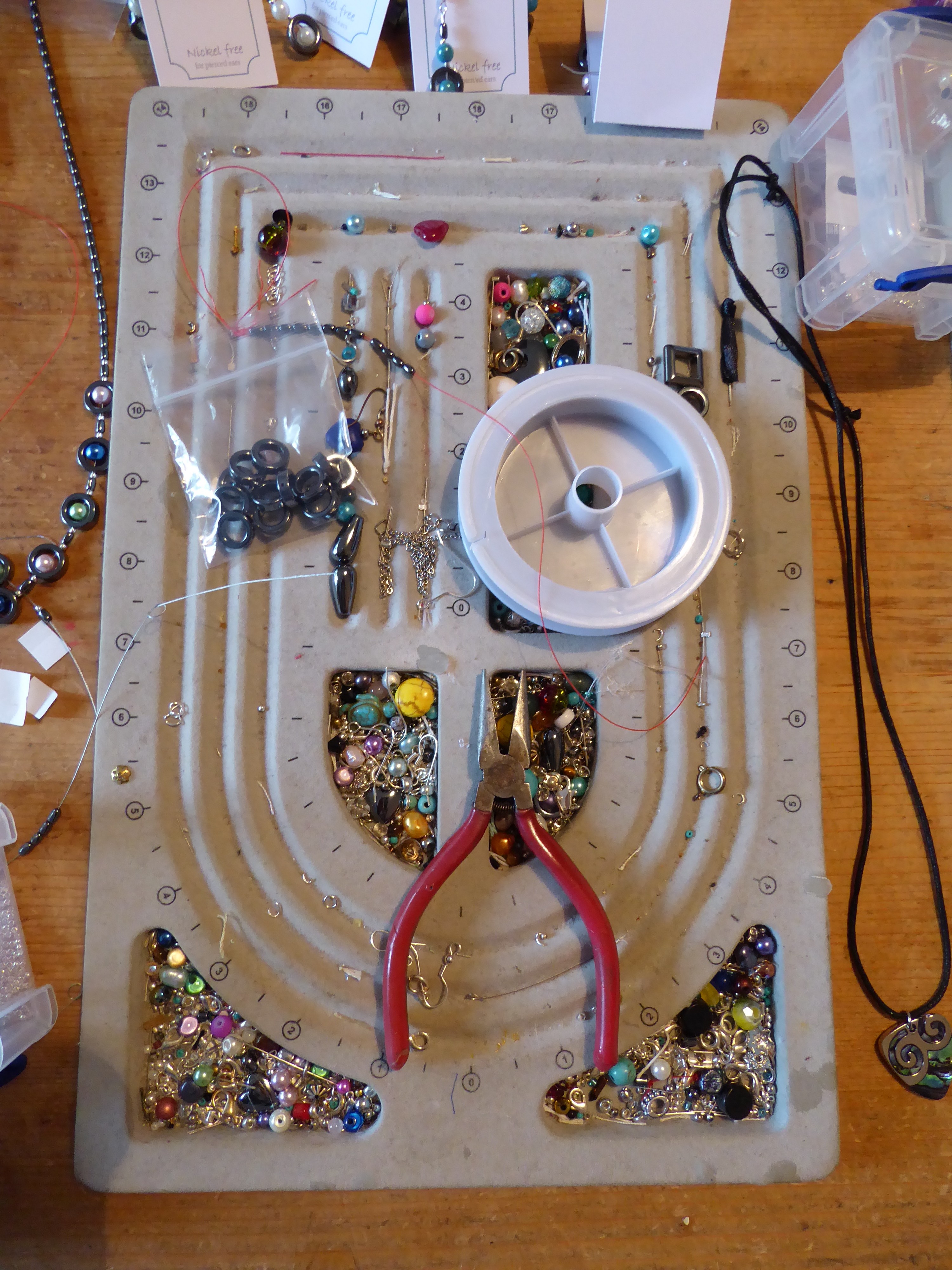
My beads, soundly restrung and secured with new clasps  awaited me on the workroom table, among the tools of the trade and a dazzling array of further possibilities.

P1010182


Posted in Crafts | Tagged , , , | 1 Comment

Threads

P1010977

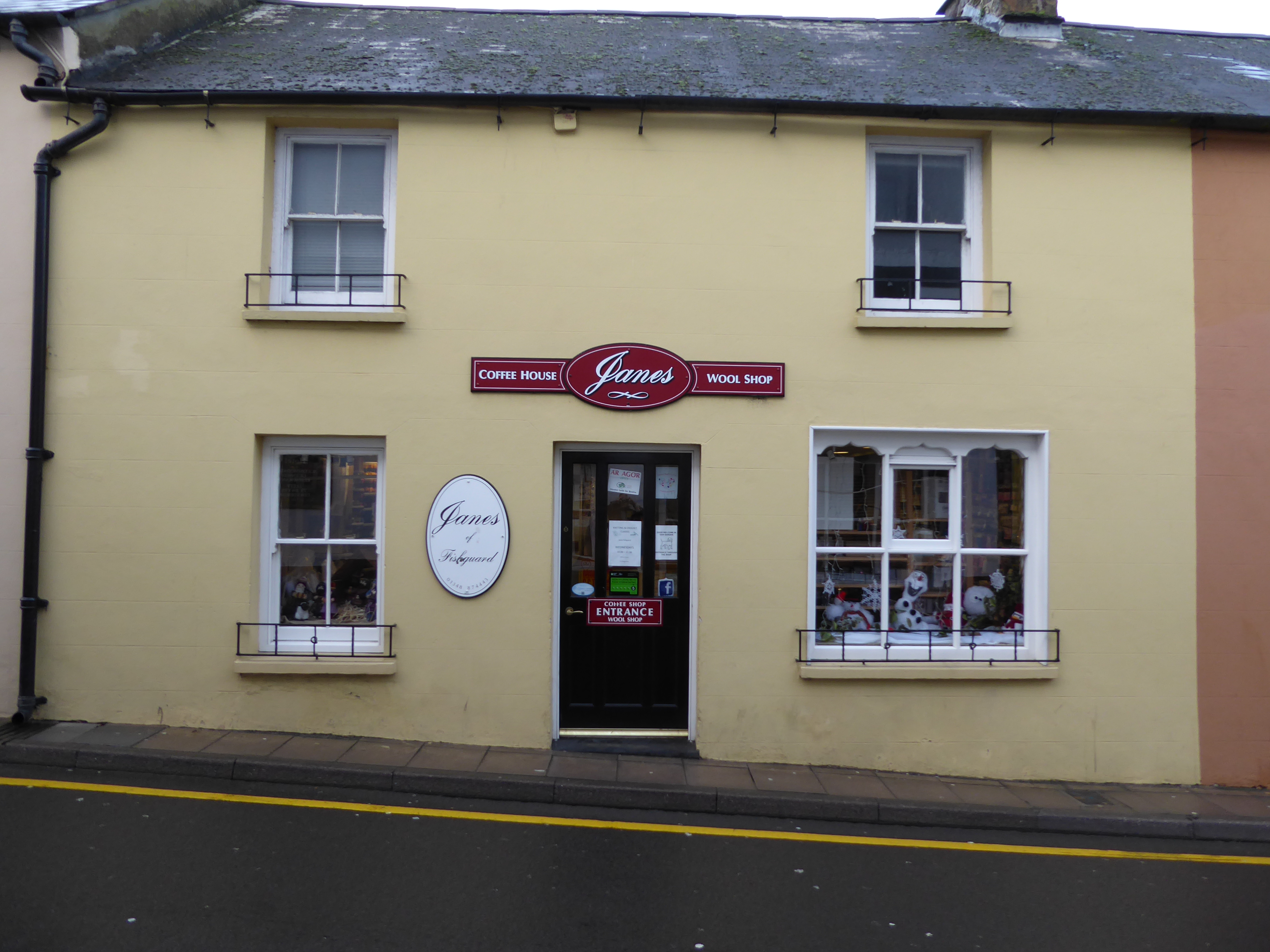
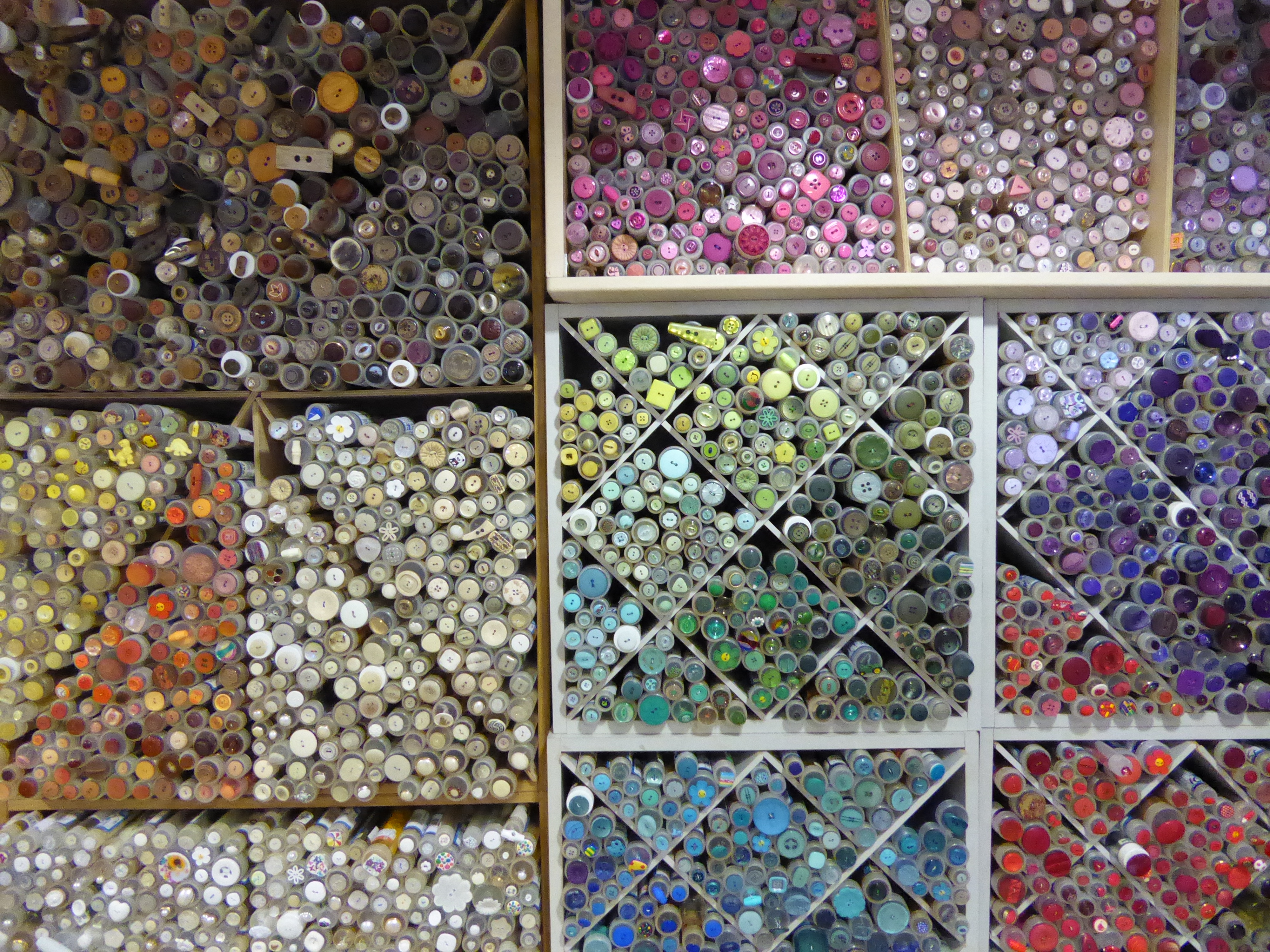
Behind this modest facade you’ll find what could be considered the HQ of the local textile craftspeople – of whom there are many. Twin sisters Catriona and Penelope, who run Jane’s Wool Shop and its lively Facebook page, have a great stock of wools, embroidery threads, cotton, ribbons, quilting materials, zips, daylight lamps, beading bits, buttons and more. Having inherited the shop from their mother and grandmother, they have several lifetimes’ accumulated knowledge and experience and their own artistic gifts are evident all over the shop which now extends from 14 – 18 on Fishguard’s High Street.

P1010963This shop is a reason in itself to travel to Fishguard. You’ll find the inspiration, the materials and the support for your new craft project and I’m sure that in the big coffee shop at the back you’ll find like-minded friendly individuals who’ll know when the local crochet club meets and the best way to achieve neat buttonholes in double-knitting.

Posted in Crafts | Tagged , , , , | 1 Comment

A scattering of sheep

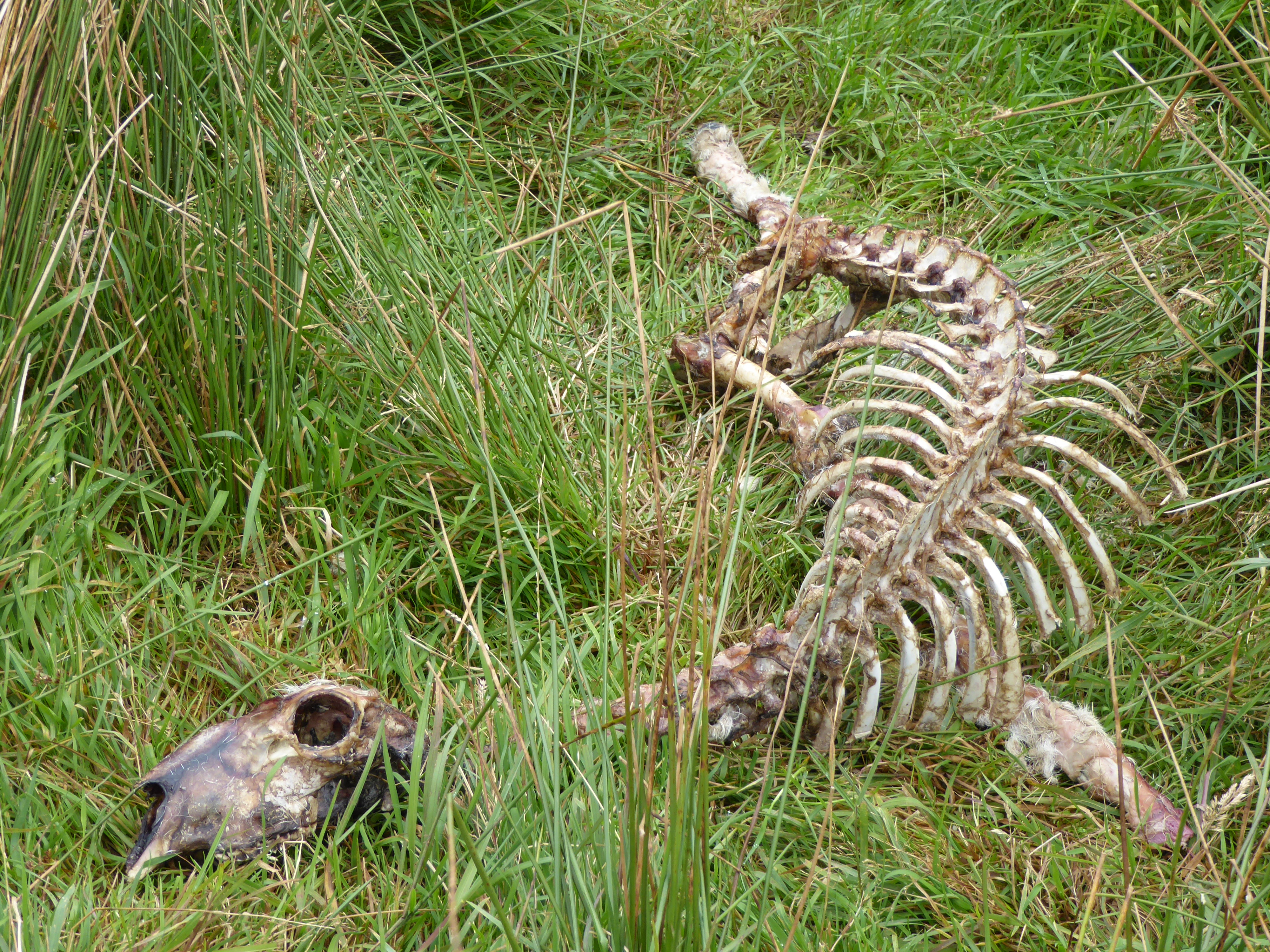
P1010251It’s not very unusual to see the skeleton of a dead sheep on the mountain above Dinas. I assume that the sheep die of natural causes and the crows do their job as carrion eaters. I have never seen the birds feeding but there are always plenty of crows about. For most of the year these intelligent birds clear up the countryside and even feed on maggots or ticks that threaten the health of the sheep. At lambing time, however, the age-old battle of crows v farmers is engaged in earnest when the crows, not content to just clean up the afterbirth, can attack both the newborn lambs and the ewes while they are at their most vulnerable.

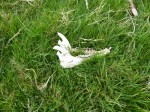
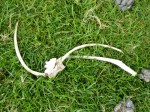
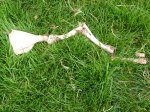
It looks as if there are still some pickings left on this carcass whereas the bones that are scattered elsewhere across the grass are as white as stones.

P1010254P1010247P1010249P1010250

Posted in Farming, Nature, Walking, Wildlife | Tagged , , , , | Leave a comment

Ty Twt: a little museum in Newport

We took the long route from Tegfan (Dinas) to Ty Twt (Newport), going up the mountain behind Dinas, along the ridge to Carningli and then down to Newport. It was a wonderful walk and at the very end, as we passed through the boundary between the the common land and the town we had to say ‘goodbye’ to the horses that had been our companions up the mountain when they handed us over to their friend who would guide us for the last part of our journey to Ty Twt.

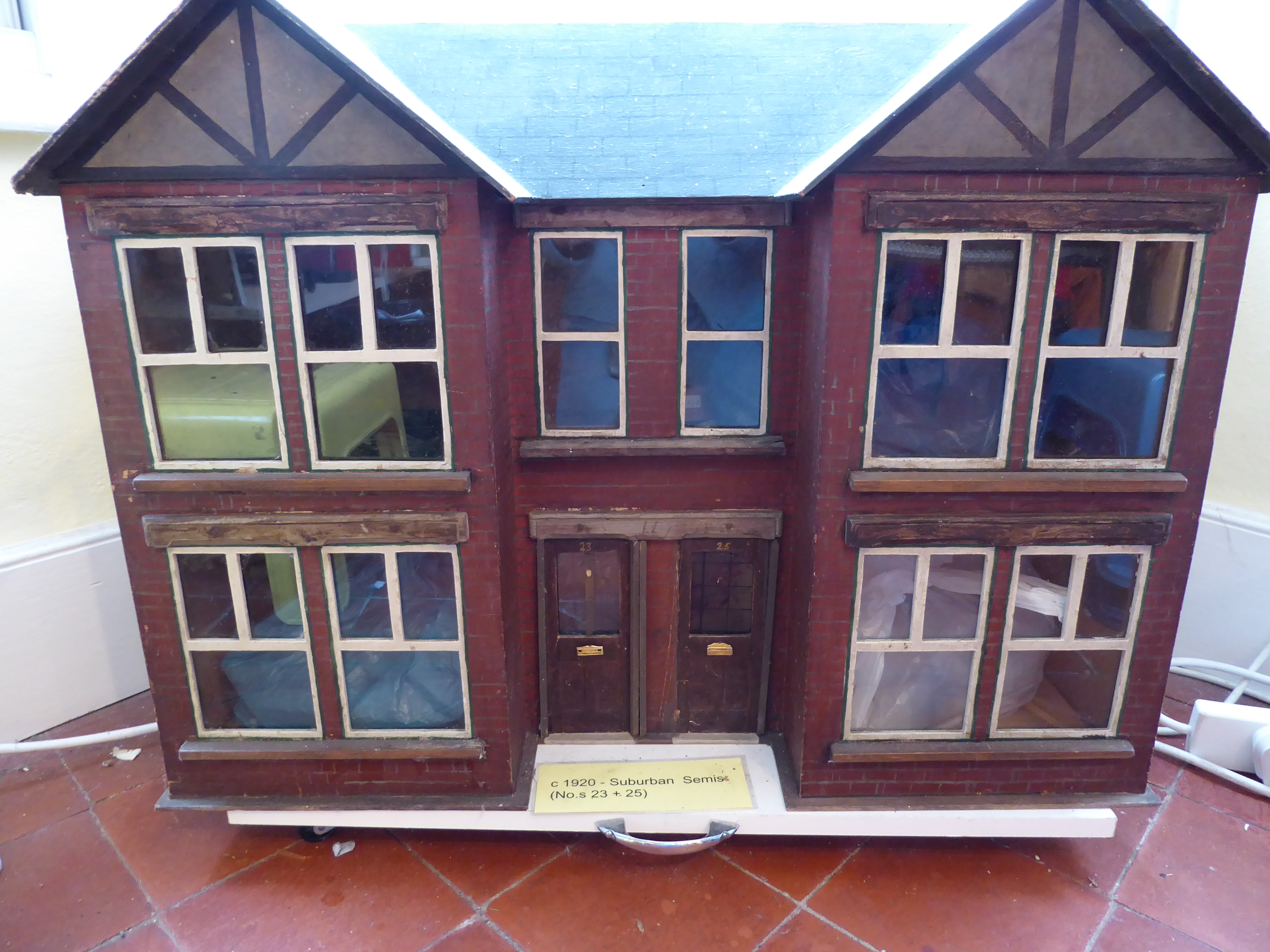
The Dolls’ House and Toy Museum is run by Val and Pam Ripley. Their own collection is housed within and visitors are welcomed (during opening hours in school holidays or otherwise by appointment) and treated to an absorbing and scholarly commentary on the exhibits.

Val and Pam’s collection started with an 8th birthday present in 1932 but all the family’s toys were crated up at the outbreak of war in 1939 and were not rediscovered until the 1970s. Since then the collection has been tended and grown so that now you can see a doll’s house of every period from 1840 to the present, each furnished only with items from the date of the house. In addition to the traditional houses there are also stables (for Victorian boys), shops, schools and roomfuls of other toys and games.

Pam and Val returned to Newport, where they had spent childhood holidays, to home and display their toys. The small museum was opened in 2010 and we are privileged to have such generous and knowledgeable enthusiasts in our area. Pam and Val are both well known collectors and long-standing members of the Doll Club of Great Britain. Val is a member and a past President of the Doll’s House Society.

This museum is worth a visit even if you didn’t think you were interested in Dolls’ Houses. I’m sure that Val and Pam could find an aspect of their miniature world to fascinate you.

P1010287


Posted in Crafts, Entertainment, History, Nature, Walking, Wildlife | Tagged , , | 4 Comments

The best of all possible worlds

Just because you are in an amazingly beautiful part of the world where population density (human) is low, it doesn’t mean that you have to miss the latest film releases or exciting metropolitan performances of High Culture. Theatr Gwaun, in Fishguard, offers a similar programme to the splendid Curzon chain – big new films, art house classics and relays from London’s National Theatre. In addition there’s often real live entertainment – a panto at Christmas time and many opportunities to hear local musicians.

Theatr Gwaun is owned by the local authority and after years of struggle has emerged triumphant thanks to a wonderful group of volunteers.

P1010959

What’s more, this community cinema and theatre has a bar which will serve you local craft beers to take into the auditorium and you can enjoy superb sound and picture quality for the ticket price of £6.

The reviews are fantastic. Here’s a taster: ‘really comfy’, ‘great experience’, ‘asset to Fishguard’, ‘helpful staff’, ‘cool people running it’, ‘seriously good quality audio and vision’, ‘well priced’, ‘rather good popcorn’, ‘welcoming’, ‘toilets are spotless’!

To find out what’s on now click here.

Posted in Art, Entertainment, Food | Tagged , , , , , | 3 Comments

At anchor on the heavenly shore

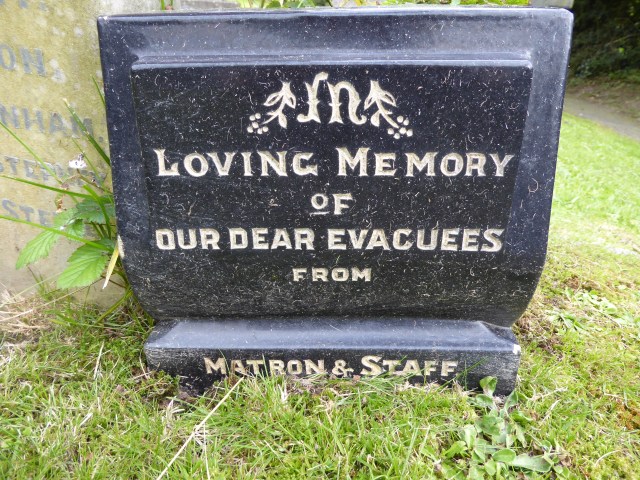
Remembered by the maritime communities of Dinas, Pembrokeshire and Jelsa on the Island of Hvar.

Posted in Sea | Tagged | 1 Comment

Part 7: Unknown lives. Guesses, Slivers of Information and Cul-de-sacs

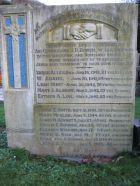
nevern-evacueesW Adams, died June 30, 1941, 64 yrs Pembroke Dock
Leah Hunt, died April 28, 1942, 76 yrs West Bromwich
Mary J Albrow, died Nov 2, 1942, 87 yrs Stepney
Annie E Smith, died Sept 11, 1943, 73 yrs Paddington
Agnes M Bennett, died July 27, 1944, 65 yrs Paddington
Eleanor Wiggins, died Nov17, 1944, 84 yrs Hoxton
Marie E Rice, died Dec 14, 1944, 72 yrs Dagenham
Elizabeth E Dorman, died July 29, 1945, 94 yrs Stepney

W Adams may have been Wilhemina Elliott , born in Gibralter in about 1877, who married Edgar Adams in 1930. Before her marriage she had been cook for the Hay family living at HM Dockyard, Pembroke Dock. Both she and Edgar were of mature years at the time of the wedding and Wilhemina would have been Edgar’s third wife, his second wife having died earlier in the year. Edgar himself died in 1936. If she was still living in the dock area on 19th August 1940 she would have been affected by the bombing in which 11 of the 18 oil tanks in Pembroke dock were set alight. The area was bombed again on the following day and the fire that ensued was the biggest in the UK since the Great Fire of London. 650 firemen worked in dreadful conditions for three weeks to control the flames and a thousand houses in the dock area were destroyed.

If this is the same W Adams as appears on the Nevern memorial, she wasn’t actually buried in Nevern, but taken back to her home town, where the Parish of St John, of Pembroke Dock records the burial of Wilhemina Adams on 5th July 1941. She would have joined Edgar and the two Sarahs – his former wives.

(With thanks to Philip John, who has a link to Edgar Adams through one of Edgar’s previous wives, for helping us, almost certainly, identify our W Adams of the Nevern memorial.)

Leah Hunt may have been the Leah Whitehouse who married a Joseph Hunt in 1887 in West Bromwich.

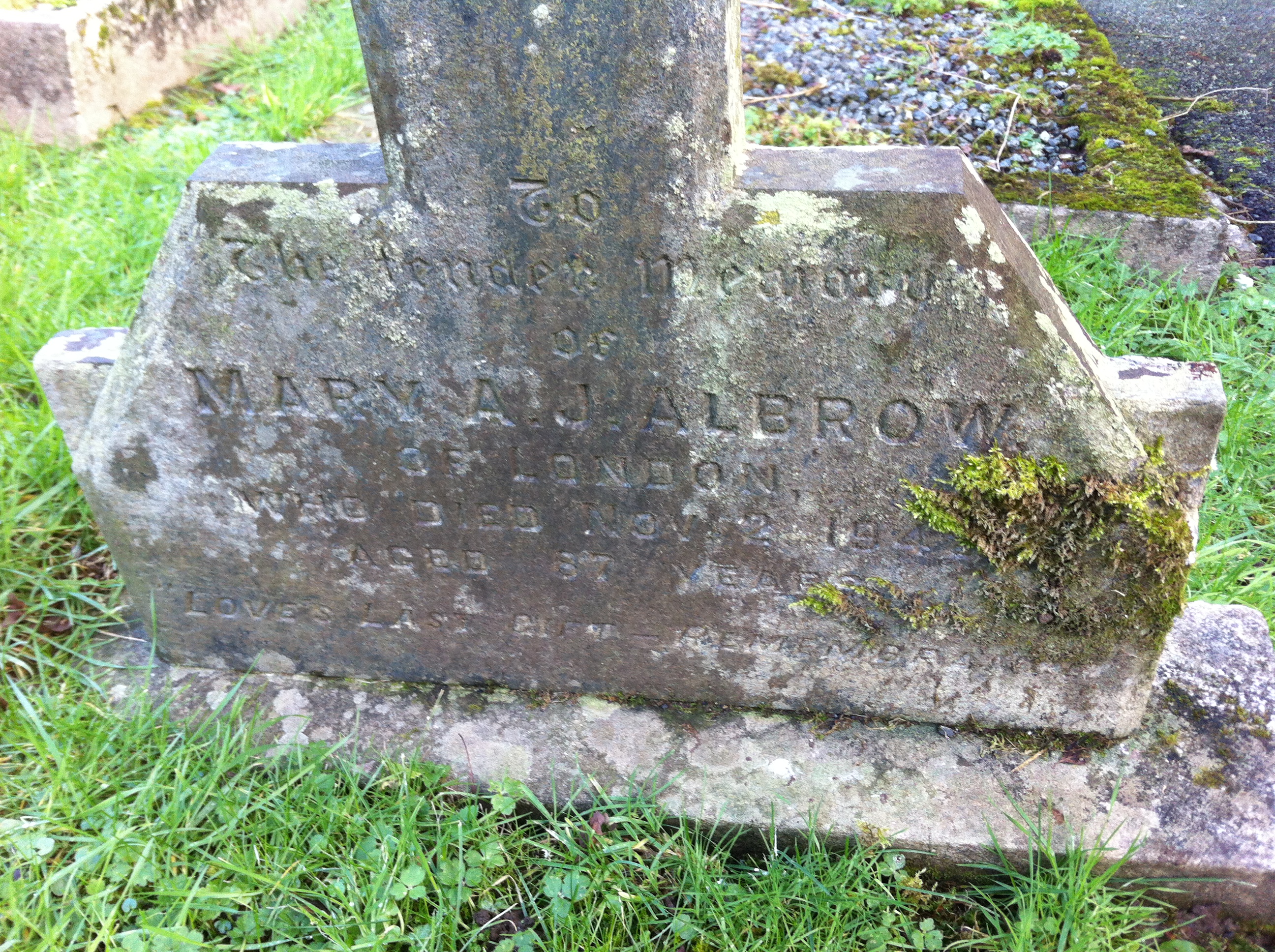
Mary J Albrow
Grave of Mary Albrow nevern-2
To the loving memory of
Mary A J Albrow of London
died Nov 2 1942 aged 87 years.
Loves last gift remembered

Mary J Albrow, has a personal memorial behind the group headstone. She was possibly the Mary Ann Bolt who married first a Henry Harney (and had a son Henry Cecil Harvey in 1872) and then a William Albrow.

Was our Mary Albrow living at 39 Salmon Lane, Stepney in 1932? We have had no contact with her family and have no reliable information.

As yet we have no information at all on Annie E Smith, Agnes M Bennett, Eleanor Wiggins, Marie E Rice or Elizabeth A Dorman. Can you help us?

This exploration of the Llwyngwair evacuees has been a fascinating experience and I’m very grateful to Heather Hill of Penrallt for all her help and shared enthusiasm. We have been delighted to find living relatives of some of the ladies, to be able to share photos and put people in touch with each other. We are also grateful to the many family historians who helped us along the way by telling us that we were on the wrong track, that their relative had a different birthplace, middle initial, marriage or war-time experience from the one we sought.

I’m still hoping, however, to be able to make contact with people in the Nevern or Newport area who remember, or heard speak of the evacuees. The descendants of the Llwyngwair ladies are keen to learn more of their great-grandmothers’ experience and I would love to be able to add a little more detail to the account of their last years.
P1010514

Posted in History, Religion | Tagged , , , , , , , | 3 Comments

Part 6: Friends

JESSIE A PRESS, DIED JULY 5, 1945, 83 YRS, STEPNEY

nevern-evacuees

The last name on the gravestone is that of Jessie Amina Press who was born in the East-end ward of St George in the East in 1862 – the same year as her good friend Amelia Berning.

She lived with her parents, James and Temperance and her six brothers and sisters at 17 Richard Street in Stepney.

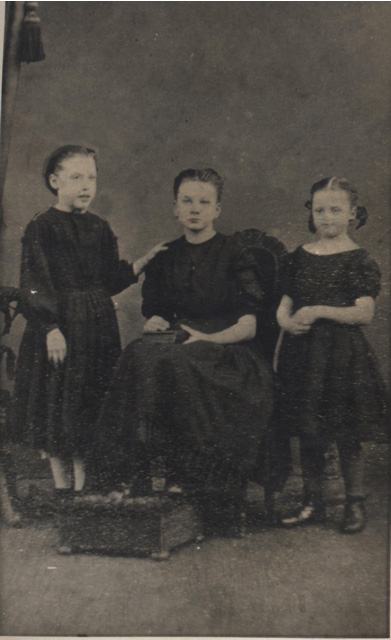
Jessie Press_and sisters

From the left –  Liza, Emily and Jessie Press. Photo courtesy of Vanessa Hamer

Jessie's house

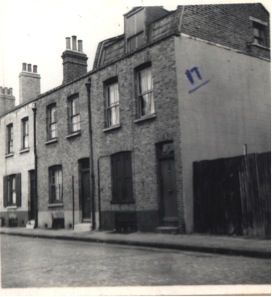
17 Richard Street. Photo courtesy of Vanessa Hamer.

Her father worked as a wood turner, her brothers attended the local school and her older sister was employed as a dress maker but at the age of 18 there is no occupation given on census returns for Jessie.
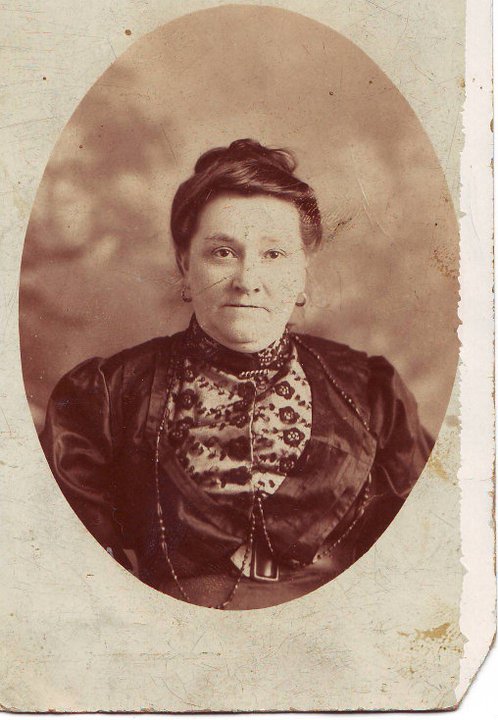
The records show no occupation for Jessie even in the 1891 census when she would have been 28. Was she in frail health and unable to work? Was she needed at home to look after the family?
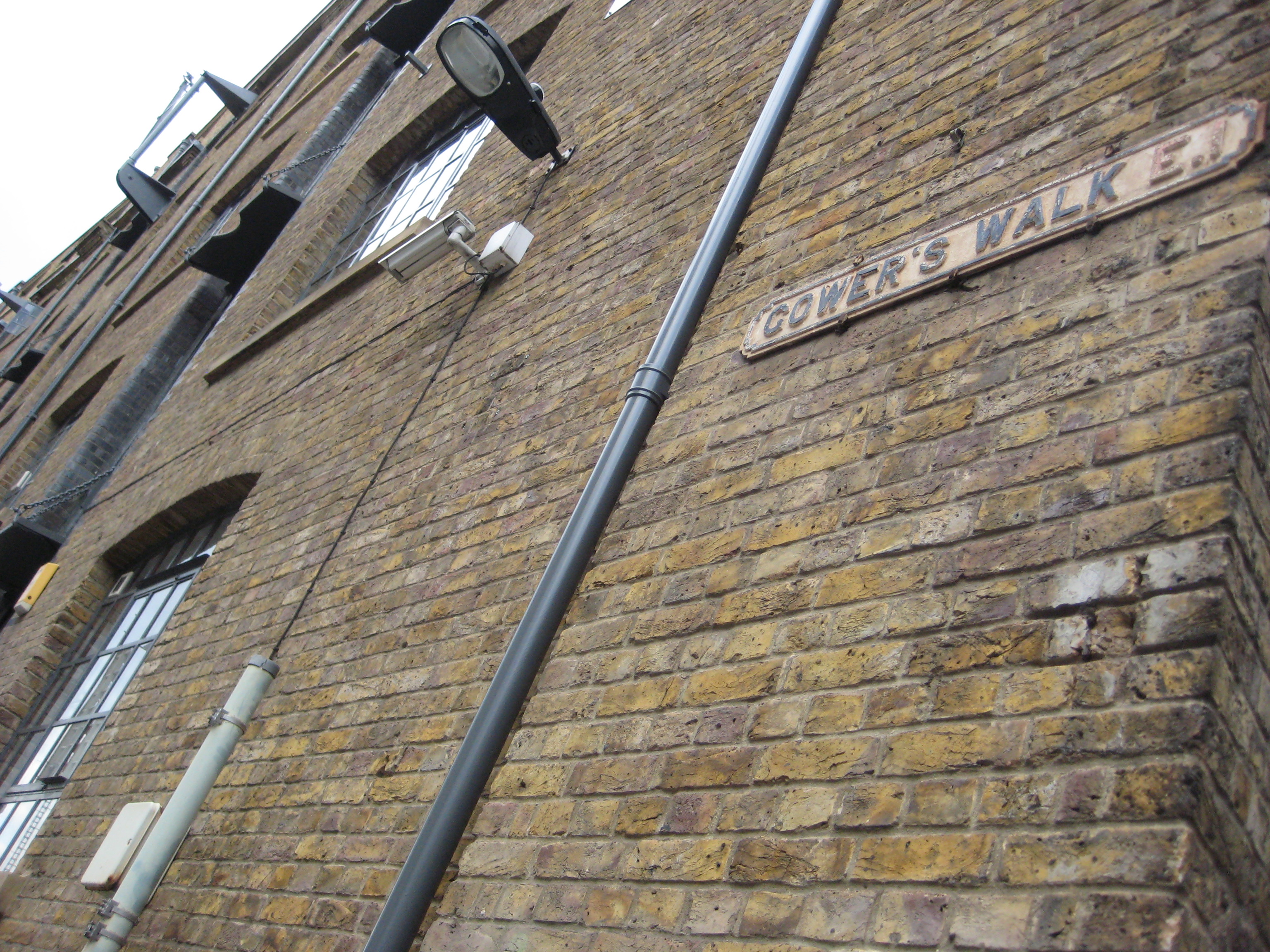
In 1892 or 1893 Emily and William (Amelia and Wilhelm) Berning moved into 15 Richard Street, next door to the Press family who still lived at number 17. This, I presume, was the start of a life-long friendship between the two women.

At some time between then and 1911 Jessie found employment as the housekeeper of a Public House – The Earl Zetland. This pub, at 137 Burdett Road, Mile End was run by Frederick Voller, another German immigrant. Did Jessie’s neighbours (The Anglo-German Bernings) help her get the job?

We don’t know where she was living while she was working at ‘The Earl of Zetland’ but in 1931 Jessie was with Amelia Berning, who had left Richard Street several years previously and had been living alone in Cowley Street since the death of her husband. Jessie and Amelia were still together in Cowley Street in 1938 and we know that they were evacuated to Llwyngwair together in 1940.

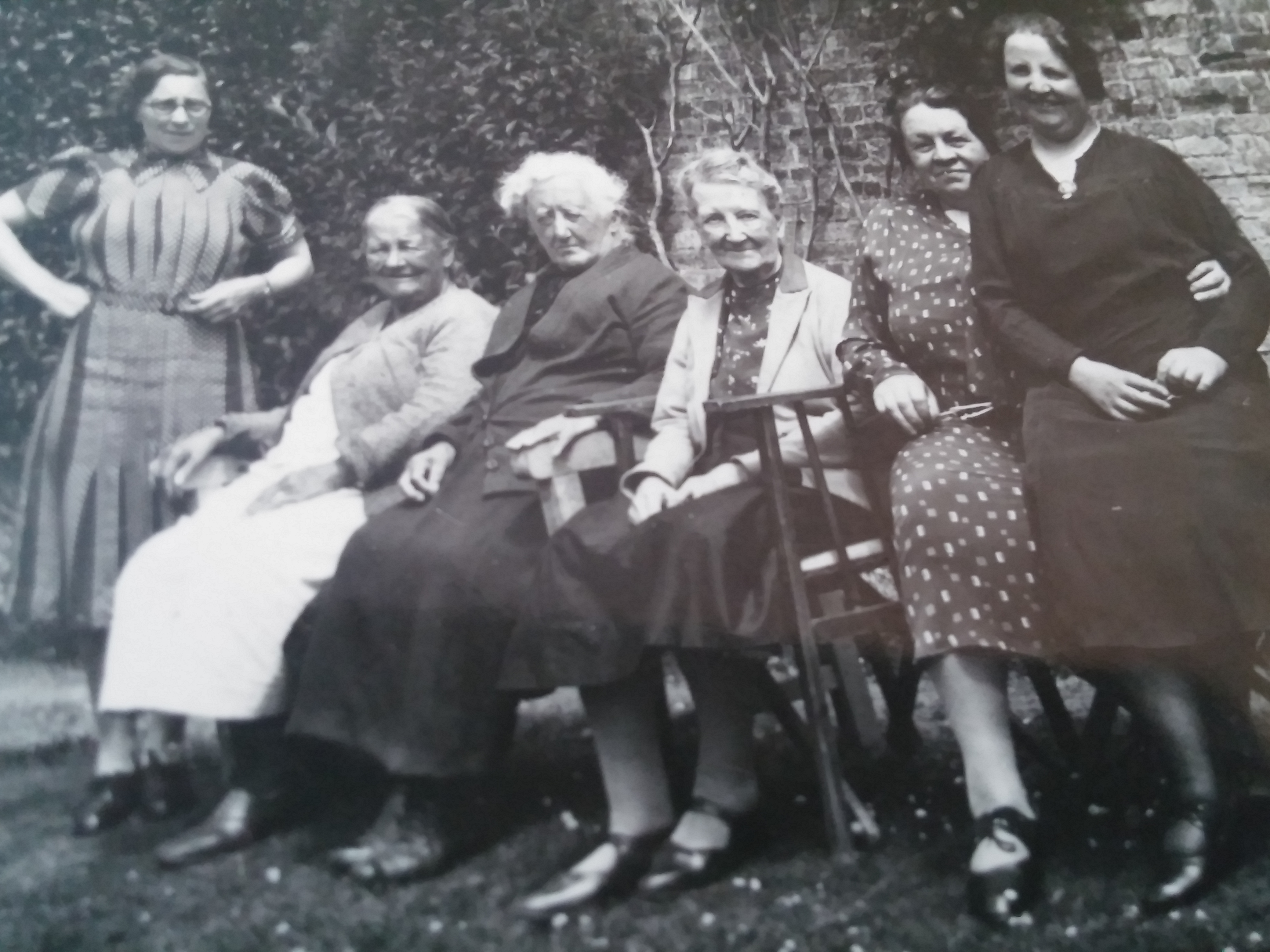
She was alive when this photo was taken but we don’t know which of these ladies was Jessie Press.

Llwyngwair ladies big group

Mary Moulam (seated third from the left in the front row):Emily Berning (standing in the back row, second from the right). Photo courtesy of Jan Ramos.

The last two elderly residents of Llwyngwair died in July 1945. In spite of the order of names on the gravestone, Elizabeth Dorman (age 94) outlived Jessie (age 83) by three weeks.

At rest

With many thanks to Jessie Press’s family – Vanessa Hamer, her great grand niece, and April Smith, her cousin 4x removed, for the photos and family history that have helped us tell Jessie’s story.

Posted in History, Religion | Tagged , , , , , , , , | Leave a comment

Part 5: German Immigrant Families Bombed by the Luftwaffe

AMELIA E BERNING, DIED AUG 29, 1944, 83 YRS, STEPNEY

nevern-evacuees

Emily Berning-3

Amelia (Emily) Berning. Photo courtesy of Chris Michaelides.

The ninth name on the gravestone is Amelia Caroline Berning. She was born in Yorkshire in 1862 to parents (Ludwig and Caroline Herman) who were recent immigrants from Hannover in Germany. They had arrived with her older brother, Johann, and joined a thriving German community in Hull.

IMG_5487

Within a few years, however, the family had moved to Gower’s Walk, Whitechapel in London’s East End, where the German community was even larger. Her father worked as a bootmaker and Amelia was employed as a dressmaker.

When Amelia was 21 she married Wilhelm Berning who had arrived in London from Hannover at the age of 17. He had been living nearby and they eventually settled in Richard Street, Stepney, near both his and her families. Over the years the Bernings, with their six children, stayed in Stepney but when they moved a few streets eastwards, it was to better housing in slightly more salubrious surroundings.

Emily Berning with William and others

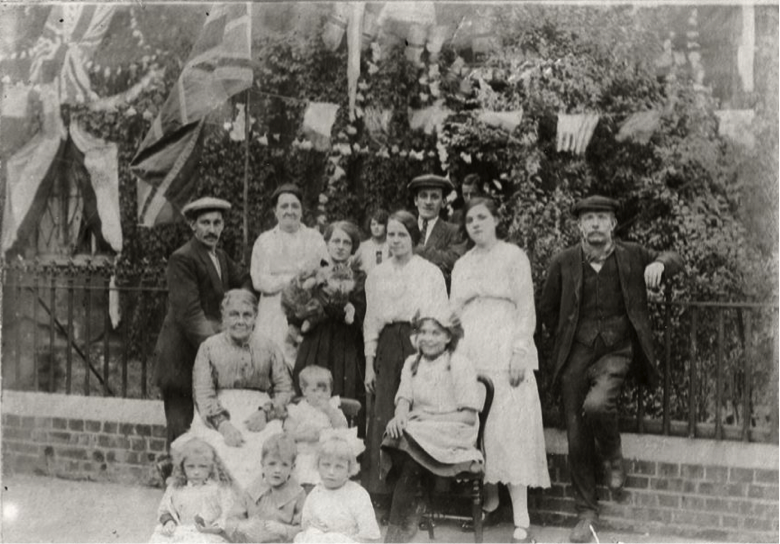
Emily (Amelia) Berning standing at the back, second from the left. William (Wilhelm) leaning on the railings, far right. Others as yet unidentified. Is Jessie Press here? Photo courtesy of Chris Michaelides

Wilhelm Heinrich Friedrich Berning - great grandfather-3

Their final home was in Cowley Street. That’s where they lived when Wilhelm died in 1926 and that’s where Amelia was at the beginning of the war, having been joined by her old friend Jessie (see part 6 to follow) and, probably, by one of her sons.

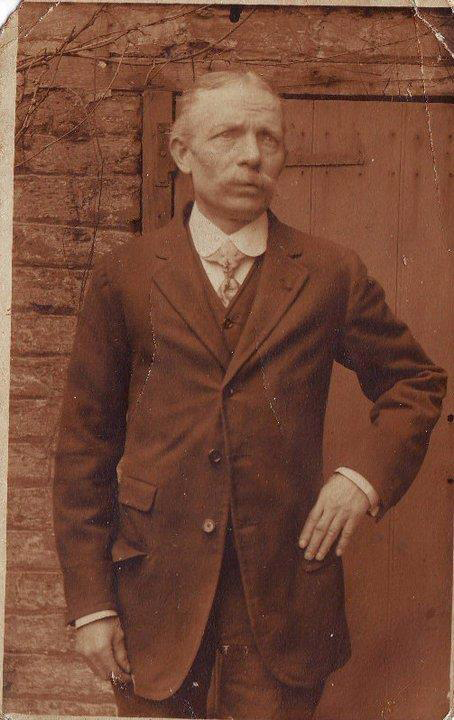
Wilhelm (William) Berning. Photo courtesy of Chris Michaelides.

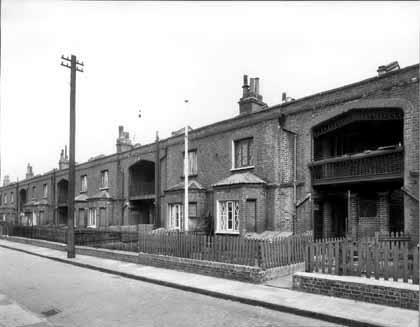
The houses in Cowley Street and Gardens were relatively new.They had been built by the Society for Improving the Condition of the Labouring Classes, based on an exhibit at the Great Exhibition of 1851. Their design would be considered important enough for the houses to be listed in the 1970s .They were subsequently delisted and demolished.

Cowley Gardens, Stepney where the Bernings lived-3

Cowley Gardens. Photo courtesy of Chris Michaelades

However, the East End’s housing was squeezed between the railways, canals and docks that would inevitably be a target for Germans when the war started. And indeed, the people of the East End suffered. The first night of the blitz saw 5 high explosive bombs land nearby, and the shelters that had been improvised in the area were seen to be inadequate. In 1941 Cowley Street, had a direct hit; one of Amelia’s sons-in-law was injured and died shortly after. In 1944 her son, Theodore, was killed when a V2 bomb hit the Woolworth’s store in Catford.

But what had happened to Amelia Berning? Her descendants, documenting the family history, could find no further trace of her.

In Dinas, Heather Hill’s research into the ninth name on the Nevern headstone, Amelia E Berning, eventually led her to Amelia C Berning of Stepney with a confusion of Emilia, Emilie and Emalia and wrong birth places recorded in official documents along the way. It was impossible to be sure that we had found the right person until we realized that her friend, Jessie, was also named in the graveyard at Nevern. It became clear that Amelia and Jessie had been rescued together from the bombing of the East End by the Salvation Army and given sanctuary at Llwyngwair. And it was good to hear that in the stress of evacuation from the crowded streets of London to the relative quiet of Llwyngwair, Jessie and Amelia had each other’s friendship for comfort and support.

Llwyngwair ladies small group

Amelia Berning, identified by her great grand‐daughter Chris Michaelides, seated on the far left of the bench. Photo courtesy of Jan Ramos

I’m very grateful to Chris Michaelides, great granddaughter of Amelia Berning for the photos, family information and East-End history that she has sent us. Being able to tell Chris and her family of Amelia’s final years and place of burial was one of the many rewards of this project.

Posted in History, Religion | Tagged , , , , | 2 Comments

Part 4: A Royal Connection

MARY MOULAN, DIED JUNE 8, 1944, 86 YRS, STEPNEY

nevern-evacueesMary Moulan, the seventh name on this headstone in the graveyard at Nevern, proved difficult to find until we realized that the final ‘n’ of her name, as written on the tombstone, should be an ‘m’. The search, in the end, however, was gloriously successful in helping us document the lives of our dear evacuees. To our astonishment and delight, her family sent us two group photos. Although we can’t match many names to faces, the photos have helped bring the elderly ladies listed on the tombstone to life.

Mary Moulan, of Stepney, turned out to be Mary Ann Rochford, whose family originally came from Ireland and who married John Moulam in Shoreditch in 1877. The couple went on to have five children but John (a police constable) died in his thirties, leaving Mary with her youngest child still to be baptized and the necessity of putting her oldest child into the Police Orphanage to ease the burden of caring for the others.

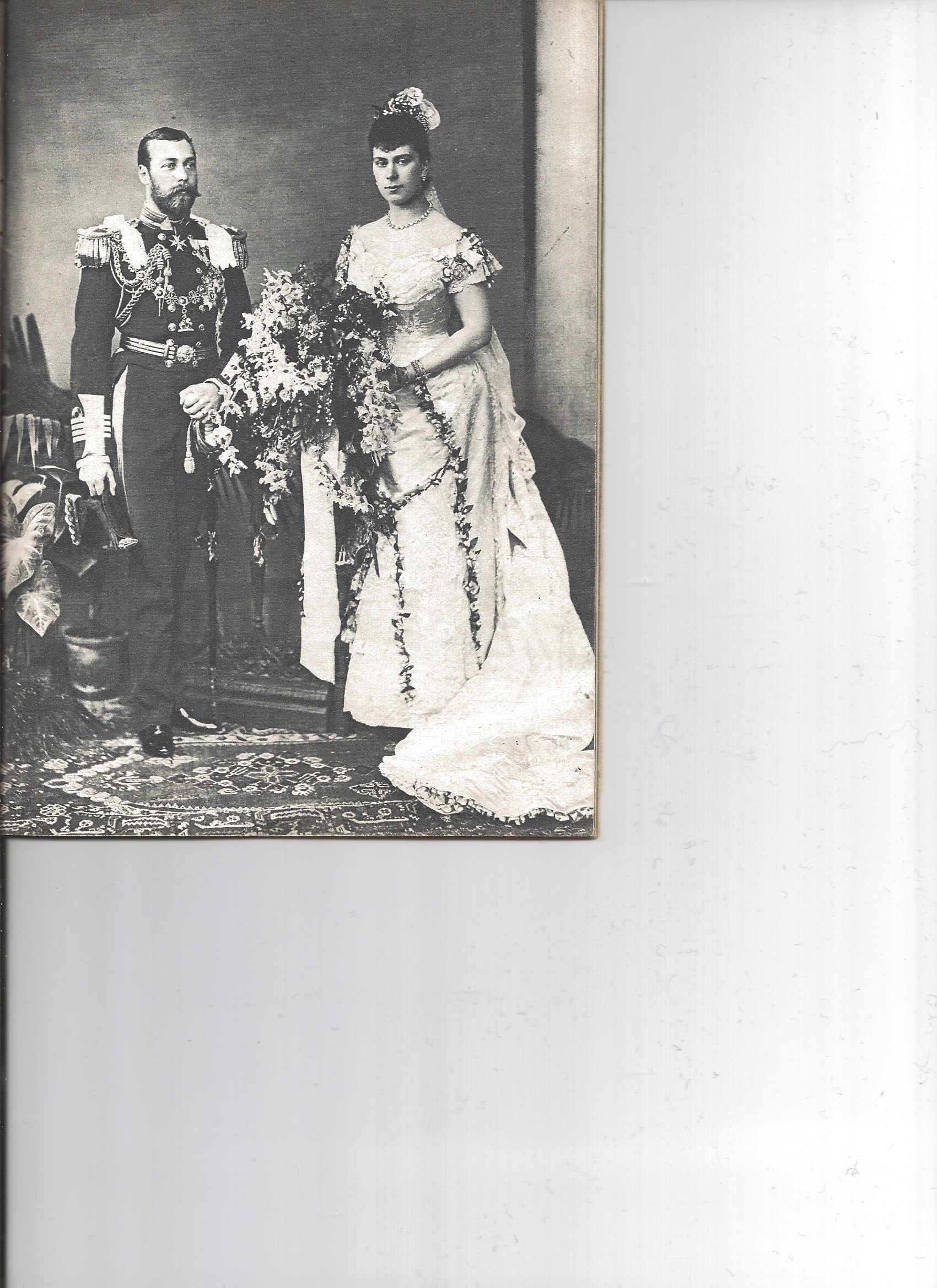
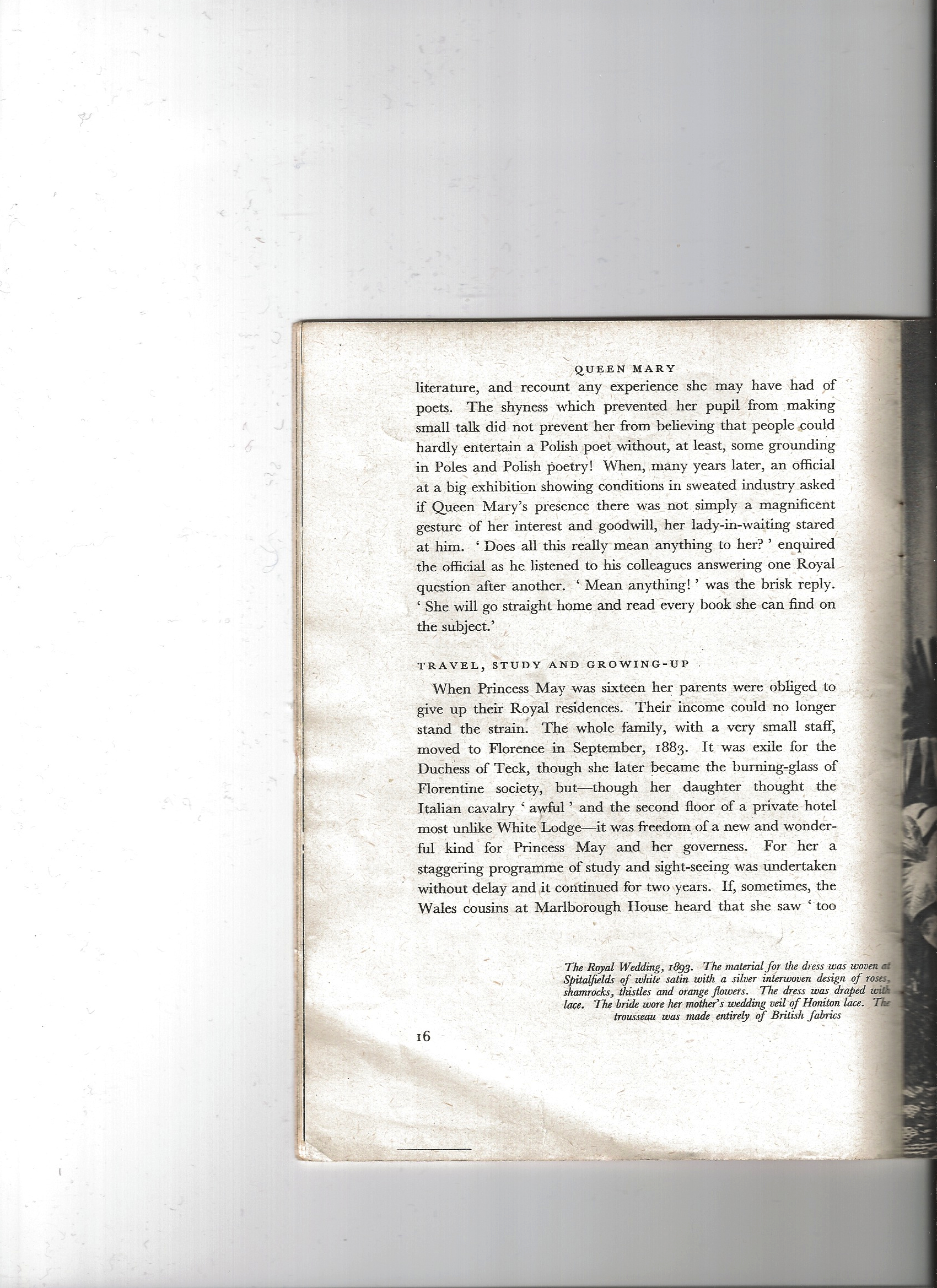
Queen Mary's wedding dressMary Moulam was a talented seamstress. She must have been working after the death of her husband because her family knows that she helped make the dress for Queen Mary’s wedding in 1893. The design was entrusted to ‘Linton and Curtis’ of Albemarle Street (who may have been Mary’s employers) but the silk cloth was woven by Warner’s of Spitalfields, not far from where Mary was living at the time.

Queen Mary's wedding dress caption

The family also benefited from her skills. She would only have to see a garment once and she’d be able to make a faithful copy from memory. In later years her granddaughters could go and see a film with her, pick out a favourite dress on the screen and know that grandmother would make the same for them; they could be dressed like the stars.

Mary was obviously quite a character. She not only had considerable talents but also had ‘the gift’.  Her family remembers that during the war she used to sit by her window at night reading the cards without closing the blackout curtains even when there was a raid imminent. The air raid warden, whose job it was to check that no chink of light was visible from the street, was often having to reprimand her. Could this have been part of the reason she was deported evacuated to Wales?

Here is Mary, elegantly dressed, coiffed and looking young for her years.

Llwyngwair ladies small group

Mary Moulam (third from the right) and friends at Llwyngwair.

With many thanks to Jan Ramos (great grand-daughter of Mary Moulam) for this photo and family memories.

Posted in History, Religion | Tagged , , , | 2 Comments

Part 3: The Landlady

nevern-evacueesESTHER A LOH, DIED MAY 4, 1943, 83 YRS PADDINGTON

The fifth name on the head stone is that of Esther Anne Loh. She was born Esther Anne Jones, on September 9th 1860 and although her married name might appear unusual enough to render her more easily traceable, we know little about her life in Paddington. She married Austrian-born Anton Von Padua Loh in 1877 at St Martin in the Fields and had several children, one of whom, Francis, was killed in action on October 30th 1918. Her daughter, Miriam, lived with her at 34 Clarendon Gardens, Maida Vale, London.

Esther Loh's houseEsther and Miriam remained at the same address throughout the 1930s with up to six lodgers in their large house which still stands, grandly, in Maida Vale. A high explosive bomb fell just behind Clarendon Gardens during the blitz and her house may have been damaged, but we know that her daughter Miriam was still living there in 1945.

Why was Esther evacuated to Nevern? Did she know Annie E Smith or Agnes M Bennett who were also evacuated to Nevern from the Paddington area? So many unanswered questions.

At Llwyngwair, however, Mrs Loh made an impression on Dilys Roberts, daughter of the farmer who worked on the estate, who still lives locally. She was nine or ten years old at the time and it was her job, every morning , to take the milk to the ladies. She’d go down the back steps and leave the milk in the kitchen. It didn’t take long, but on a Sunday she’d linger with the evacuees and listen to the Service, enchanted by the music played on banjo, accordion and piano by the Salvation Army staff.

Dilys thought that all the ladies were very nice, but perhaps Esther Loh spent more time with her than the others and 75 years on, it’s Esther Loh’s name that she still remembers –  Mrs Loh, who used to go out in a pony and trap with her friend, Mrs Thomas from Pont Clydach. What were the other ladies doing while Esther was riding around the lanes? Some of them may have been doing embroidery, remembers Dilys.

This photo of the Llwyngwair ladies probably includes Esther Loh, but so far no-one has been able to identify her. Dilys remembers that Mrs Loh wore glasses but she must have taken them off for the camera.

Llwyngwair ladies big group

Llwyngair ladies. Photo courtesy of Jan Ramos.

(With many thanks to Esther Loh’s great grand-daughter, Angie Crawford, for family information about Esther Anne. Many thanks also to Mrs Dilys Evans for sharing her childhood memories.)

Posted in History, Religion | Tagged , , , , | 2 Comments

Part 2: A Christmas Wedding

SARAH ALLEN, DIED JUNE 16, 1941, 81 YRS STEPNEY

nevern-evacuees

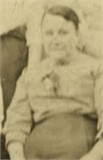
Sarah Allen. Photo courtesy of Jackie Lawson

Sarah Allen. Photo courtesy of Jackie Lawson

The first name on the memorial in Nevern’s Churchyard is that of Sarah Allen who died in 1941, at Llwyngwair.

Sarah Jane Lawson was born to James Lawson and Mary Ellerton on 27th October 1860 in Bethnal Green, East London.

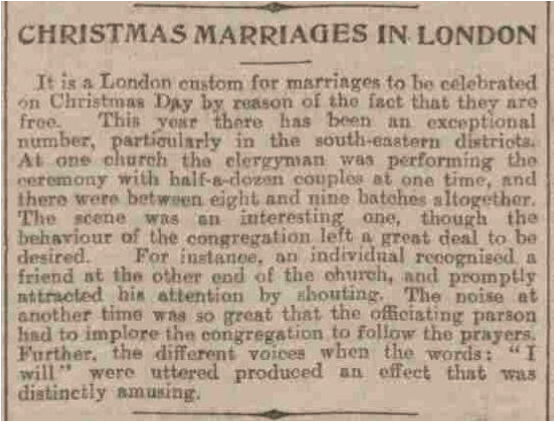
At the age of 20 she married John Edward Thomas Allen, on Christmas Day at St Mark’s Church, Walworth. The Christmas Day wedding was not unusual at the time; it was a day when no one would lose wages by attending and when the bride and groom would benefit from the traditional offer of free wedding services at Christmas and Easter.

By December 1900 the custom was well entrenched and the clergy were evidently finding it difficult to manage the crowds.

Christmas marriages in London

Sarah and John had ten children but five died between 1891 and 1903, two at birth. John died in 1914.

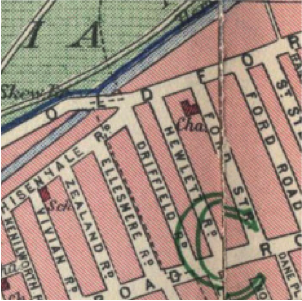
Sarah Allen's address

After her husband’s death Sarah lived at various addresses in the Bethnal Green area of London with members of her husband’s family. However, the docks, canals and railways that intersected the East End made it a target for German bombs. Although 77, Hewlett Road, where Sarah was living at the time, does not appear to have been directly hit during the first eight months of intensive bombing, high explosive bombs fell on Driffield Road and Old Ford Road. These were close enough to cause damage at Sarah’s address and Hewlett Road now comes to a stop at number 43. The section of road where Sarah’s home had been forms part of a post war housing estate.

Her evacuation from London would have been arranged by the Salvation Army whose centre in Shadwell seems to have coordinated the rescue but as that also was bombed there is no documentary evidence in The Salvation Army Archive.

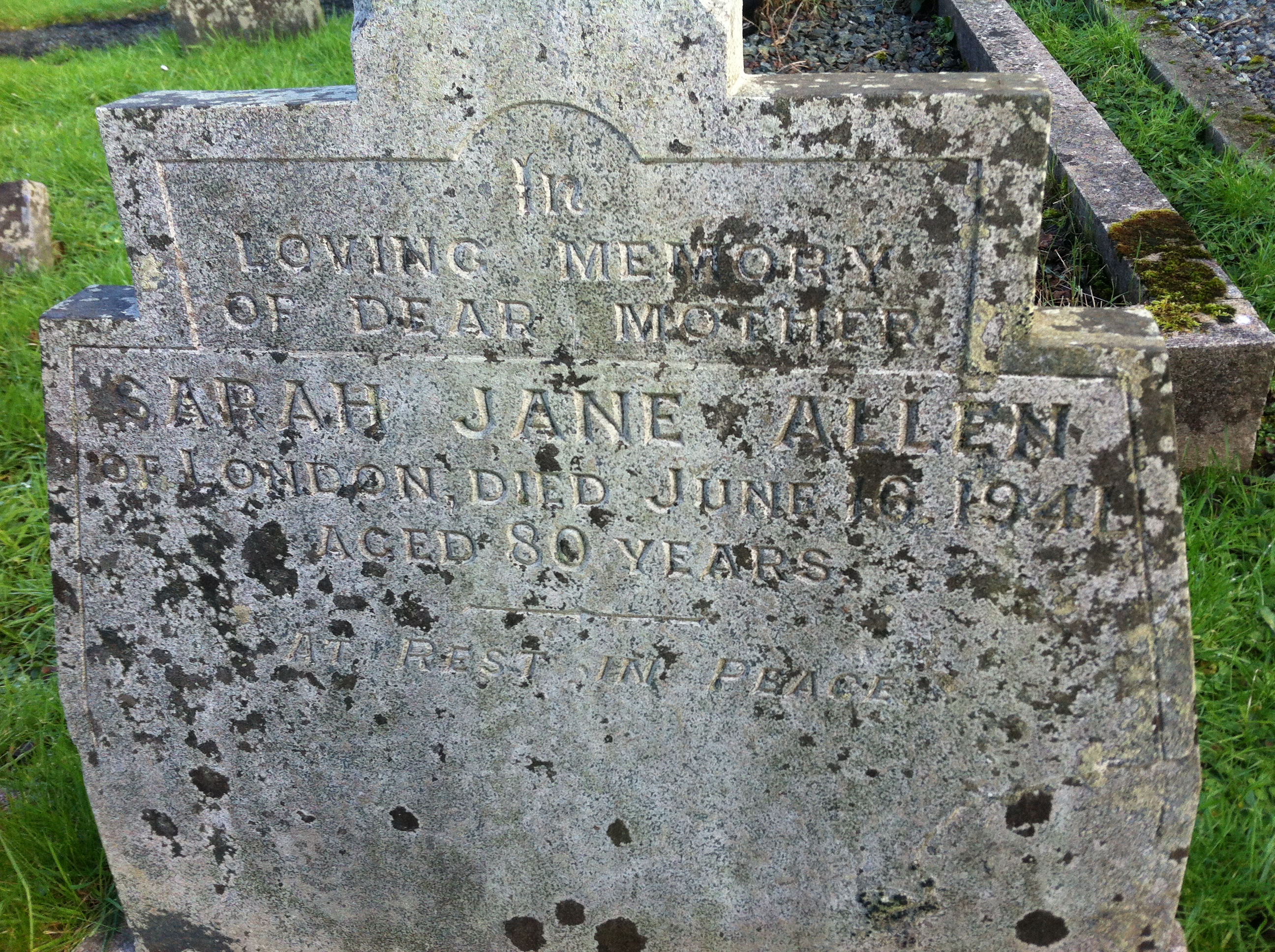
Sarah died in June 1941, within a year of her arrival at Llwyngwair. She was survived by three of her children, Albert, Florence and Blanche. Her son registered her death and the family arranged for an individual head stone and burial plot that can be seen behind the main Llwyngwair memorial.

Grave of Sarah Allen Nevern

IN LOVING MEMORY OF DEAR MOTHER, SARAH JANE ALLEN OF LONDON DIED JUNE 16TH 1941 AGED 80 YEARS. AT REST, IN PEACE.

I’d like to thank Jackie Lawson, Sarah Allen’s great grand niece, for contributing the photo and family information that have helped us tell her story.

Posted in History, Religion | Tagged , , , , , | Leave a comment