Cwm-yr-Eglwys regatta

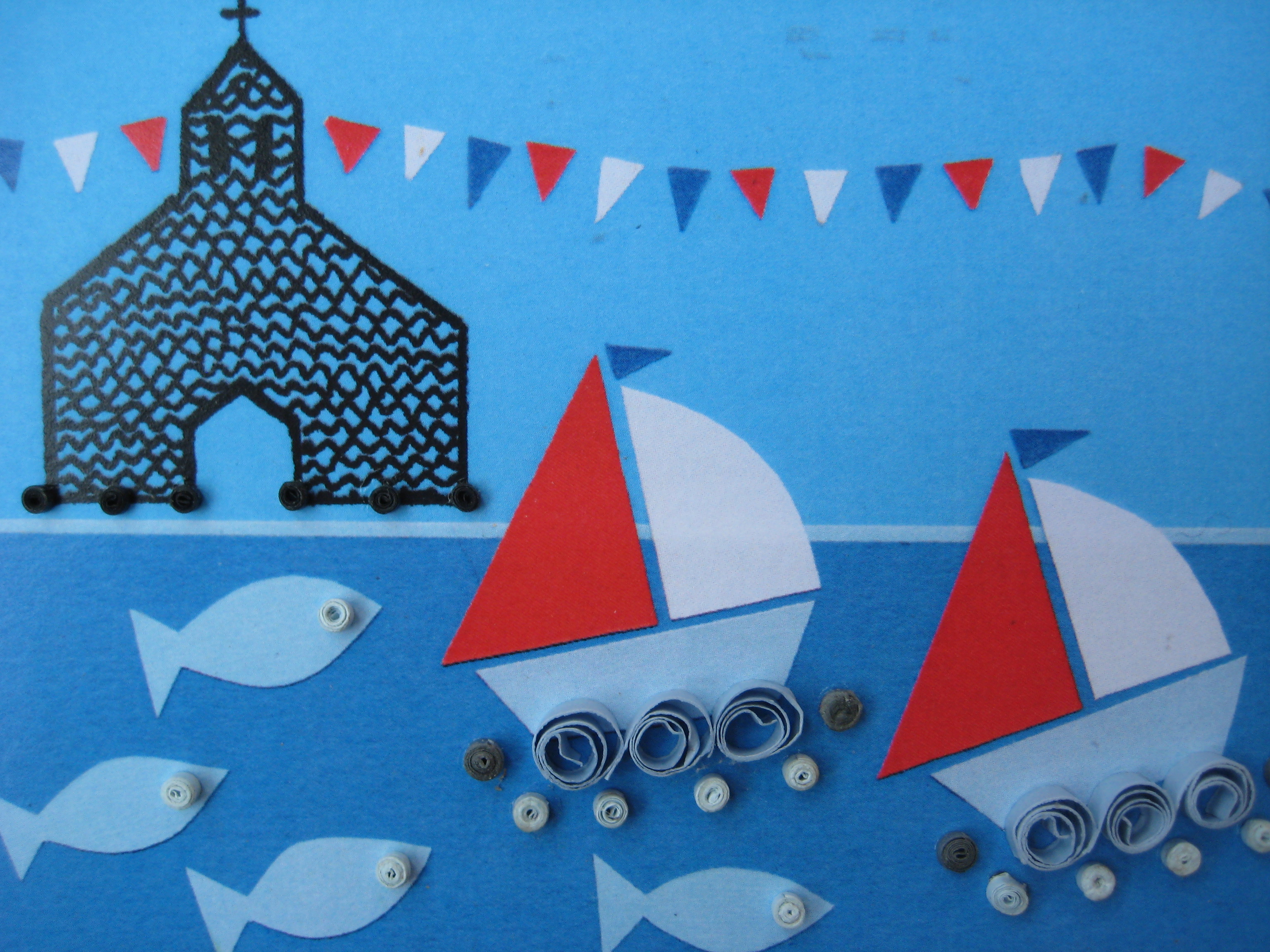
Dinas Regatta CardThe first Cwm-yr-Eglwys regatta took place in 1899 – planned in a hurry when  Newport decided to abandon its regatta for that year. There was much enthusiasm in the village and Dinas residents determined to put the Fishguard regatta in the shade; early plans included prizes for ‘the heaviest cartload of culm which can be brought up the hill from Pwllgwaelod by one horse’, donkey races and a prize for the ‘most ill-conditioned horse in the parish’ .. a contest that they thought would be keenly fought. In the end they decided on a slightly more conventional set of events.

The date for the first regatta at Cwm-yr-Eglwys was fixed for Thursday 24th August 1899 and the success of the event so exceeded expectations that it was decided to make it an annual affair.

In the ‘Aquatic Division’ the events included sailing races, rowing races, swimming races and a diving competition. The ‘Athletic Division’ included footraces, sack races, obstacle races, donkey races and a competition to see which donkey would go furthest out to sea.

There were prizes for all the winners and the fundraising was so successful that there was even a ‘balance in hand’ for the following year’s event.

The following year’s programme was even more ambitious:

  • Sailing
  • Two oared boats
  • Sculling
  • Tub race
  • Swimming
  • Diving
  • Obstacle racing
  • Wheel-barrow racing for committee members
  • Knitting a pair of gentleman’s plain stockings
  • Making a buttonhole in white linen
  • Darning a hole in a piece of flannel
  • Putting a patch on print
  • Best home-made walking stick
  • Best paper knife made in any wood
  • Best drawing of the ruins of the Church at Cwm-yr-Eglwys
  • Best bouquet of wild flowers gathered by Dinas children
  • Best fuchsia in pots
  • Best geraniums in pots
  • Best musk in pots
  • Best 12 pods of peas
  • Best 12 potatoes
  • Best white cabbage
  • Best six carrots – scarse or yellow
  • Best six leeks
  • Best recitation in Welsh or English
  • Best singing of ‘Hen Gwlad fy Nhaddau’
  • Best map of Australia (Dinas school children only)
  • Best hand-made tray cloth
  • Donkey race
  • Sack race
  • Best performing donkey.

The second regatta was accompanied by the Newport Town Band and was a success in spite of several heavy showers and rough weather. It was decided for the following year that the exhibition would be ‘on a very large scale’.

And the tradition continues. Make sure you are at Cwm-yr-Eglwys in 2015 for this event. The regatta usually takes place during the first week in August and the programme is launched with a Church service on the first Sunday of the month.
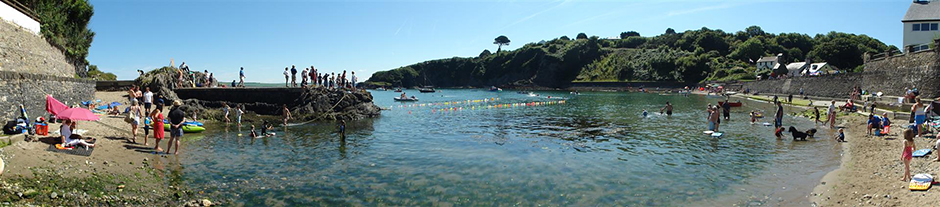
Cwm yr Eglwys regatta


Regatta cards by Charlotte Cowley Cards
For more information see ‘The News of Dinas 1894-1900’ transcribed from THE COUNTY ECHO by Anne and John Hughes in the ‘Dinas History Series’. This is an absolutely fascinating publication (unfortunately now out of print and sold out) that can be downloaded by clicking here countyechofinal. Contact Ann and John Hughes for information on their other publications – Phone 01348 811255.
Posted in Crafts, History, Sport | Tagged , , , , , , , , , , | 2 Comments

A treat for horse lovers

This year’s Grand National Favourite – TeaForThree – was trained just down the road from Tegfan, at Aber Fforest.

Riding from Rebecca Curtis' stables

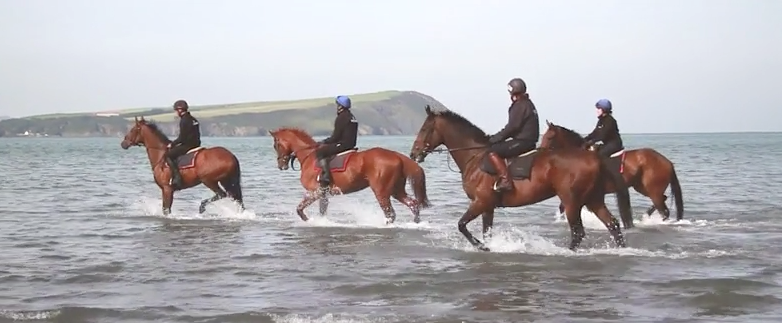
Horse-riding at AberFforestTegfan is very close to the racing stables of Rebecca Curtis who trains a string of horses at Fforest Farm, just off the A487 on the way to Newport, and we have seen the horses galloping early in the morning. She is clearly a gifted trainer, working in association with champion jockey – Tony McCoy – so if you are lucky you’ll be able to spot a future big-time winner.

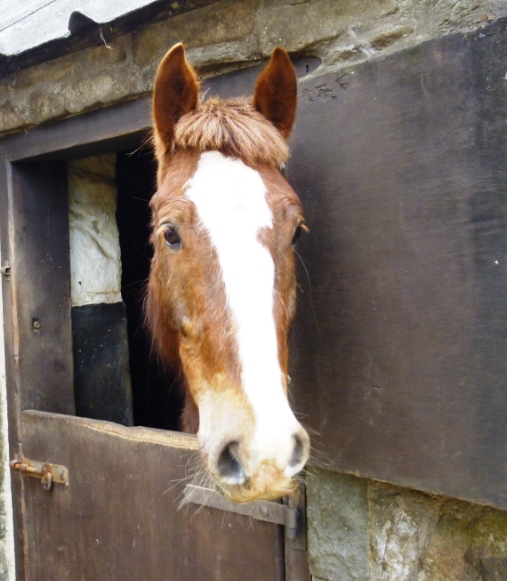
If visitors to Tegfan want to indulge in some leisurely hacking the horse pictured here on the left (and others) can be hired at the livery stables across the road from the racing stables.

Posted in Sea, Sport | Tagged , , , , , , , , | Leave a comment

Have a beach to yourself

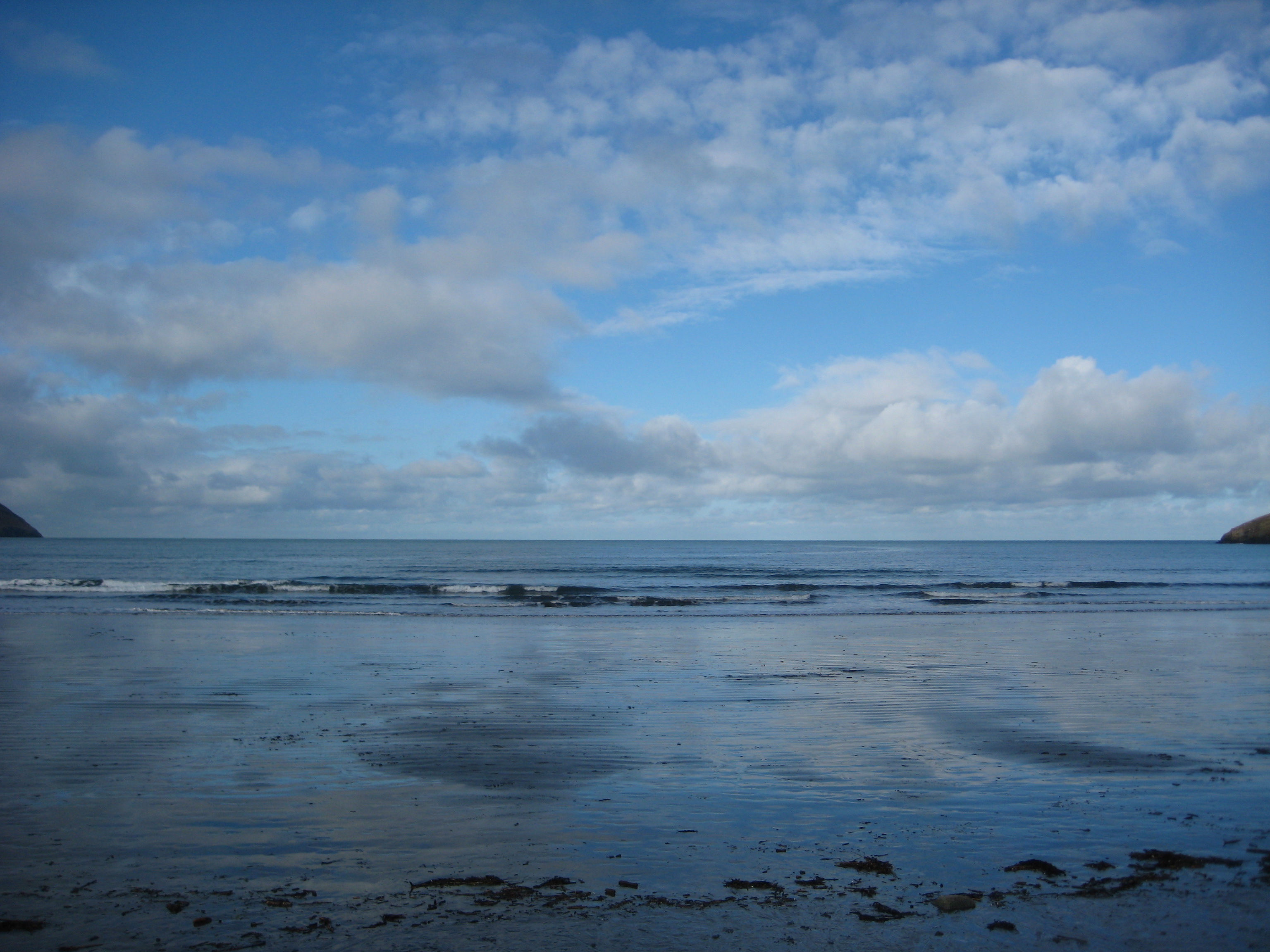
AberfforestThere are a number of beautiful beaches near Tegfan with no parking or easy road access. If you are prepared to walk a mile or two, you’ll discover that you are among a minority of holiday makers and you’ll be likely to find a beach to yourself. Amazing rewards for not much effort.

Posted in Nature, Sea, Walking | Tagged , , , , , , , , , | 1 Comment

Women without men (or Why Kiel House?)

There were so many women without men in Dinas in the 1890s that the local paper suggested that the village should have a policeman to keep an eye on all these vulnerable “lady residents whose husbands are engaged at sea”.* However, it was the sea that posed the biggest threat to these ladies, who otherwise seemed strong and capable and not unduly prey to criminal intent.

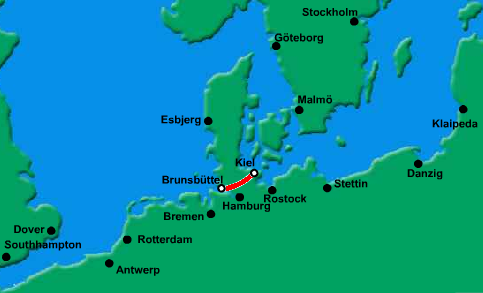
Kiel canalA life at sea was a dangerous life and too many men never returned. David Rees, of Smithfield, Dinas, had been 1st mate on a Newport Ship, the “Celynen” when he was drowned in 1898. According to the Welsh Mariners Index he died from a fall into the Kiel Canal, a recently completed short-cut linking the North Sea to the Baltic along the Northern coast of Germany.

Eleanor Rees had been married to David for only ten years when her mariner-husband was drowned. Her family wasn’t local but she stayed in Dinas after the tragedy, moved house and set up shop to support herself and her three young children. The shop was called Kiel House as a memorial.

 Kiel House, Dinas Cross

© Copyright ceridwen and licensed for reuse under this Creative Commons Licence.

Her two sons both followed in their father’s footsteps and eventually became master mariners – like so many of Dinas’ young men. Her daughter, Eliza Blodwen, who was aged nine at the time of her father’s death, eventually took over the shop and ran it with her husband, John Philip Howell.

Perhaps it was no coincidence that Blodwen and John Philip’s family histories had a tragic symmetry – both stricken by events that were determined by Dinas’ closeness to the sea. John Philip had been a child of 12 when his mother disappeared from their home at Hescwm Mill.

The story was eventually told in the Kemes Guardian: 8 Jan 1904

Disappearance at Dinas Cross.

From her home at Hescwm Mill Farm, Dinas Cross, overlooking one of the many coves on the Pembrokeshire coast, Mrs Martha Ann Howells, wife of Mr J. Howells, disappeared early on Monday morning week. After assisting her husband to load some young pigs into a cart for a neighbouring fair, she went from the house in the dark towards the garden, leaving her mother and a son of 12 indoors, and has not been seen or heard of since. She is tall, 38 years of age, and her outer clothing consisted of two shawls of Welsh flannel, tweed cap, and clogs. Search parties have scoured the vicinity of the farm and adjacent mountain, and emptied the mill pond, while the local fishermen and coastguards in boats have been grappling under the high cliff near the farm, but without result. Mrs Howells has been suffering from melancholia for some months.

Her clogs were found on the beach at Aberbach.

For Eleanor, Martha Ann’s mother, this presumed drowning marked the death of the last of her children, all five of whom died before her: two boys died early at sea and another in infancy; the other daughter died when she was about 14 and finally the tragedy of Martha with whom she had been living at the time.

I don’t remember the Howells, who must have been shop keepers at Kiel House when I was a child. Kiel House has always struck me as a sunny place. It saved Eleanor Rees from destitution and I hope it brought happiness to Blodwen and John Philip after the tragedies of their childhood.

Kiel House is now for sale. Click here to find out more about this wonderful shop. I wish the new owners business success and every happiness.

 *See  ‘The news of Dinas 1894-1900 transcribed from The County Echo by Ann and John Hughes ‘ published in the Dinas History Series 2012.
This is an absolutely fascinating publication and copies can be obtained from Ann and John Hughes. Phone 01348 811255 for information and hurry because there aren’t many copies left!
Posted in Farming, History, Sea | Tagged , , , , , , , , , , , , | 6 Comments

Who are these people?

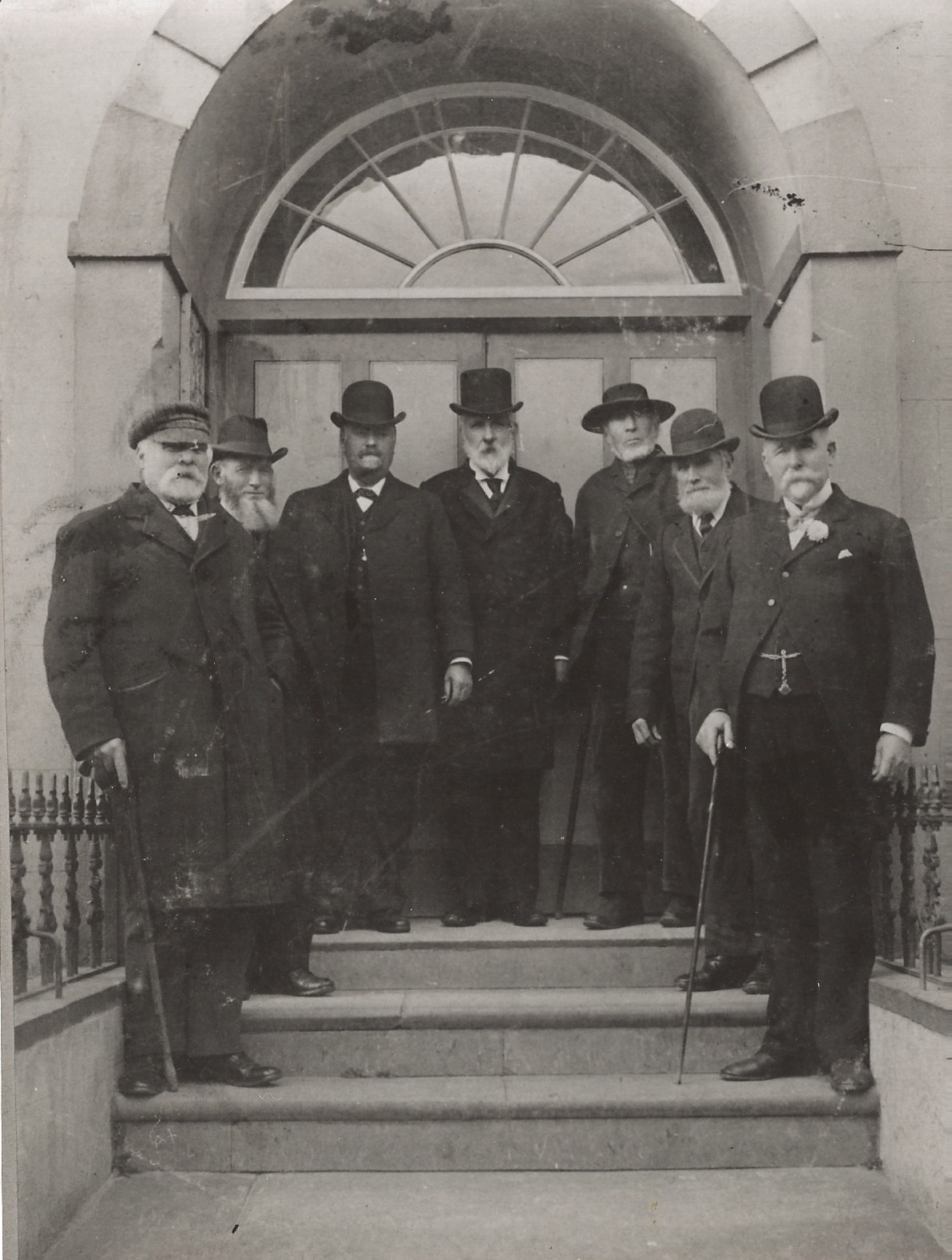
Deacons of Tabor Baptist Chapel, Dinas Cross, c1900Can you help us identify the people in this photo?

These men were deacons of Tabor Baptist Chapel, Dinas Cross, Pembrokeshire, and the photo was probably taken in the early years of the twentieth century. I know that Stephen George stands second from the left. I think that the Minister, Revd J W Maurice, stands in the centre. Does anyone know any of the others?

Posted in History, Religion, Welsh language | Tagged , , , , , , , | 4 Comments

Even better than John Lewis

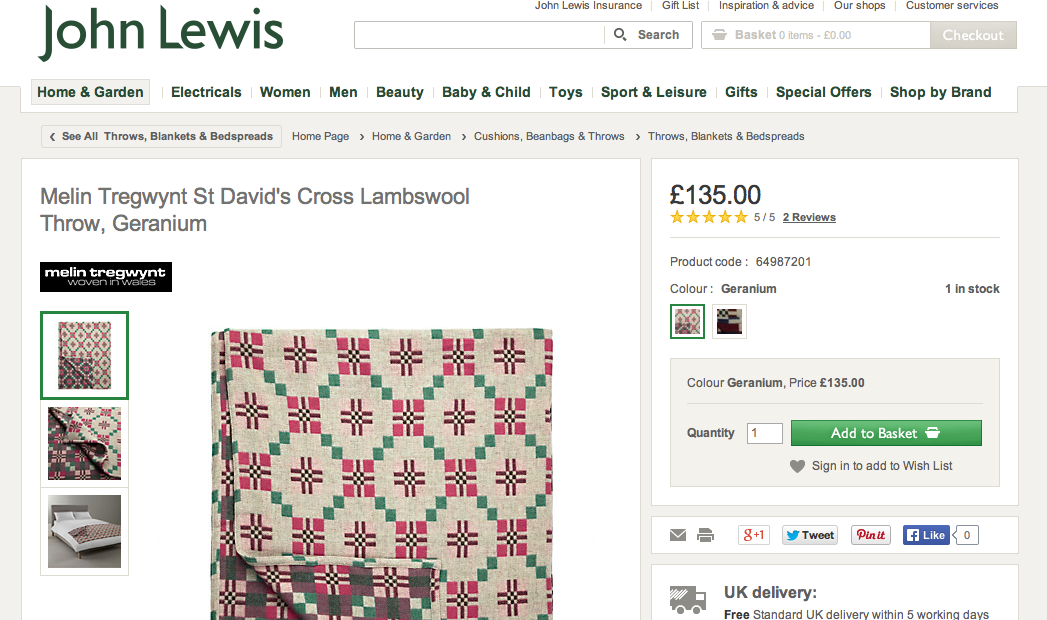
You could buy this quality ‘lambswool throw’ on-line from John Lewis and take it on trust that the colours are stunningly beautiful and that it is soft to touch.

Melin Tregwyn throw from John Lewis


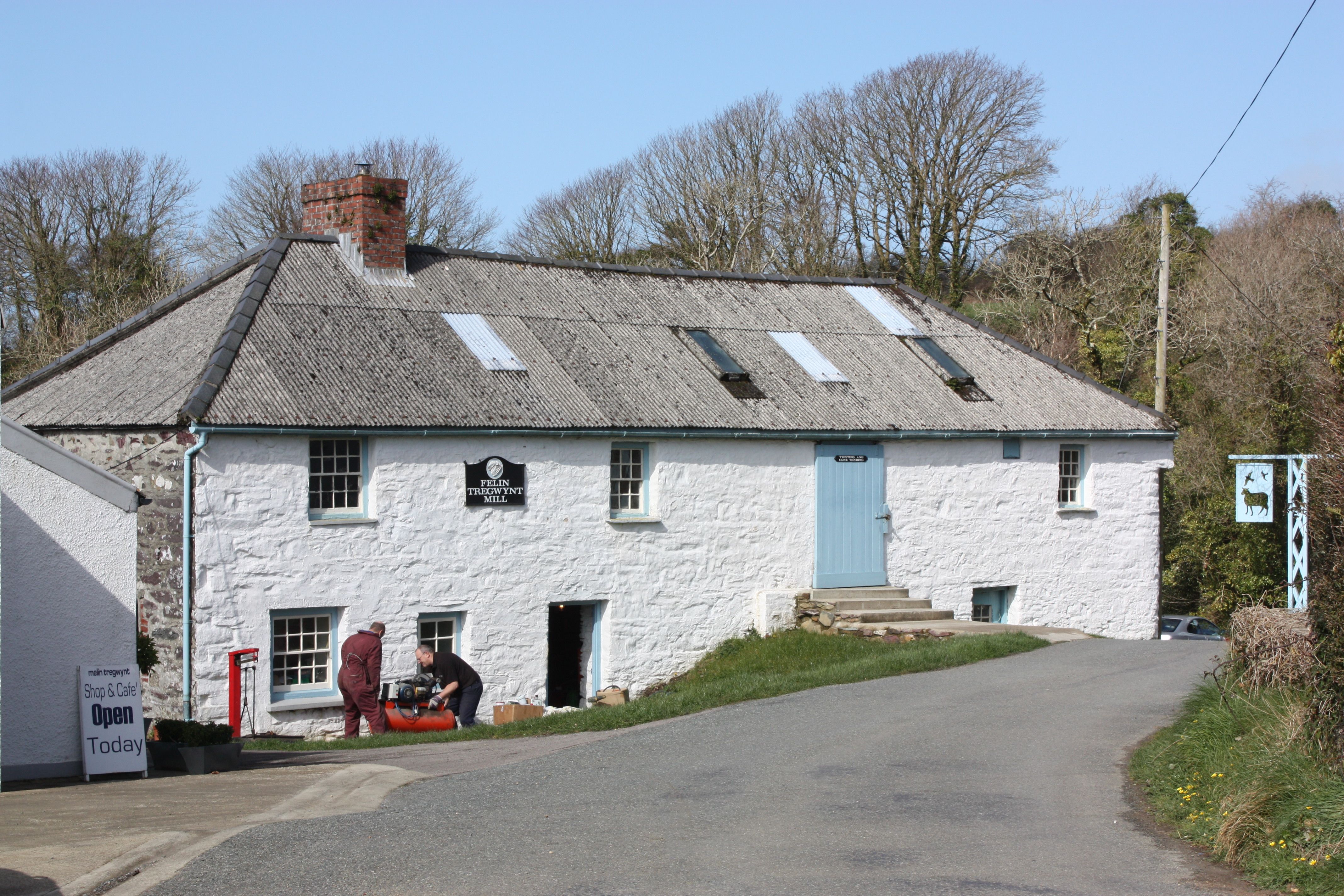
Tegfan visitors, however, are within easy reach of Melin Tregwynt where they can see the cloth being woven, feel the quality for themselves and be dazzled by the wonderful choice of colours and patterns in the mill shop.

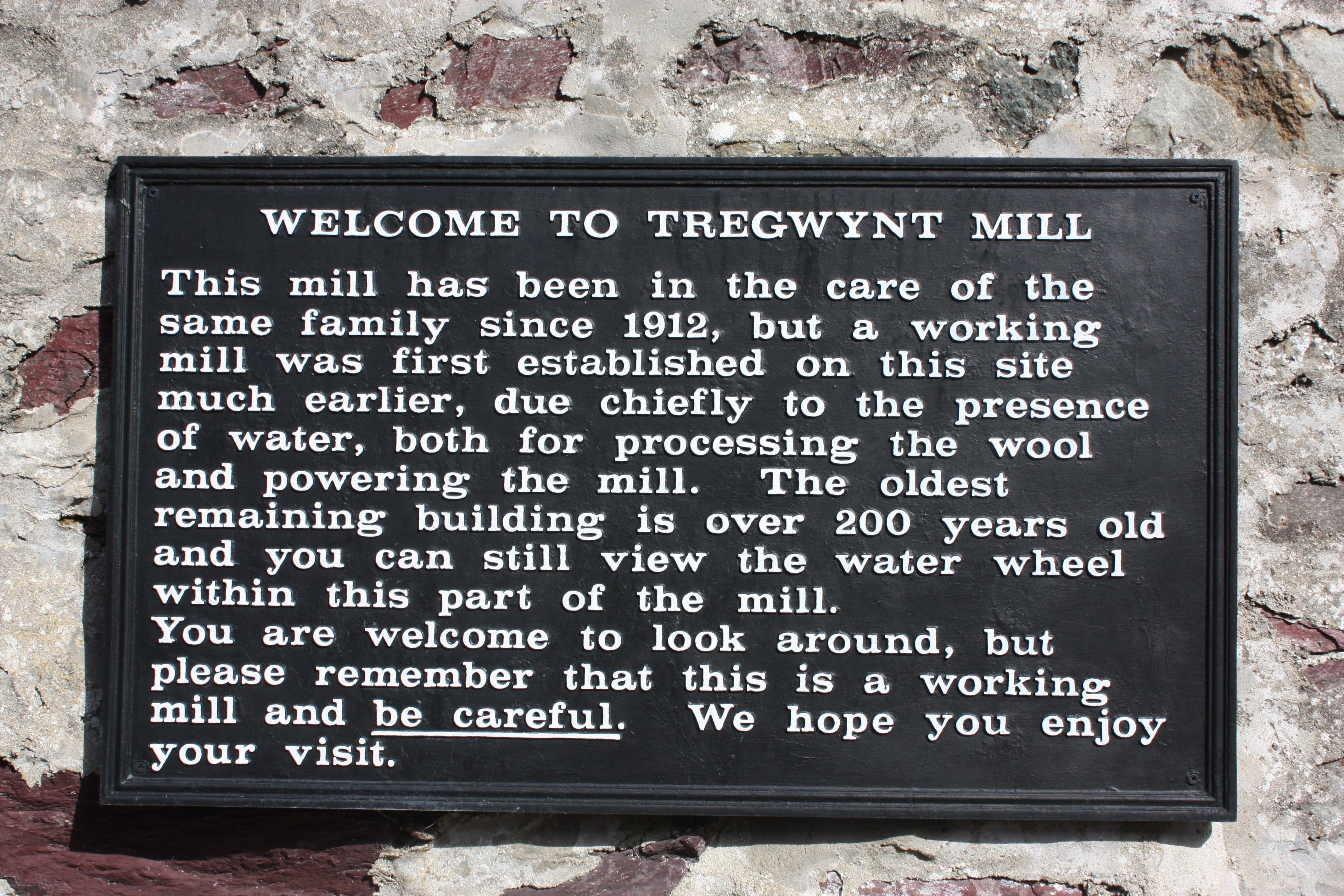
A visit to the mill is free

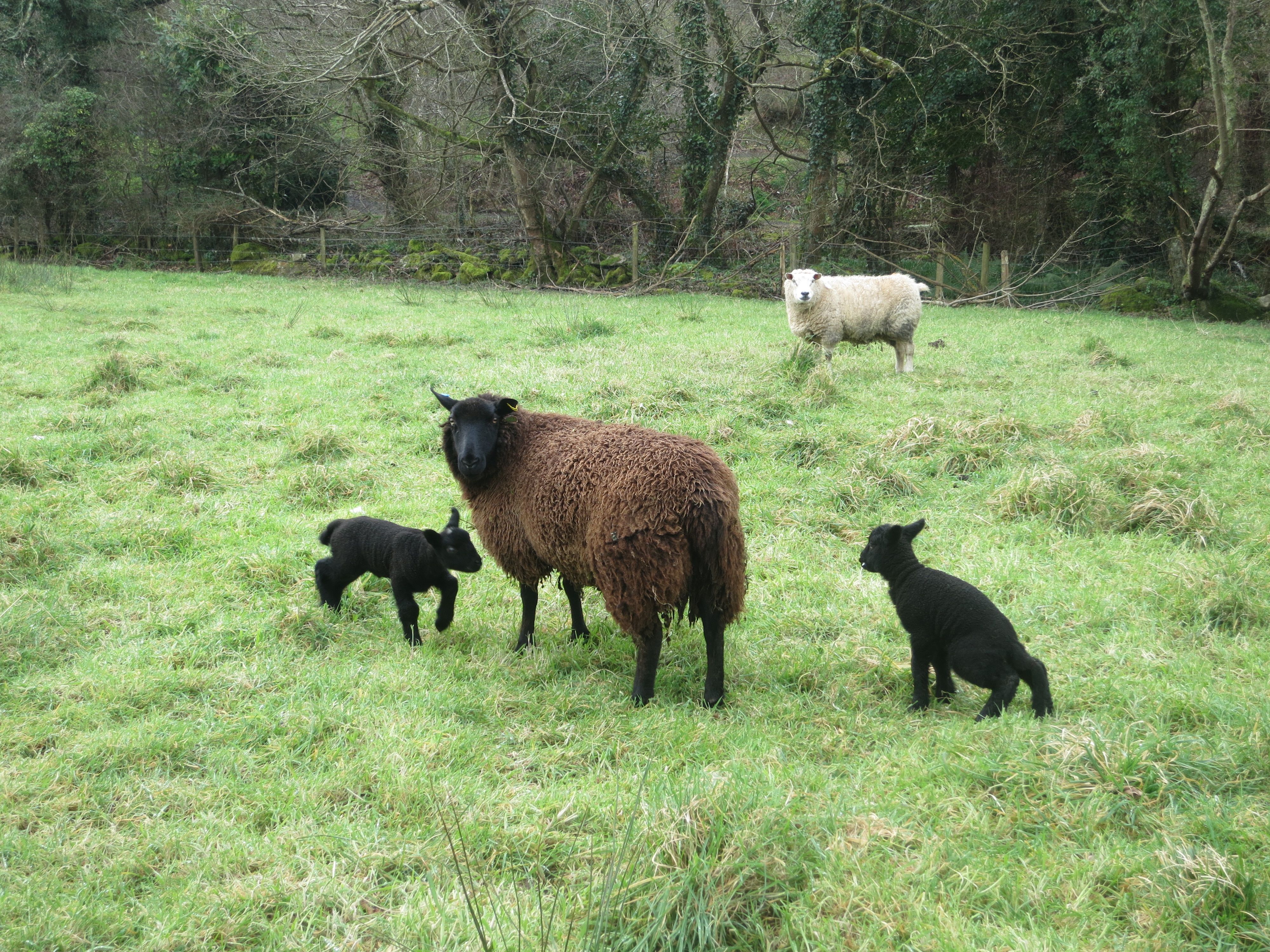
Tregwynt Mill and will give you a chance to see their sheep,

Lambs at Melin Tregwynt

the stream that powered the water wheel,

the weaving shed

and an Aladdin’s cave of woven riches in the mill shop.

Melin Tregwynt

With thanks to Jane and Megan Snape who took these lovely photos on their recent visit to Tegfan

There’s even a cafe where you can combine refreshment with surreptitious glances at your purchases .

Posted in Crafts, History, Wildlife | Tagged , , , , , , | Leave a comment

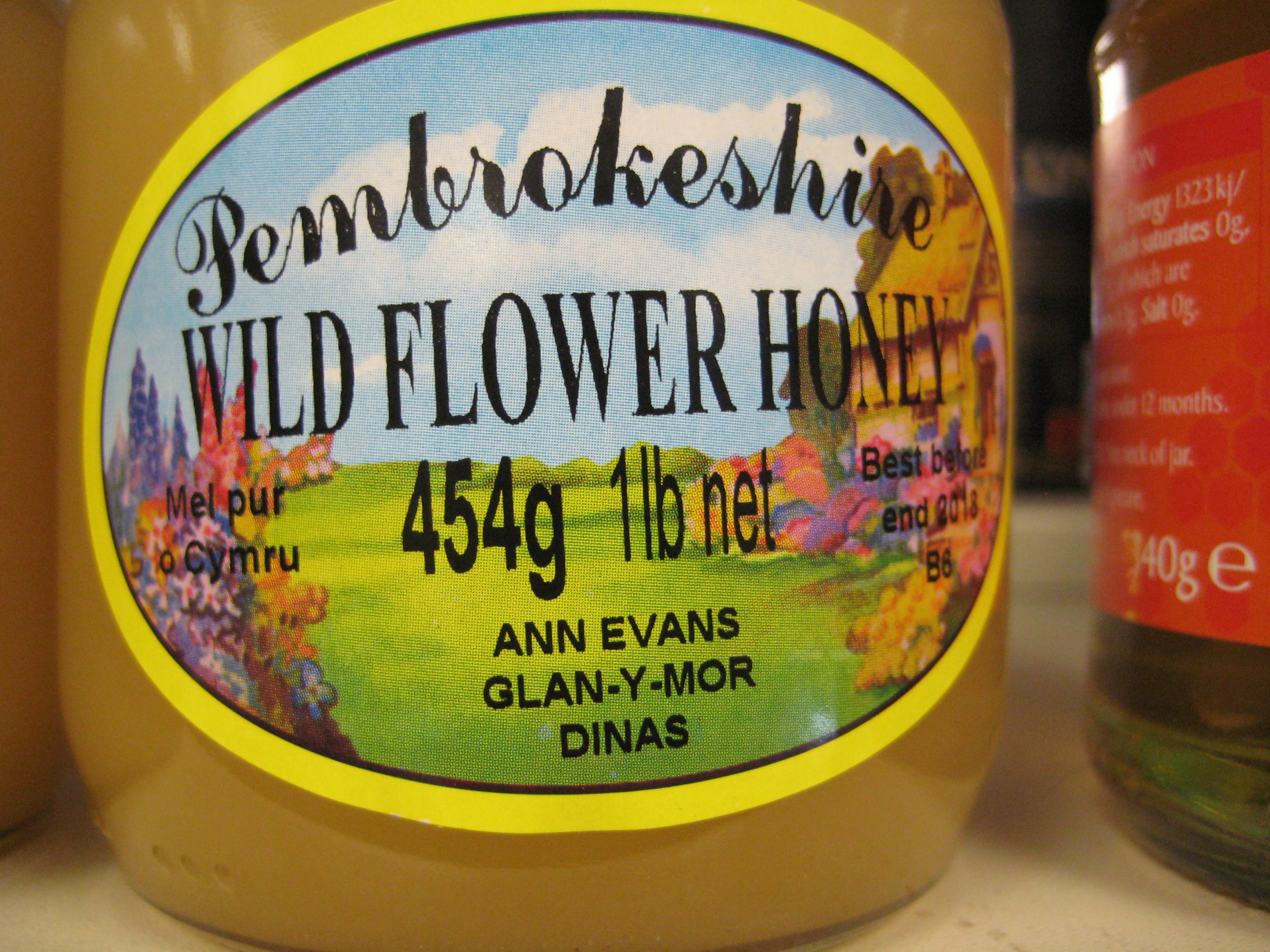
Buy local and delicious

Dinas honey

Dinas honey

Posted in Farming, Food, Nature, Wildlife | Tagged , , , , , , | 1 Comment

I was a child vandal

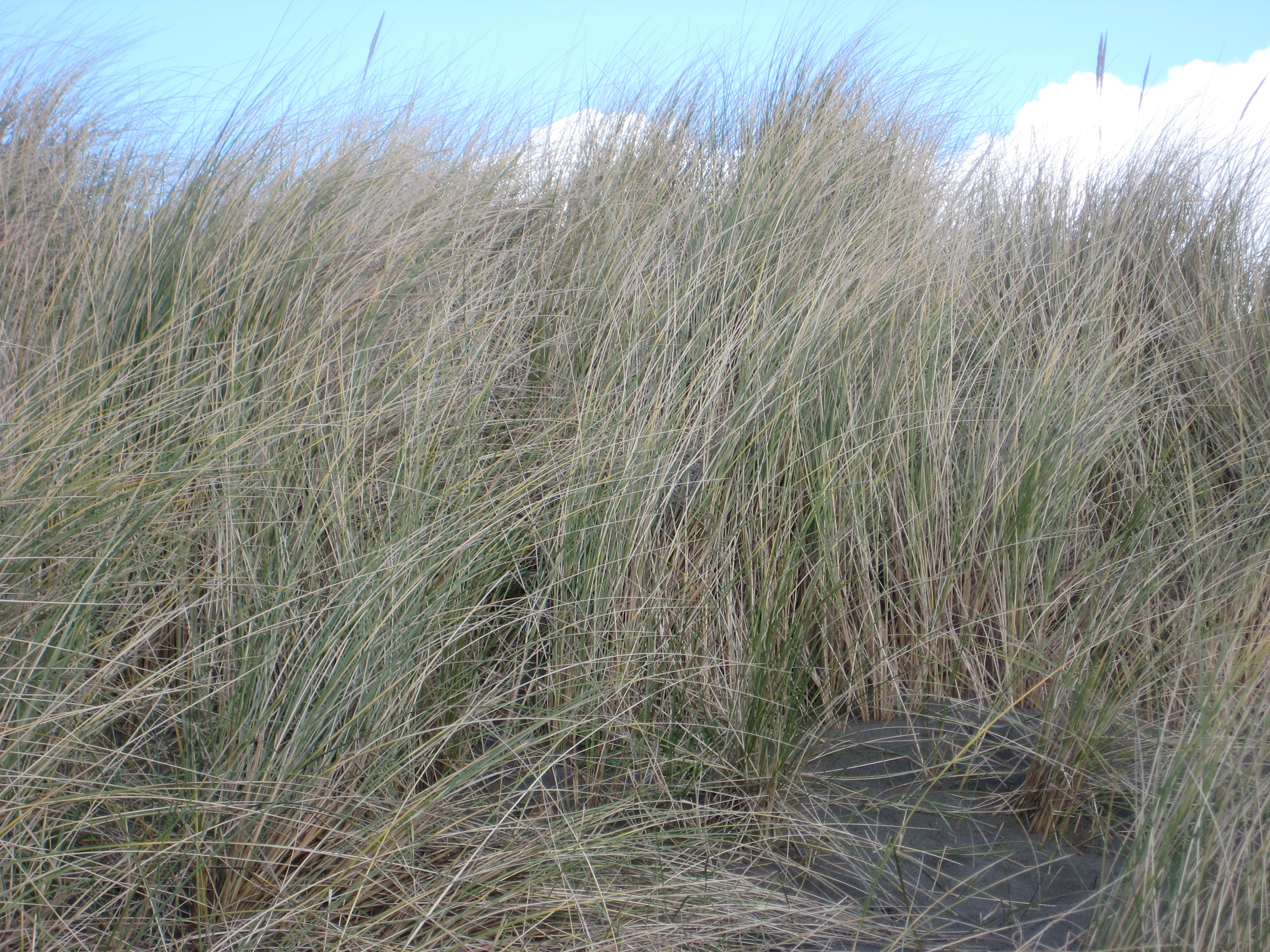
Marram Grass at Newport SandsI’m confessing to having played a part in destroying the dunes at Newport. As children we slid down into the hollows, we tunnelled dangerously deep into the sand and we raced heedlessly to get lost in the dips and the tall grass. We had a fantastic time on the beach. This did the dunes no good at all and we didn’t give it a second thought.

Rush mat making with marram grass

Fortunately the National Park rangers stepped in before destruction was complete. The dunes were fenced off and planted with marram grass and they are now beautiful again and tough enough for me to walk carefully through this amazing landscape.

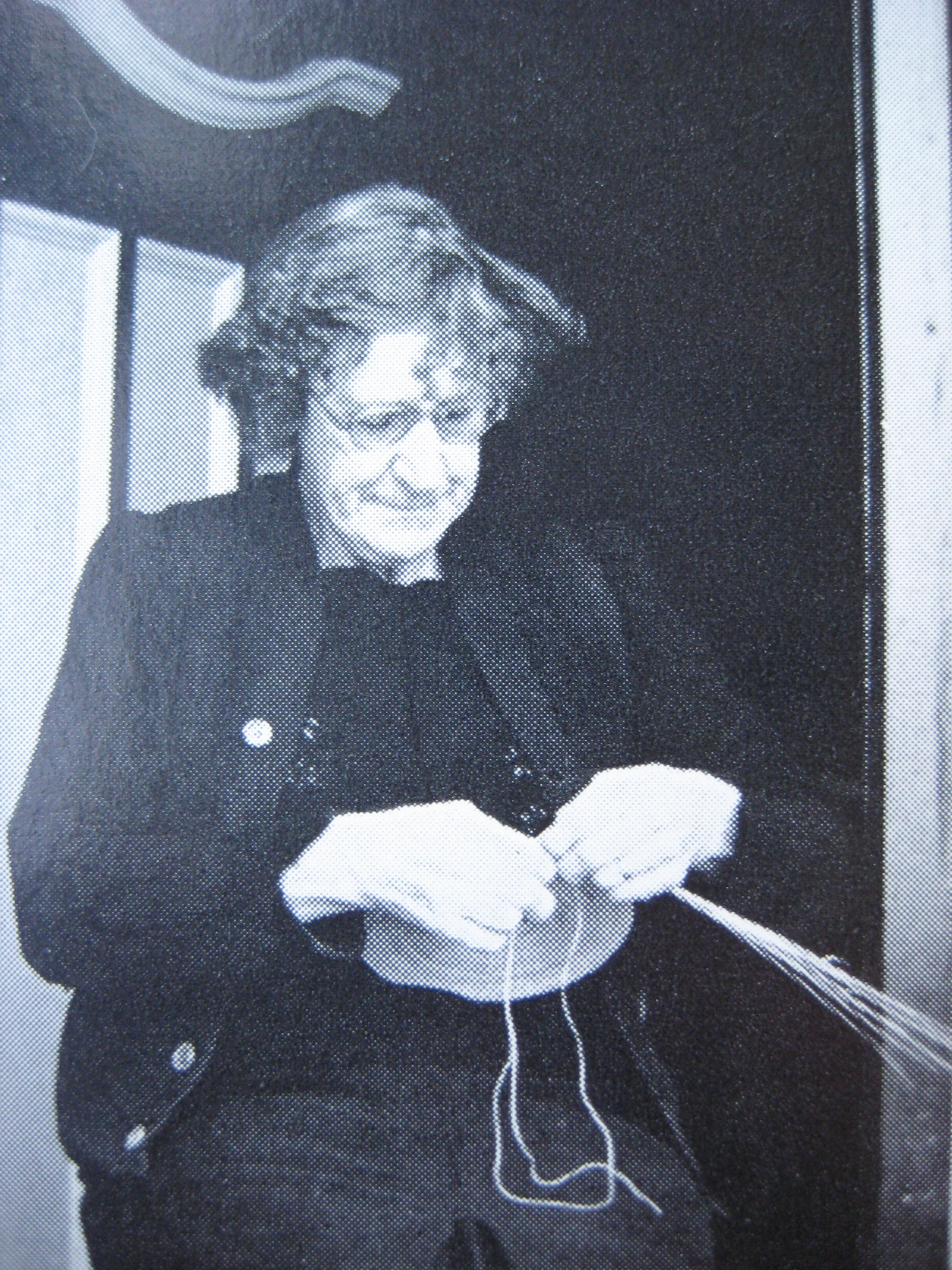
Marram grass played a part in the economy of poor families in North West Wales and the mat weaver in this photo lived in Newborough. This area, known as ‘the most miserable spot in Anglesey’ in the mid-nineteenth century had a traditional monopoly of the trade because if a girl hadn’t learnt the craft before the age of 14 she never got quick or skilled enough to make mats for sale. While the men were farm workers on poverty wages the women supplemented the family income by cutting marram grass from the dunes and plaiting it to make mats for haystacks.  The mats had to be 3 yards long by one yard wide and farmers used them to protect their hay until the stacks were complete and thatched. The mat makers exchanged completed mats for provisions at the grocers or the butchers and these tradesmen sold them to the farmers in early summer. Corrugated iron didn’t do the job as well because the hay sweated underneath, but it marked the beginning of the end for the marram weavers.

For more information on marram grass weaving see ‘The Craft Industries’ (Industrial Archaeology Series) by Geraint Jenkins
Posted in Crafts, History, Nature, Wildlife | Tagged , , , , , , , , , , | 1 Comment

Welsh Ships and Sailing Men

I have bought this delightful book and shall be adding it our collection. What a treat! Just the thought of it sitting expectantly on our shelves, should tempt you down to Tegfan to read it. J Geraint Jenkins, who was born in Llangrannog, Cardiganshire (a few miles along the coast from Dinas) came from a sea-faring family and spent much of his life in historical examination of Wales’ 600 mile-long coastline.  He wrote in his autobiography:

Salt water flows through my veins, as it did in many of my ancestors’, though unlike them I have expressed it not by sailing to distant parts but in my books.

This better-than-a-guidebook is divided into 50 short chapters and covers all the small coastal settlements around Dinas and beyond. The pages on Fishguard explain why, in spite of sporadic ambition to become a starting point for transatlantic travel, the port has never prospered as hoped. The chapter on Newport surprises with its account of the port’s history of ship building and the enormous number of pubs required to fuel the coastal trade. Our tiny local beaches, Cwm-yr-Eglwys and Pwllgwaelod, are elevated in status to ports in their own right.

I shall be looking out for J Geraint Jenkins’ other books. In a busy professional life as keeper and curator of museum collections in Wales and subsequent involvement in politics in Ceredigion, he still found time to write over 50 historical studies of Welsh life. In addition to his seafaring books

  • The Welsh Woollen Industry (1969) arose from his interest in the woollen mills of West Wales
  • Life and Tradition in Rural Wales (1976), was written when he was the editor of the magazine ‘Folk Life’
  • Morwr Tir Sych (“Dry land sailor”, 2007) is his autobiography.
Posted in books, Crafts, History, Sea, Welsh language | Tagged , , , , , , , , , , | Leave a comment

Dry Stone Walls

IMG_3866

Dinas has miles of beautiful old stone walls and even some relatively new ones. My favourite old walls are up the mountain where they are host to the vegetation that causes their eventual disintegration – and a richness of wildlife.

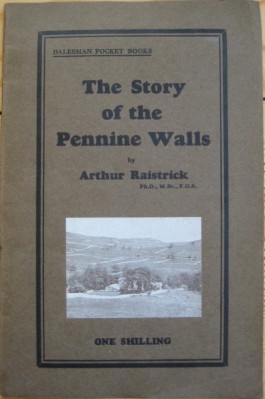
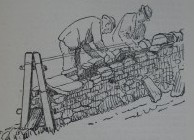
The Story of the Pennine WallsThe ancient craft of making a dry stone wall has a mystique of its own and I love the way that experts describe the process. Arthur Raistrick‘s slim little book, ‘The Story of the Pennine Walls’ is both scholarly and practical. The author’s knowledge is exhaustive but lightly worn; in twenty-six pages he ranges from  the history of land enclosure in the Pennines to the building of the walls and the lives of the masons. It was published for one shilling in 1946. Here is one of his illustrations.

Building a dry stone wall

If you would like colour and sound, click here for another master of the craft talking about his work.

I am curious to know if the Dinas walls ever looked as beautiful as these. Many of the walls up the mountain look more like heaps of stones, thrown aside when the fields were cleared, rather than a wall constructed by a mason. Is that what plant life can do to the structure or was the land too poor to warrant hiring a specialist?

Posted in books, Farming, History, Nature, Wildlife | Tagged , , , , , | 2 Comments

The Pembrokeshire Coast Path in Spring

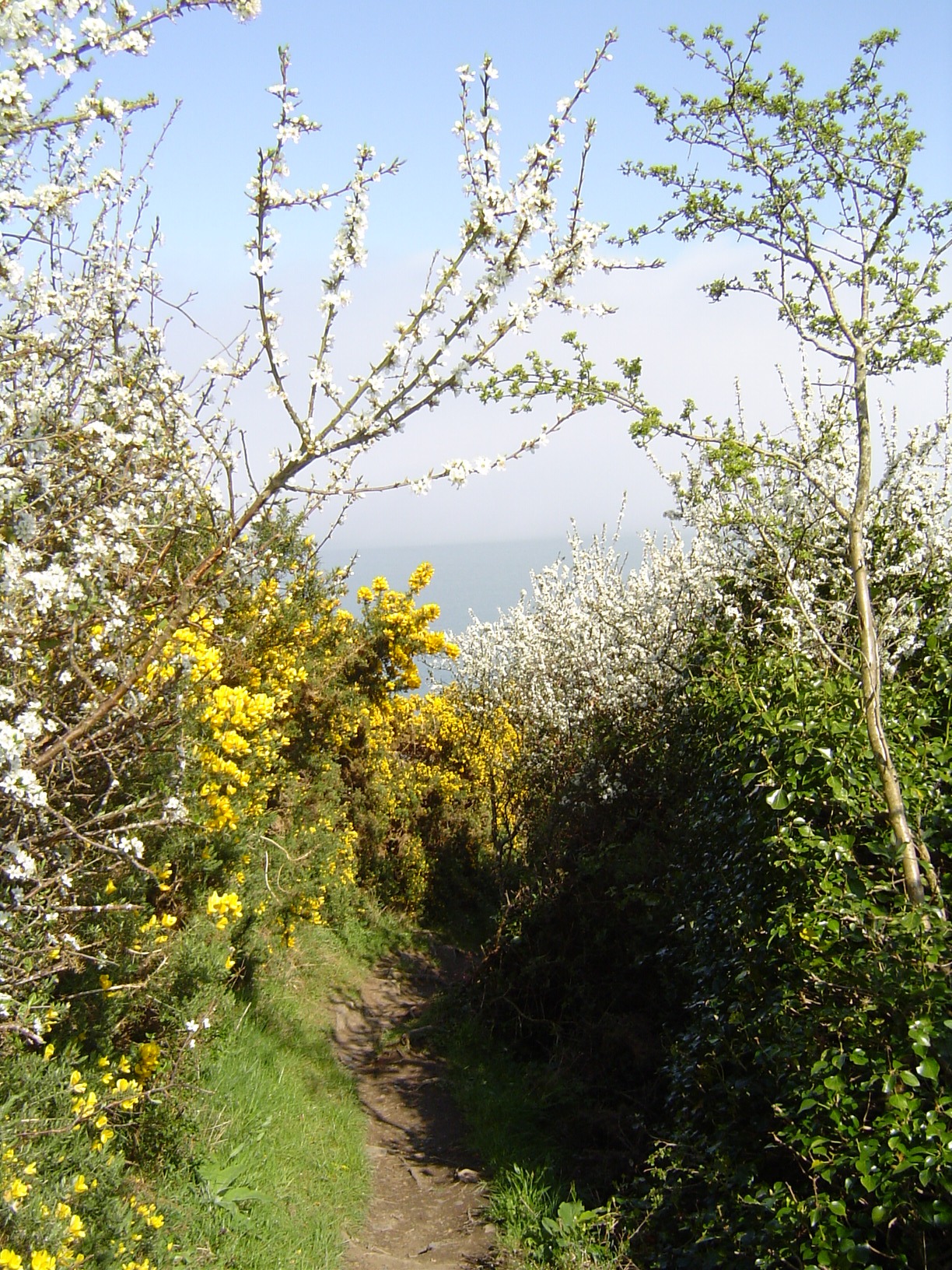
Coastal path Dinas

Tegfan is within a few hundred yards of the coast path, which provides wonderful walking at any time of the year. The scenery, the flowers, the sky and the sea change from month to month to enchant and delight.

It was recognition of Pembrokeshire’s spectacular coastline that led to the establishment of the National Park in 1952, and the path was planned so that the public could enjoy the dramatic landscape. Ronald Lockley, author and naturalist, who farmed on Dinas Island during the second World War, was asked to recommend a route for the new path and, inspite of his reluctance to allow the public too close to precious bird nesting sites, a cliff-top route was approved  by the Countryside Commission in 1953.

Once the path had been planned on paper it was the job of the Pembrokeshire County Council surveyors at Crymych to walk the route, check its viability on the ground and to negotiate with the farmers who owned the land. From 1957 onwards, one of the cartographers responsible for the work was the Dinas potter, Len Rees, who had been languishing with the Ordnance Survey in Chessington and couldn’t believe his luck when a colleague showed him a vacancy for a Welsh speaker in the Council’s surveying department  in Crymych.

It was to take seventeen years for the coast path to be completed, with 100 footbridges and  500 stiles over its 200 mile length.

It was opened with a fanfare in 1970.

Posted in History, Nature, Sea, Walking, Wildlife | Tagged , , , , , , , | Leave a comment

The Great Storm of 1859

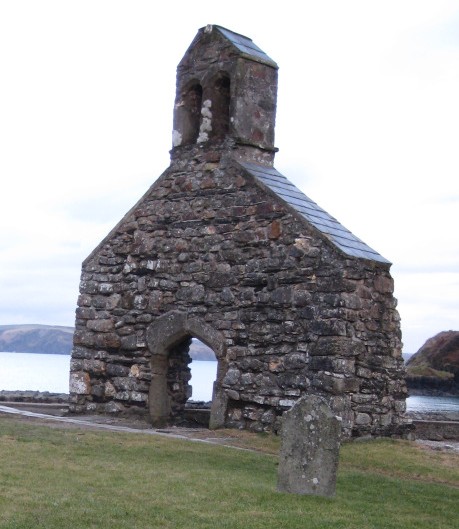
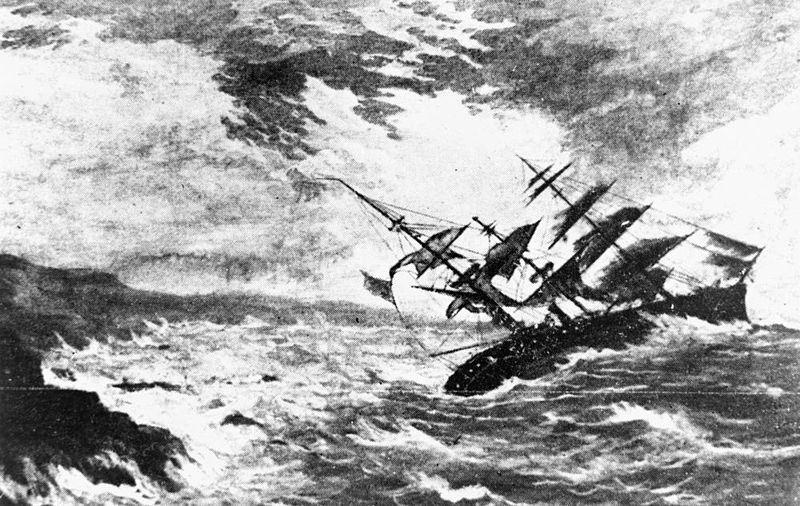
St Brynach's Church 2Now that we have seen the TV pictures of the storms battering the SW coast in the winter of 2013/2014, we can begin to imagine the strength of the Royal Charter Storm, the most powerful storm  in the Irish Sea of the 19th century.  St Brynach’s Church in Cwm yr Eglwys was destroyed by the hurricane force winds (storm force 12) that blew for 15 hours between 25th and 26th October 1859. The roof was blown off the church and with huge waves, over 50ft in height, and wind speeds of over 100mph, 133 ships were sunk, 90 ships were badly damaged and over 800 lives were lost.

At least two ships were wrecked on Dinas Head.

  • The Swansea Trader, a 45′ wooden smackwas carrying a cargo of roofing slate when it was blown onto the rocks and wrecked during the great storm.
  • The Mathildis, a 70′ wooden schooner with two masts, was carrying a cargo of culm when it was wrecked. The crew of six lost their lives.

Eight bodies were subsequently washed ashore or recovered from the cliffs. Two burials are recorded in the Dinas Burial register for 30th October – ‘Unknown drowned in a shipwreck during a terrific gale Oct 25th 1859. Abode, both Cardiganish as supposed’. –

See more at: http://www.peoplescollectionwales.co.uk/items/4719#sthash.glaeyYaM.dpuf

Royal Charter

Royal Charter

The Storm came to be known as ‘The Royal Charter Storm’. The Royal Charter, a clipper with auxiliary steam engines and an iron hull, was returning to Liverpool from Australia when she went down off Anglesey with the loss of over 450 lives. The gold bullion in the cargo and the personal gold carried by a number of the passengers is said to have enriched some of the local families in the vicinity of Porth Alerth beach.

THE GALE OF LAST WEEK. (From the Liverpool Telegraph) We believe we speak without exaggeration when we say that the 25th and 26th of October has engraved a melancholy line in the annals of maritime disasters. For the time the gale lasted it was, perhaps, the most destructive of any storm since the beginning of this century, the loss of vessels and life being most appalling whilst its devastating fury continued. We speak in re- ference to those whose fate is beyond conjecture, but, to swell the total, numbers of unfortunate craft have foundered with their crews, leaving only floating fragments for the mind to guess at a fate not to be revealed in time. The actual loss to the shipping intereat on the 25th and 26th of October, 1859, is beyond all conception, and perhaps without parallel within living recollection.

(From The Pembrokeshire Herald and General Advertiser 11th November 1859)

As a result of these tragedies, arrangements were made for the newly established Meteorological Office to use the electric telegraph to warn of storms in British waters.

http://www.weatheronline.co.uk/reports/philip-eden/The-Royal-Charter-storm.htm

Posted in History, Sea | Tagged , , , , , , | Leave a comment