We’re in a Megafauna Hotspot

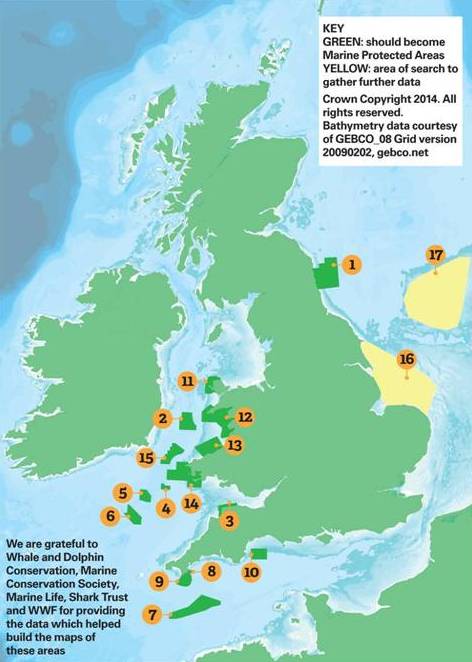
Megafauna hotspotsThe Wildlife Trusts are proposing that The Cardigan Bay area and the ‘Pembrokeshire Marine’ should be designated ‘reserves’ for the harbour porpoises that are often seen in the area.

According to Sea Trust volunteers, Strumble Head attracts very large numbers of porpoises, including mothers with calves all year round. Apart from porpoises, several other cetacean species have been recorded. Rissos are seen several times a year particularly around the Christmas period, while other occasional visitors include basking sharks and sunfish. Fin, humpback , minke whale and orca have also all been recorded. Bottlenose dolphins can be see further to the north but are not often spotted at Strumble Head.

We have seen  these marine mammals when staying in Dinas and we are reminded by wildlife organisations to be alert to strandings.

Posted in Nature, Sea, Wildlife | Tagged , , , , | Leave a comment

Come to Dinas to see the real thing


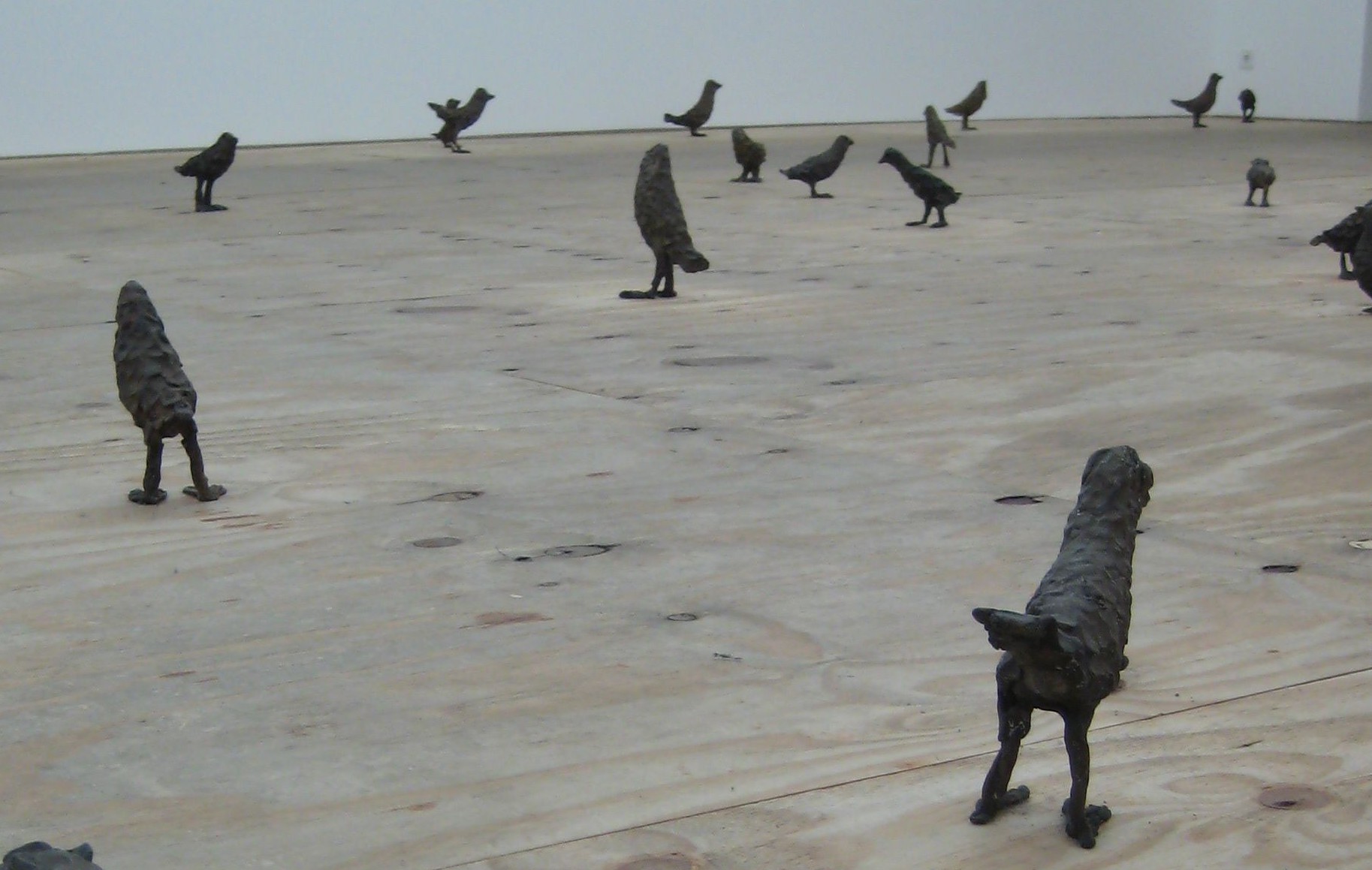
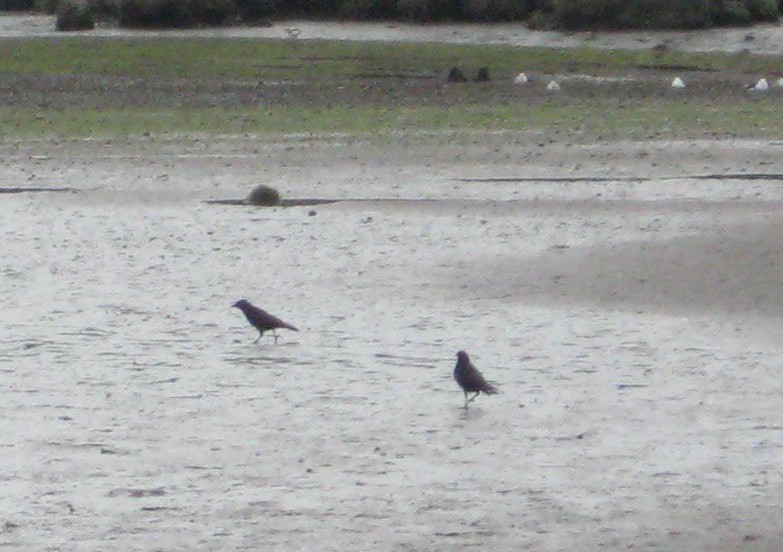
Bronze birds by Ugo Rondinone 2We saw these birds by Ugo Rondinone in Berlin’s Hamburger Bahnhof earlier in the year. A few months later, the memory of the gallery installation worked to make the ordinary birds on the murky Newport river mud a joyous sight.

Crows in Nevern Estuary Newport

Posted in Art, Nature, Wildlife | Tagged , , , , , , , , | Leave a comment

Do you remember your classmates from primary school?

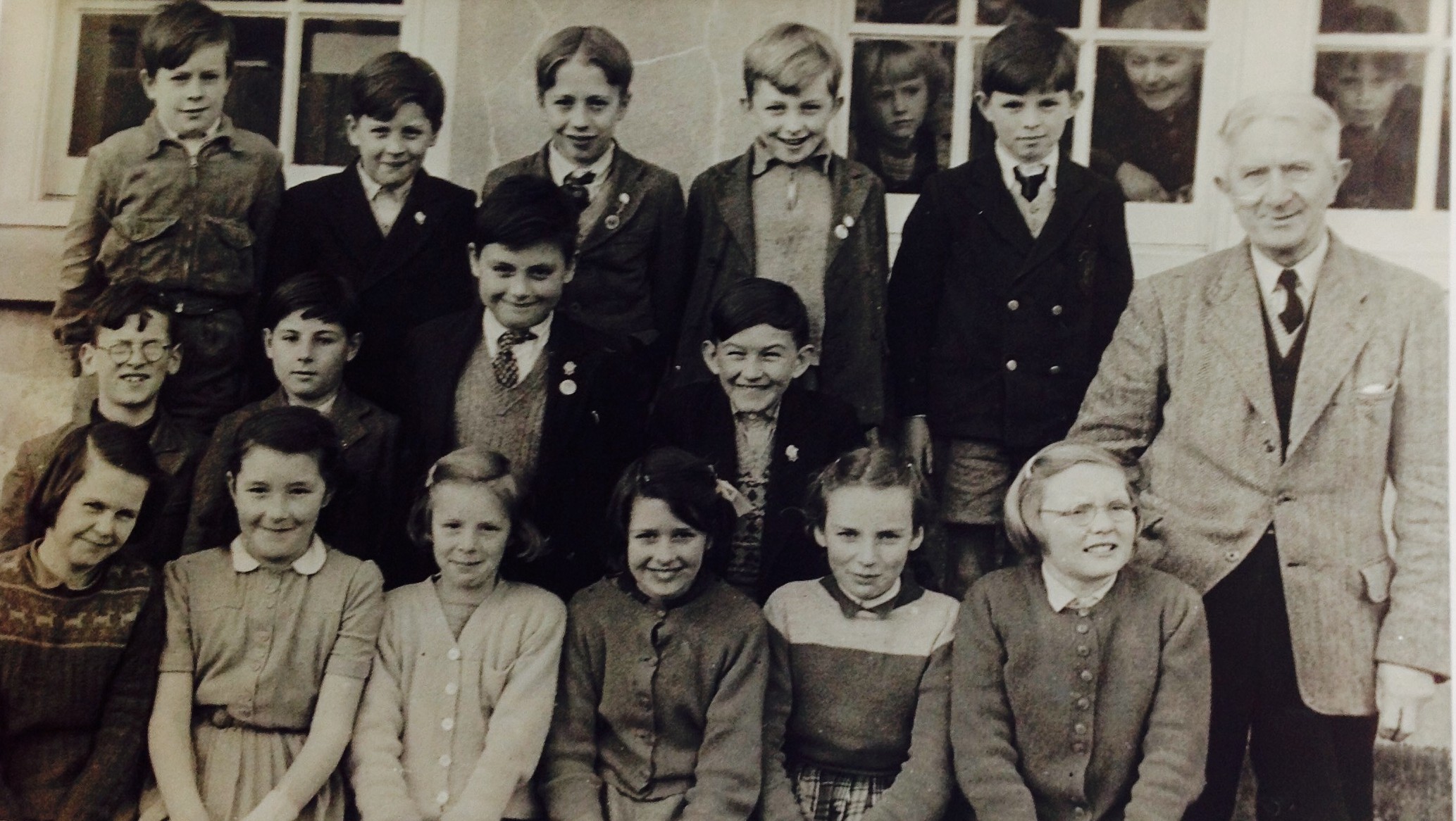
Class 3 Dinas County Primary School

I love this photo of class 3, Dinas Primary School c 1953, and can give you the names of everyone in the class, including the four children who were absent on the day.

Back row, from the left: David Stephens, Ken Davies, James Davies, Walter Mathias, John Spedding.
Middle row, from the left: Keith Thomas, Brian Williams, John Harries, John Williams, Mr D T Lewis (form master).
Front row, from the left: Grace Williams, Jeanette Lewis, Janice Davies, Pat Owen, Sylvia Harries, Mair Davies.
In the same class but missing from the photo: Margaret Rowlands, Mefus Williams, Ann Richards, Audrey Williams.

Interestingly, the majority of these children have stayed within five miles of Dinas for most of their adult lives. Three moved to Haverfordwest (20 miles away) and, as far as I know, only one has moved out of Wales to England.

This little class produced at least two  athletes, one of whom represented Wales in the Commonwealth Games and the other played for Llanelli RFC,  at least five teachers, a mechanic, a builder, two bankers, a railway worker, a pub landlady and a gifted musician. And, in spite of diligent enquiry,  there are still some of these pupils that I know nothing about.

What makes this photo special for me are the shadowy figures from the Infants class, looking out of the window at the photographer in the playground. There, in the middle, is Miss Mary Perkins who had been at the school so long that she had probably taught the parents of most of the children in the picture. On her right is Janet Willoughby (whose English name can be explained by the fact that her family arrived in Dinas, having fled the floods in the East of England) and on her left is Bobby Smith, whose mother ran the booking for the village tennis court until recently.

Were you in Dinas Primary school in the 1950s? Can you share any of your memories. I’d love to hear from you.

Posted in History, Sport | Tagged , , , , , , , , , | 6 Comments

Hedd Wyn (Blessed Peace)

In our Christmas 2014 exchange of letters, Gill (an old friend from Abergavenny)  and I both wrote about films we had seen during the past year. Her chosen film was Hedd Wyn and she has inspired me to search it out to view. The film is based on the life of poet Ellis Evans who was awarded the chair at the National Eisteddfod in 1917. I’m sure Gill won’t mind my quoting her here:

In January we were mindful of the commemoration of the 1914-1918 war beginning and as an alternative we invited friends and the local church groups to a showing of the movie ‘Hedd Wyn’. This is a Welsh film with English sub-titles which portrayed the reality of the war on a small Welsh farming community. We first saw this movie when it was premiered in the Seattle Film Festival in the early 1990s. It was as well received there as it was in our small gathering – a depiction of a Welsh sheep farmer’s son and poet being conscripted to join up and who soon after died at Passchendaele.

Hedd Wyn posterThis was the first Welsh language film to be nominated for an Academy Award.   


Posted in Farming, History, Religion, Welsh language | Tagged , , , , , | Leave a comment

And the rain descended, and the floods came, and the winds blew, and beat upon that house; and it fell not: for it was founded upon a rock.

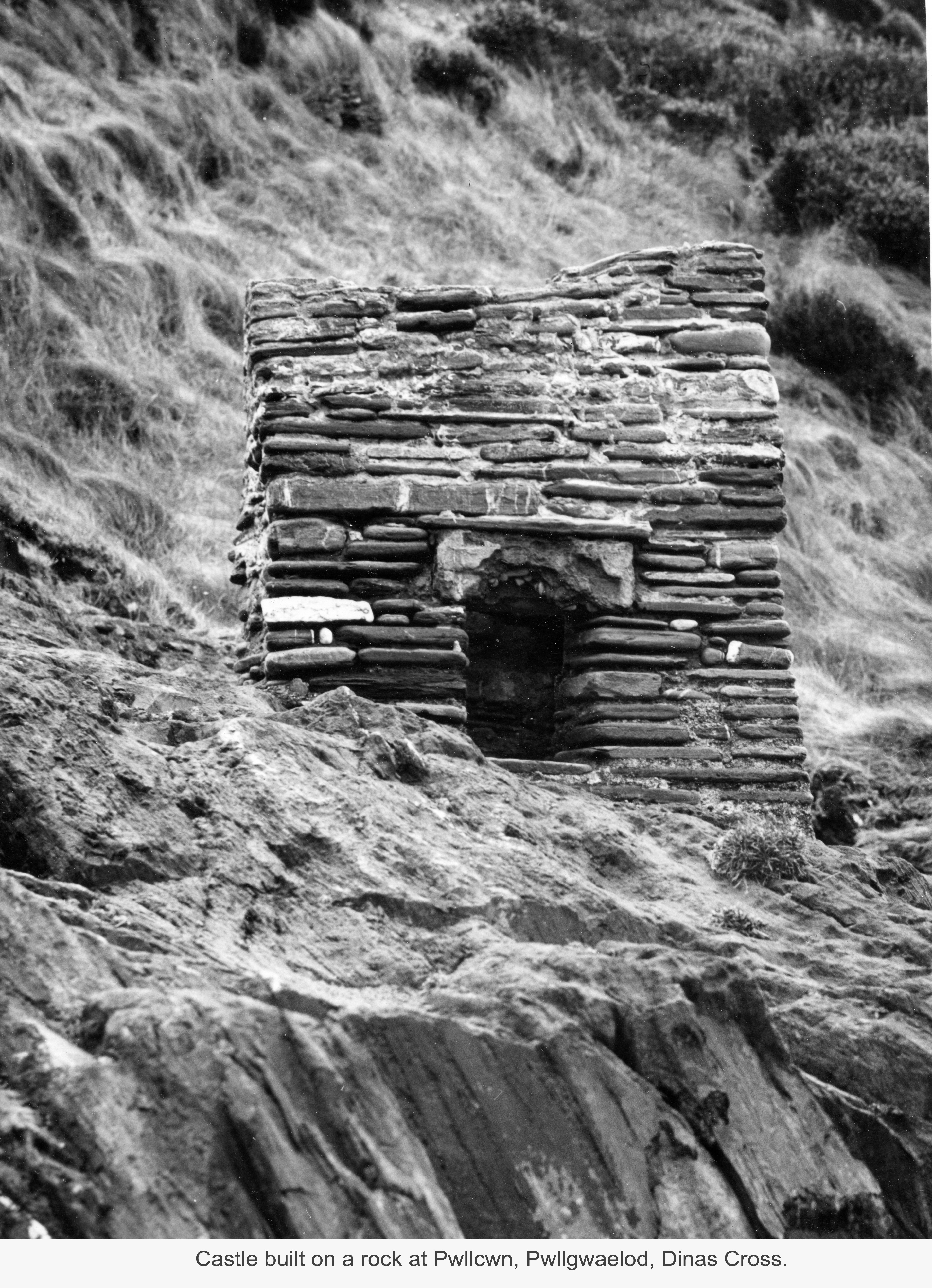
Castle built on a rockBy the time the photo* was taken in the 1960s, these walls had withstood the wild sea weather for 60 years at least and provided an apt example for the local Vicar to use when teaching the parable of the house built on the rock. Gerwyn Stephens, the Vicar of St Brynach’s Church, Dinas, compared the strength of this little house to the impermanenence of sand castles in a programme made for Sunday broadcasting. Local children built the sand castles for the cameras and David Harford’s little house on the rocks stood for the work of the wise man.

If you have seen my previous post on this subject you’ll know that the little house has since been restored by Parkes builders and has been photographed, in colour, by ceridwen.

Did you build one of the sandcastles? Did you see the programme? I’d love to hear from you.

*With many thanks to David Stephens.

Posted in History, Religion, Sea | Tagged , , , , , , , , , , , | Leave a comment

Haunting Churchyards

St Brynach's churchyard, Nevern

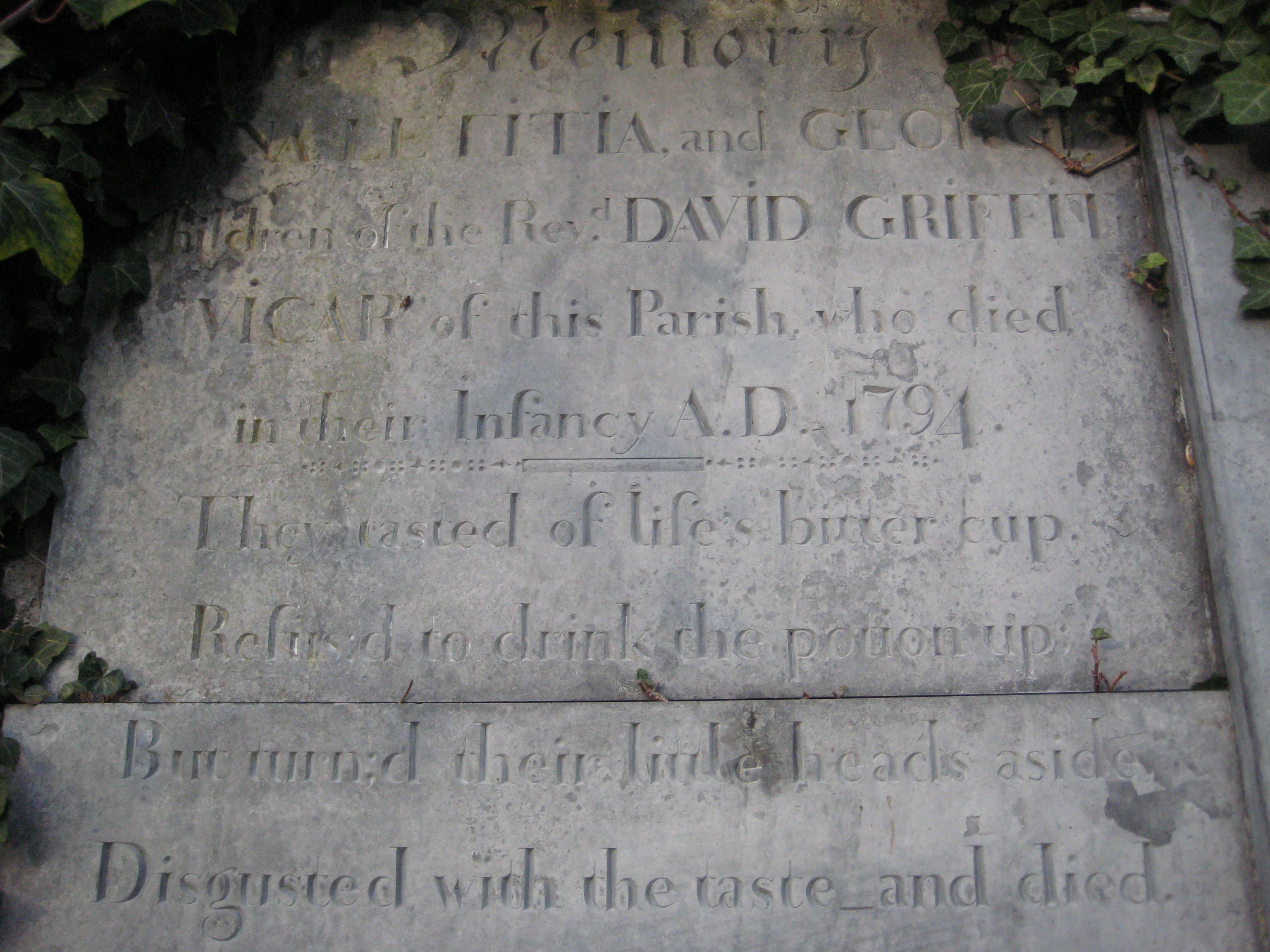
Gravestone of Letitia and George Griffiths, St Brynach’s Church, Nevern

 In Memory of
LETITIA and GEORGE
children of the Rev.d David GRIFFITHS,
VICAR of this Parish, who died
in their Infancy AD 1794.
———
They tasted of life’s bitter cup.
Refused to drink the potion up
But turned their little heads aside
Disgusted with the taste and died.


Posted in History, Religion | Tagged , , , , , , | Leave a comment

Slate quarrying at Aberbach (How to lose lots of money fast)


The lovely beach at Aberbach gives some clues. There’s slate nearby and the tiny quarries in the Dinas area were probably the earliest attempts to work slate in the region; George Owen, writing in the very early 1600s referred to sites near Newport which produced ’tiling stones’. The enterprise depended on transport by ship and the stone was loaded in the little ports of Cwm-yr-Eglwys and Newport to be sold around the country.  As late as the mid-nineteenth century companies were being formed, money raised on the stock market and fortunes lost.

The problem was that, in spite of the marketing which compared our slate favourably to the north Wales stone which roofed the world in the 18th and 19th centuries, the local blue slate often lost colour and flaked; with its high pyrite content it degraded quickly, causing roof timbers to rot and lichen to grow. Local people used it on their roofs but protected it with a layer of mortar.

Bank house

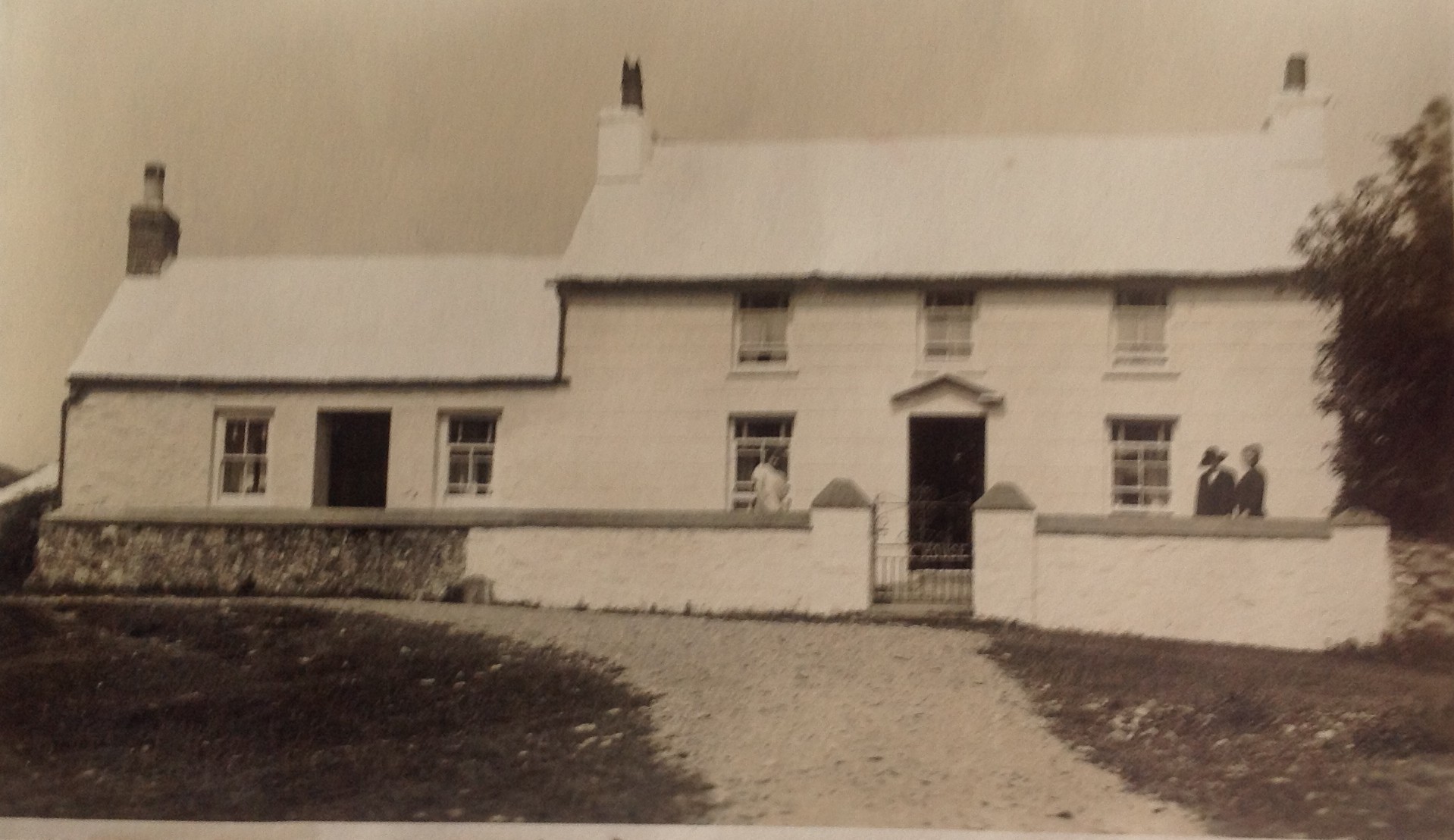
Bank House, Dinas, before the family bought the common land that now forms part of the front garden. The right-of-way had to be diverted so the path now goes straight up from the main road, to the left of the cottage.

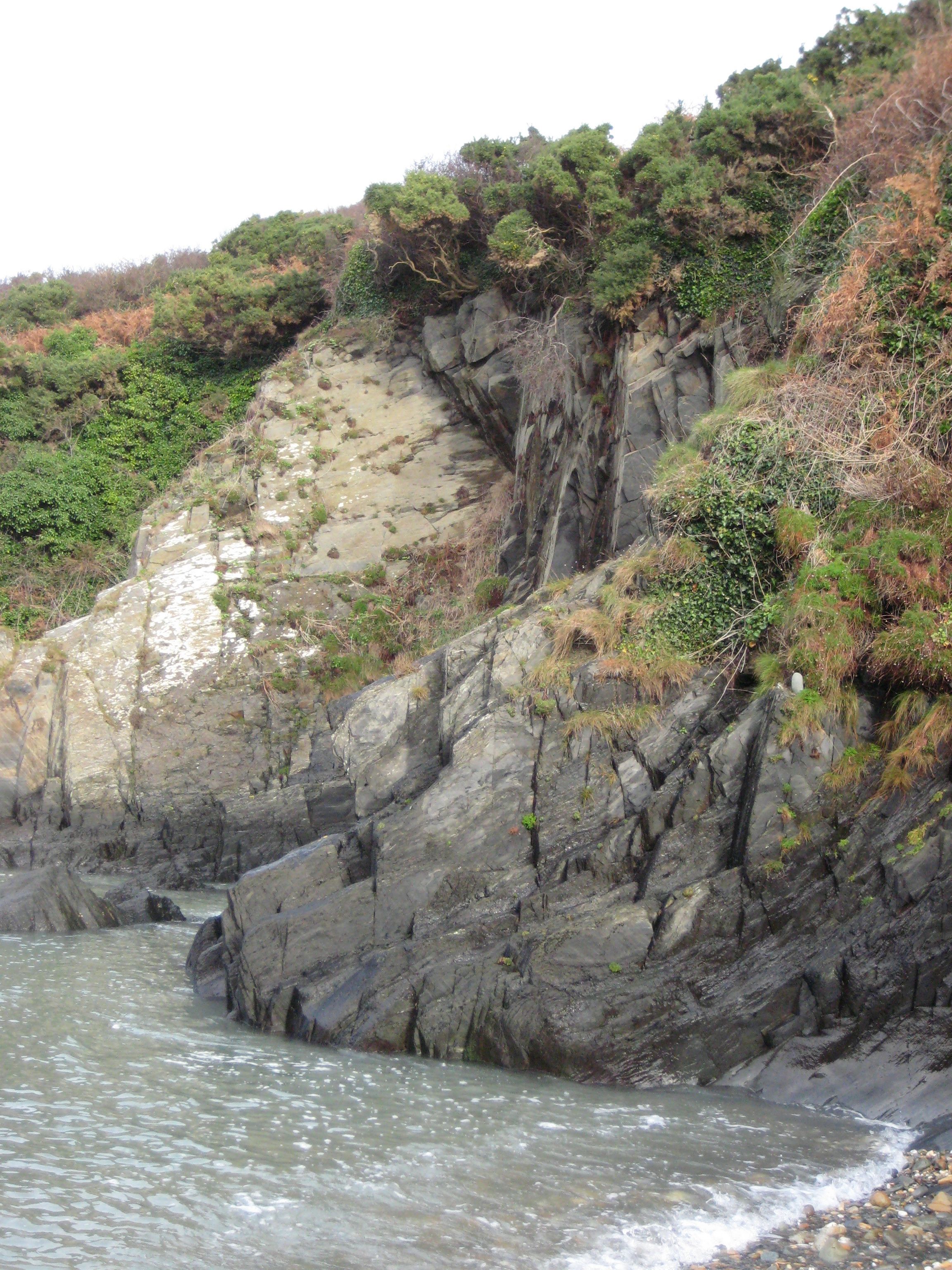
There are still some signs in the cliff face of older slate workings, but the ‘Hescwm Slate and Slab’ company, formed with £30,000 in 1878 was dissolved in 1887, probably without any quarrying having been done. Later attempts to revive the company in the 1930s failed and it was noted anecdotally, “The slates were so poor the company went out of business”.

Slate quarrying Aberbach

Aberbach, Hescwm, Dinas, Pembs


For more information see “The Slate Quarries of Pembrokeshire’ by Alun John Richards, published by Gwasg Carreg Gwalch, 1998.


Posted in History, Sea | Tagged , , , , , , | 1 Comment

Stitched in a chapel to be hung in the cathedral

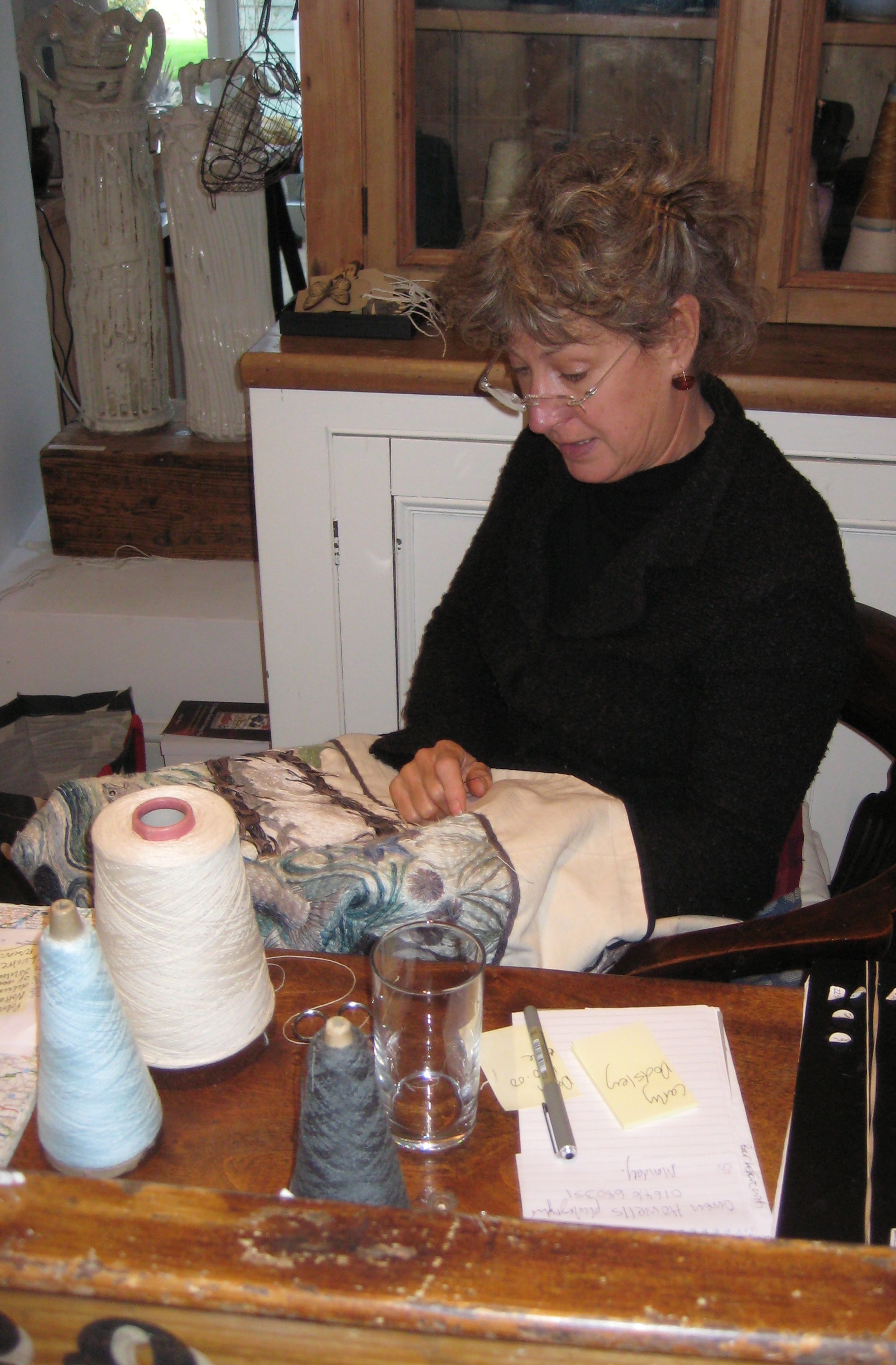
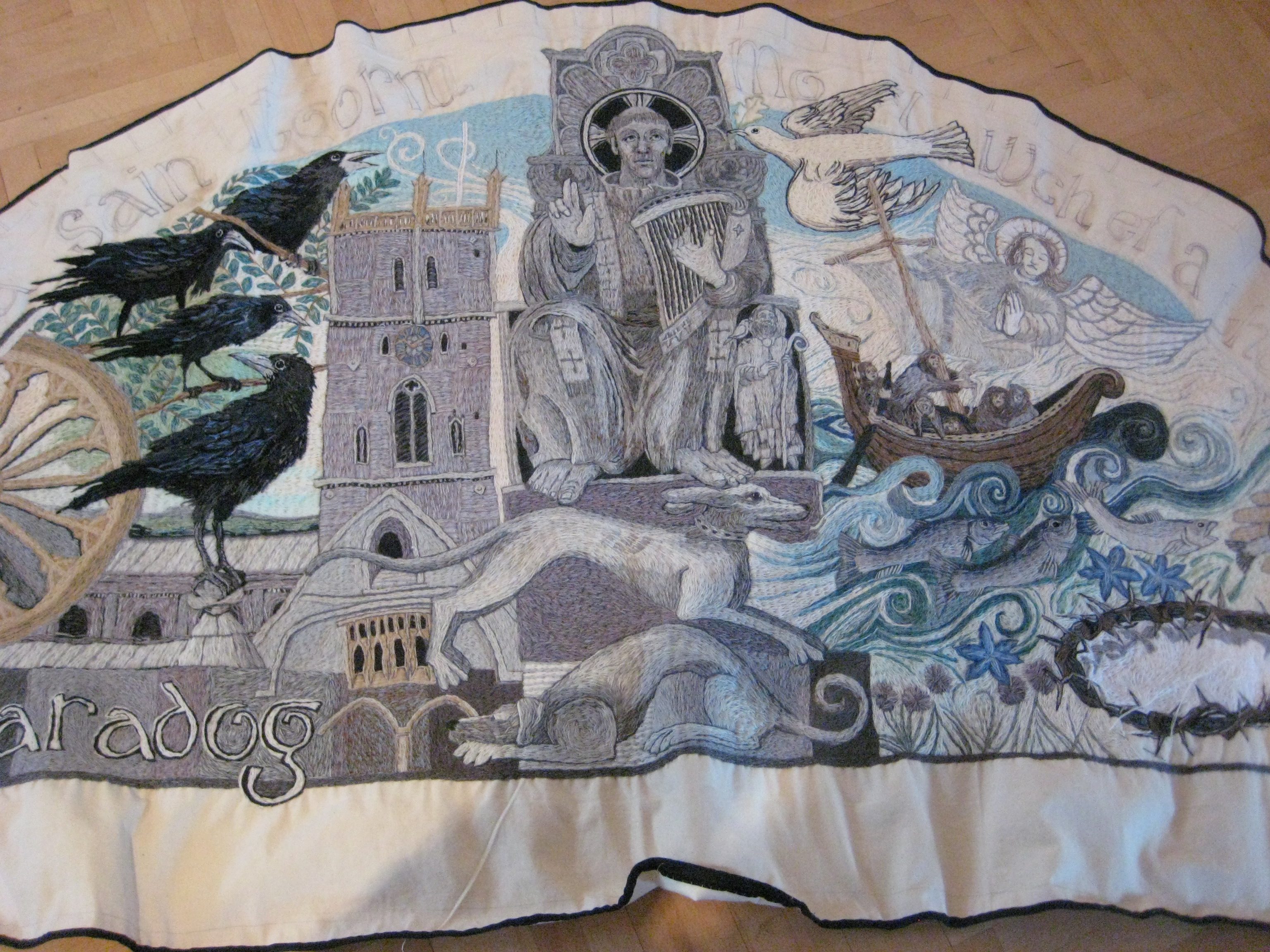
Goat St Gallery 1I was privileged to see the beginning of St Caradoc’s journey from a converted chapel, where he was being hand-stitched by Amanda Wright, to his appointed place in the great Cathedral of St Davids, where his bones are thought to lie.

St Caradoc, who lived in the 12th century, came from a wealthy background, being well educated and having a place at the court of Rees, a prince of South Wales. However, he abandoned his faith in worldly princes when Rees, enraged at the loss of two greyhounds, threatened his life. From that moment Caradoc decided to dedicate his life to God, became a hermit and impressed everyone, including English settlers, Norwegian pirates and, importantly, the local archbishop with his sanctity. He died in 1124 and was buried in the Church of St Davids. In addition to his memorable curing of an English nobleman and his founding of the 12th century church in Lawrenny, he is remembered as a harp player.

Goat St Gallery 3

Amanda Wright, who was commissioned to make this beautiful account of his life to be placed in the Cathedral, works in the Goat Street Gallery in St David’s. This is a wonderfully converted chapel, where you can see her embroidery, pottery by ceramicist Daniel Wright and work by other artists and craftspeople.


Posted in Art, Crafts, History, Religion | Tagged , , , , , , , , | Leave a comment

When Wales was the envy of Russia

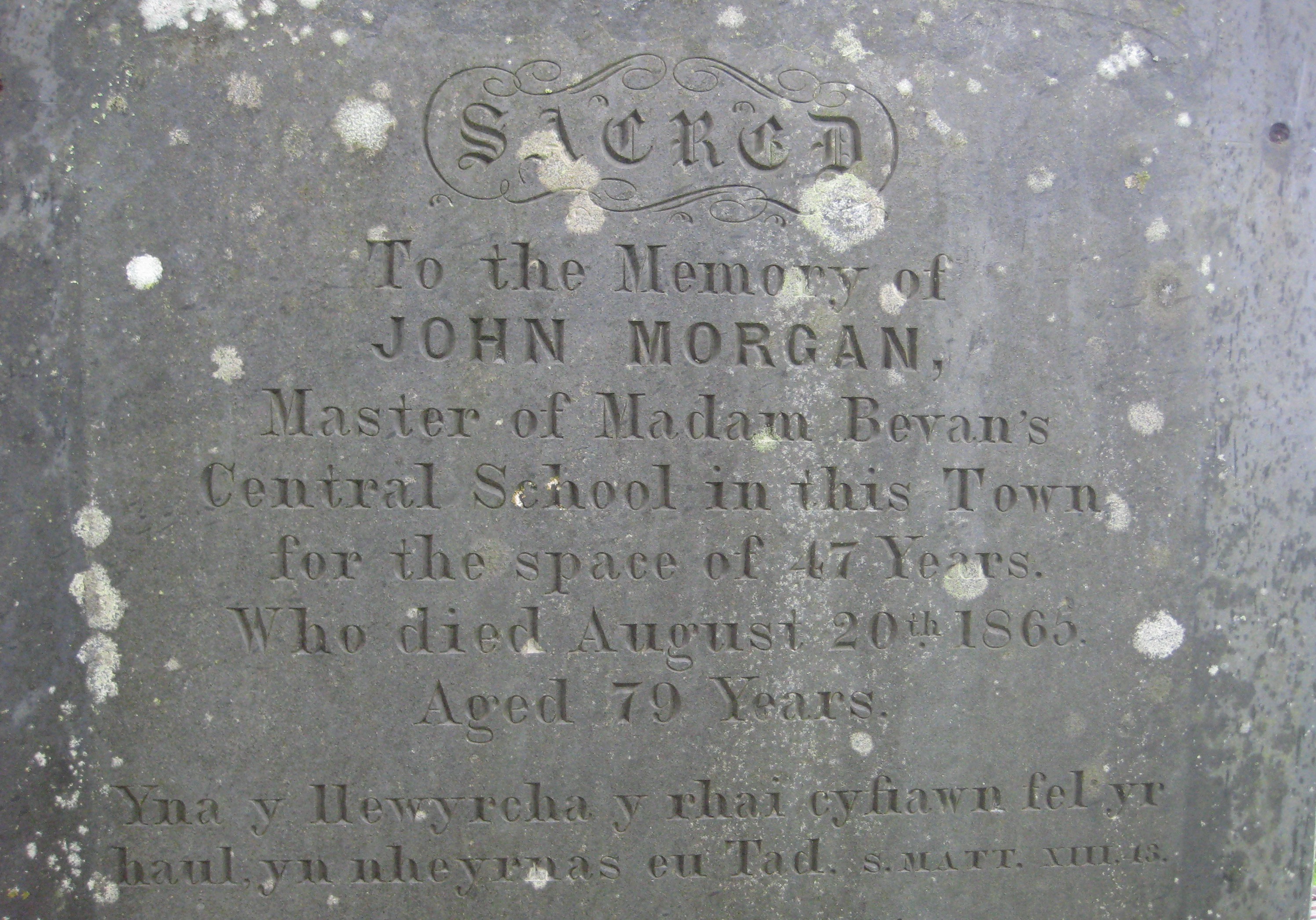
John Morgan's memorial

John Morgan’s headstone, St Mary’s Churchyard, Newport, Pembs.

To those of us who find it hard to resist the opportunity of wandering around a graveyard, a headstone will often offer a personal, privileged glimpse into largely undocumented lives. This inscription marks a grave in St Mary’s churchyard, Newport, Pembrokeshire.

John Morgan, a teacher like me, died 150 years ago and played a part in the movement that took literacy levels in Wales to such an unusually high level, by European standards of the time, that in 1764 Catherine II of Russia had instructed a commissioner to report to her on the organisation of the Welsh schools.

The inspiration behind Madam Bevan’s Central School in Newport was Griffith Jones from Llandybie, Carmarthenshire, the founder of the ‘Circulating Schools’ movement. His primary concern was spiritual rather than educational and his schools had the limited aim of enabling all to read the Bible, hold family prayers and make sense of the catechism. In this he was remarkably successful.  He was a gifted fundraiser, an efficient administrator and singleminded. As his purpose was to save souls, he abandoned writing and arithmetic and pared the traditional curriculum down to a minimum – reading only. He recruited able teachers and vetted, trained and supervised them, instilling such commitment that they worked for very low pay.

The schools were initially peripatetic and intensive. Tuition was arranged in churches, barns and farmhouses and took place mainly in the autumn and winter to fit in with the farming year. Children were taught earlier in the day and adults in the evenings and, significantly, all tuition was in Welsh. Pupils were expected to achieve literacy in three months and the school would move on but return at a later date to remind pupils of their previous learning.

By the time of his death in 1761, Griffith Jones had worked on his mission for 30 years, had established 3,325 schools and had taught about 250,000 pupils, or half the population of Wales, to read.

Madam_Bevan

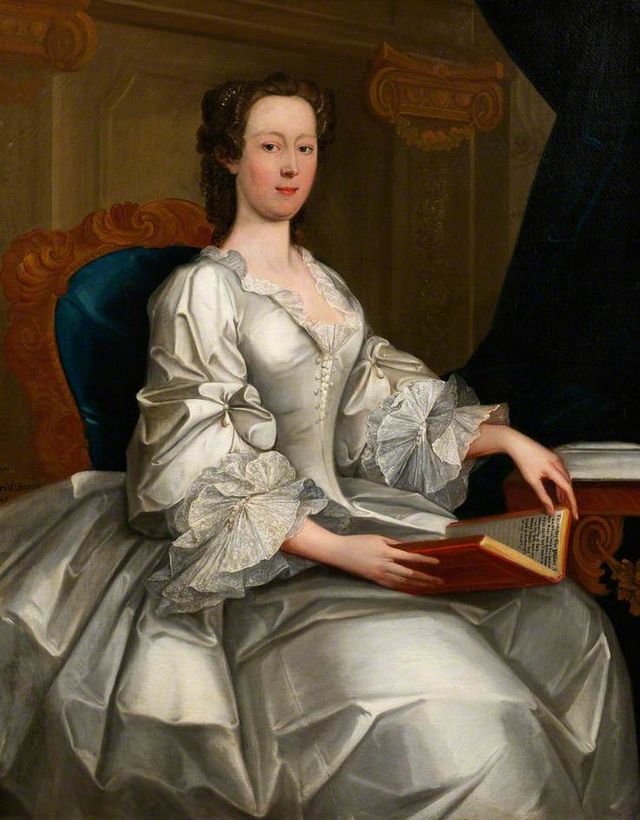
Portrait of the Welsh philanthropist and educator Bridget Bevan (1698-1779) painted by John Lewis

Madam Bevan of Laugharne, wealthy, widowed and usefully connected, continued his work when he died and in the following 16 years the schools taught another 150,000 pupils.

Madam Bevan died in 1779 but the movement she supported continued until the Education Act of 1870 which made provision to educate all children aged 5-13.

 For more information see: ‘The Foundations of Modern Wales 1642–1780’, Geraint H Jenkins. (Clarendon Press, University of Wales Press, 1987)

Posted in History, Religion, Welsh language | Tagged , , , , , , | Leave a comment

A walled garden offering delicious solitude for readers and nature lovers

IMG_4840

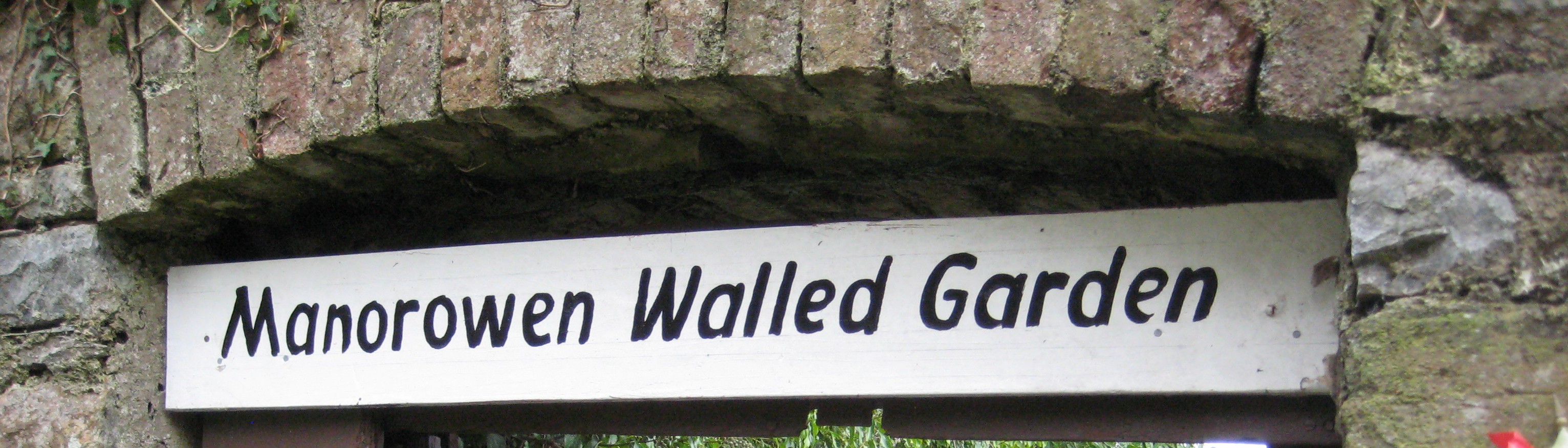
If you should be looking for a quiet place to retreat with a good book, I suggest Manorowen Walled Garden. There is a small entrance fee but I am sure that you could find a comfortable seat and spend a delightful day hidden amongst the greenery. The surrounding walls are massively high in places, and overgrown with ivy – just like I imagined the walls in Hodgson-Burnett’s ‘Secret Garden’.

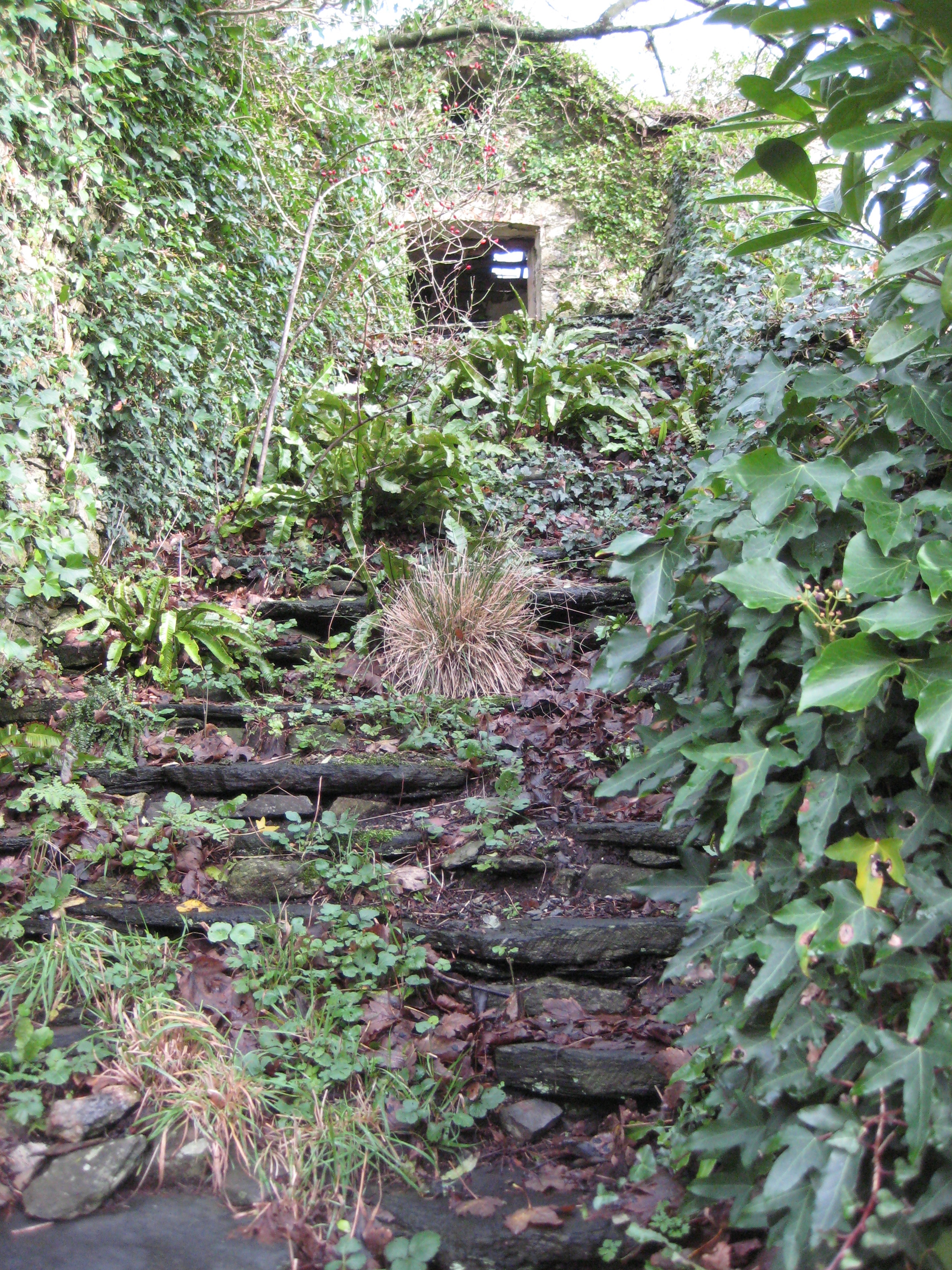
The garden originally contained a summer house, dating from the late eighteenth century, whose (treacherously unsafe) ruins are tantalisingly glimpsed at the top of a slippery climb by the entrance.

IMG_4832

The garden itself, even in early winter, is full of interest and if you like your gardens veering to the wild, rather than the manicured, you’ll love this place.

As a bonus, there are plants on sale. I left with two little azaleas that I know will do well in my garden at home and be welcome reminders of my visit.

Posted in Nature, Wildlife | Tagged , , , , , , , , , | Leave a comment

Searching for John Henry Jones and William Lloyd: the mysteries on Dinas’ war memorial

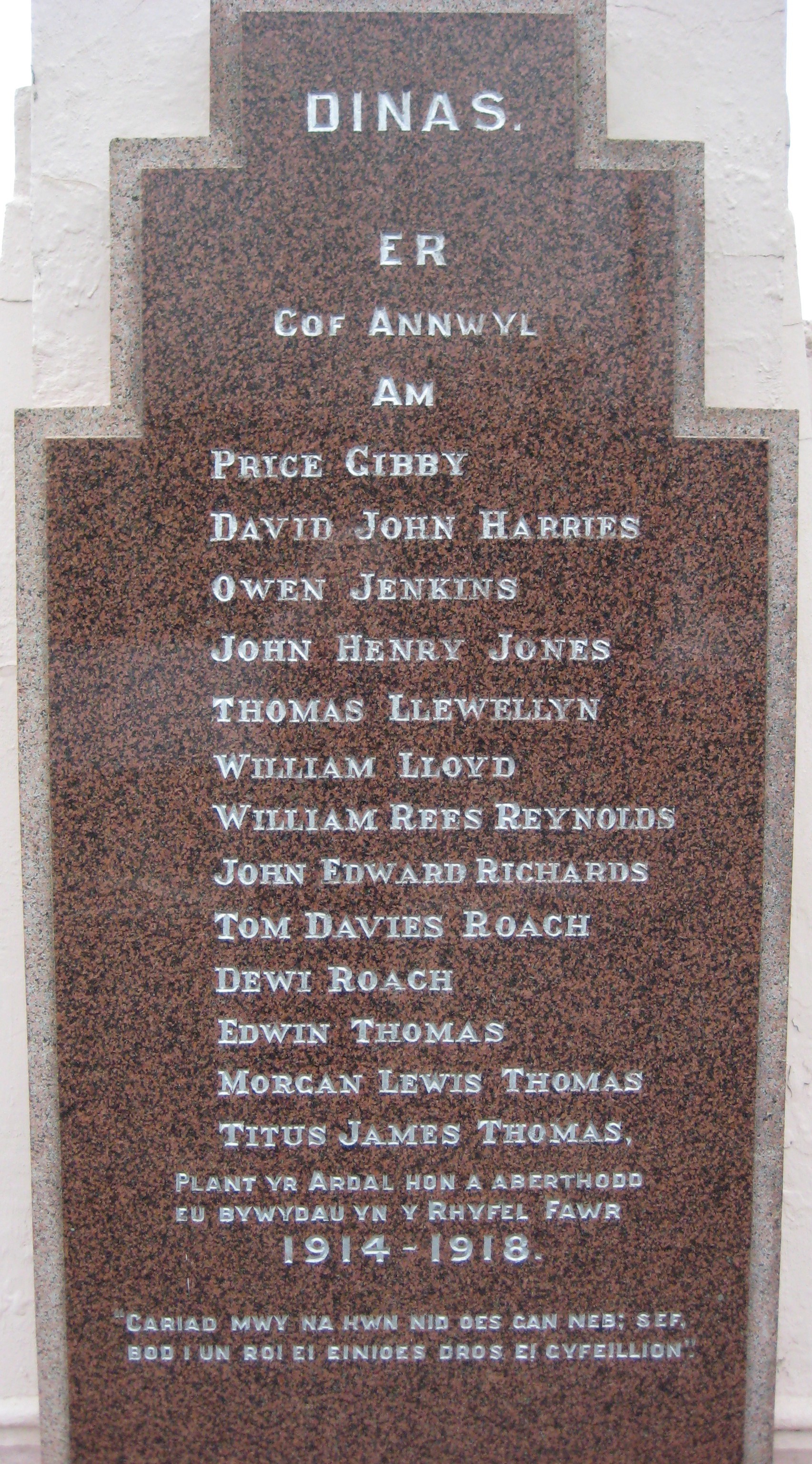
Dinas War MEMORIAL 1914-1918Thirteen men from Dinas are remembered on the village WWI memorial.

Locally there are long memories and diligent historical research so quite a lot is known about most of these men. There are two sets of brothers, three were sailors who died at sea, three were killed at the Somme and three at Ypres. One 19 year old died as a German prisoner of war. Their gravestones, their war records and their engraved names on the monumental war memorials of Northern Europe have been found and are being recorded as part of our local history.

But so far we know nothing about two of these men – no war record, no burial site, no foreign memorial, no village memories. So this is an appeal for help. Do you know anything about William Lloyd or John Henry Jones? Please get in touch if you have any information. Dinas families are so intertwined someone must have come across these names in their family histories. I’d be grateful if you’d pass this request on to anyone you think could help. Thank you.

Posted in History, Sea | Tagged , , , , , , , , , , , , , , , , , , , | 2 Comments

The Church on the Rock

OLYMPUS DIGITAL CAMERA

© Copyright ceridwen

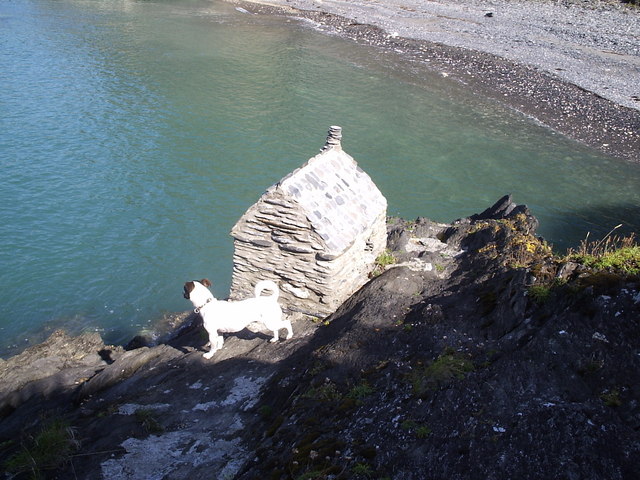
The best way to get a good view of this little building is to approach by boat which is why, I suppose, we have some fishermen from Pwllgwaelod to thank for restoring the little Church after it had fallen into disrepair.
Church on the rocks with pointer_edited-3It is possible to climb down from the coast path but it’s a hazardous climb and when I was tempted, a few weeks ago, the wet weather and the strong winds dissuaded me and I’ve borrowed Ceridwen’s photo for my first picture to show you the building in a bit more detail. If you peer down from the coastal path on your way to Aberbach, this is what you can see.

The Church on the Rock, as it was known locally, was originally built by Alfred Harford*, an artist from the Bristol area, who spent some time in Dinas at the turn of the twentieth century. He painted pictures for local residents, possibly in lieu of payment,
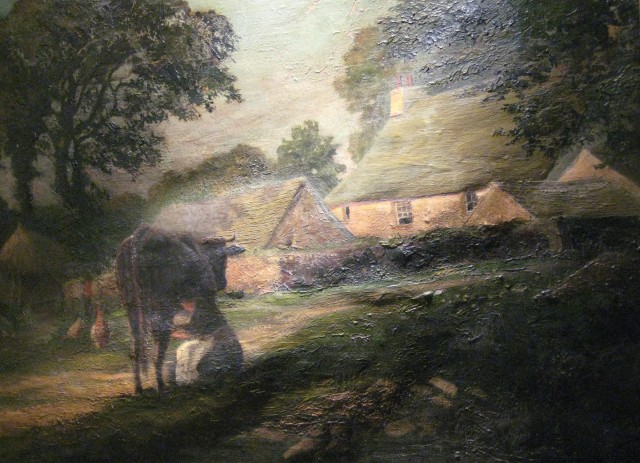
Rear of cottage in Bryn Henllan

Rear of cottage in Bryn Henllan (Dinas)

and was seen carrying buckets of mortar along the coast for his construction project.

Surprisingly, the ruins of his original were still visible on the rock in the 1970s  but the little building would have disappeared for ever if it hadn’t have been for the vigilance and skill of local fishermen who carried out the restoration, about 15 or 20 years ago.

What could have  prompted them to rebuild, after so many years, when all that was left standing was one dilapidated wall? At this point the story gets more complicated, perhaps casting some doubt on my original claim of the house’s artistic beginnings.

Part two of the project began in ‘The Sailor’s Safety’ in the 1990s when local people overheard a visitor from the north of England ask about something special on the beach. He’d been told a story by his English grandfather.

His story was set in the early 1900s and tells of a young girl from Liverpool who was very sick. The doctors couldn’t do much for her but suggested she go and stay near the sea. So the girl and her father got on the train to Goodwick and stayed in a cottage in Lower Town for a month in the summer. The daughter soon began to look better, regained an appetite and before long was strong enough to venture as far as that little beach outside of Pwllgwaelod. The girl felt it was a special place and persuaded her father to build a house for the whole family to live in. They built the house from the rocks and sand around the little beach and it was almost autumn when they put the last stone in place.

They returned to Liverpool to the rest of the family but the winter was hard and soon the girl was unwell again and sadly died. They never returned.

I’ve heard the story of the sick little girl from two sources. However, I have also spoken to two people whose families have lived in Bryn Henllan, close to Pwllgwaelod, for generations and neither of them had heard this version before. The Parkes brothers, builders who also have a fishing boat at Pwllgwaelod, apparently heard the tale in the pub and were inspired to rebuild. Thank you!

I’m not convinced that I have got to the bottom of this. I’d be delighted to hear from anyone who can add information and help resolve the contradictions. Over to you!

* The name passed down the generations is ‘Hurford’ and there is no signed picture to decide the matter. But Alfred Harford (1848-1915) member of the Royal West of England Academy seems to fit the bill. He was from Bristol and painted scenes from rural life in oils. According to the RWA, who kindly supplied enough information to convince me, he frequently painted scenes from North Wales, submitting pictures of Betws-y-Coed, Pont-y-Pant and Beddgelert to the RWA annual exhibitions. He must have stopped off in North Pembrokeshire on his way.
Posted in Crafts, History, Sea | Tagged , , , , , , , , | 8 Comments