Who messed up?

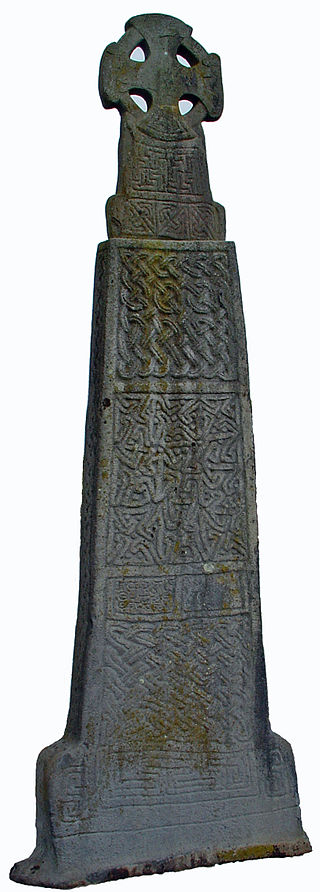
You may have admired the 1000 year old cross at Nevern and noticed that the top doesn’t fit on the bottom as it should.

The stone masons who created the cross were clearly competent and the stone is weather resistant enough to retain the lovely decoration; the mortise and tenon joint that secures the two halves of the cross has held so why doesn’t the top sit more snuggly on the bottom?

This leads me to speculate on how the crosses were constructed. Was there a production line communication problem, with the workers who cut the tops not checking with the others carving the main stems? Was there an assembly mix-up with the wrong top taken to the Nevern site, leaving another mismatched pair elsewhere?

Carew CrossThe only other similar cross remaining in our part of Wales is the Carew Cross. Given its different design, it’s hard to tell if Nevern’s head would fit Carew’s tail. Does anyone have pictures or measurements that are accurate enough to settle this speculation?

John Hughes of Dinas took these photos. I know that he’d be interested to hear from anyone who has an answer to my question.

Posted in Art, Crafts, History, Religion | Tagged , , , , , | 7 Comments

Ducks and Drakes

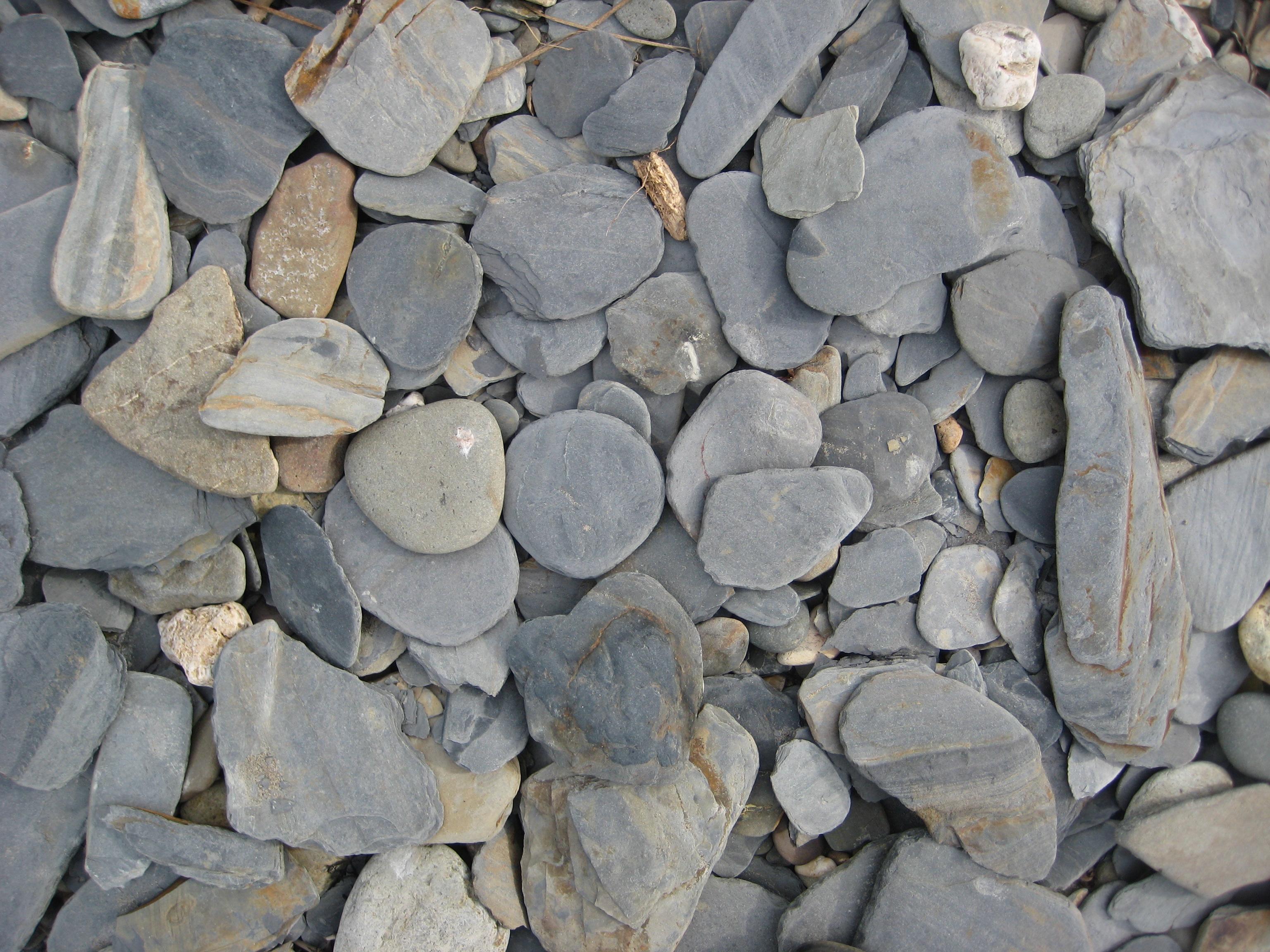
Slate for ducks and drakesIf you are on the beach at Dinas’ Aberbach or Aberfforest it won’t take you long to gather a handful of perfect ‘duck and drake’ slates from the high-tide line. While you are skimming them across the water, here is a rhyme to accompany your success:

A duck and a drake
And a halfpenny cake
With a penny to pay the old baker.
A hop and a scotch
Is another notch
Slitherum, slatherum, take her.

This rhyme, from ‘The Real Mother Goose” 1916 has many older versions and the Oxford English Dictionary’s first reference to the game dates back to 1583.

I think that the world record is somewhere around 50 skips, but that must have been reached on a lake. The waves on our beaches make achieving really high numbers more of a challenge. For inspiration, click here

Posted in books, History, Sea, Sport | Tagged , , , , , , , | 2 Comments

Fifty years too late

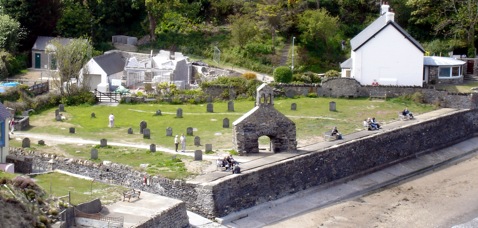
Cwm yr Eglwys Churchyard 2005

This photograph of Cwm yr Eglwys Churchyard, taken in 2005, gives a false impression of timelessness. This scene has not remained unchanged for centuries. The 1859 storm that destroyed the Church (while a service was taking place – miraculously there were no casualties) also swept away a good part of the churchyard and articles by Gwynrug in  the ‘Fishguard and Goodwick County Times 1908-1909, describe the effect of numerous storms between 1860 and 1880:

The sea made incursions into the graveyard in Cwmyreglwys in the sixties and seventies. Torn coffins with human remains protruding from them, were hanging in the bank above the beach. Pieces of coffin and human skeletons were strewn all over the shore. The sight was harrowing and ghastly!

As a consequence many gravestones are thought to have been lost or removed. A sea wall was constructed to protect the Churchyard in 1882 and dispersed human remains were collected and buried behind it. Further ground works in the 1960s and 1980s left no record of changes made. From photographic evidence it appears that many of the gravestones in the middle of the Churchyard remained undisturbed; many others have been moved or have disappeared altogether.

Fifty years ago the writing on the gravestones was still mainly legible but at the time  no one thought to document the inscriptions. In the interim some of the writing has completely disappeared

and some just allows the reader a guess at the original.

Some of the stones are still beautifully legible, however; were they more sheltered from the wind and seaspray, were the families able to choose better quality stone, or the chosen stonemasons more skilled?

Over the past 50 years we have become more interested in family history and between 2004 and 2006 all sixty of the surviving gravestones were surveyed, recorded and photographed by members of the Dinas Historical Society. It’s sad to see that about half the burials are of children.

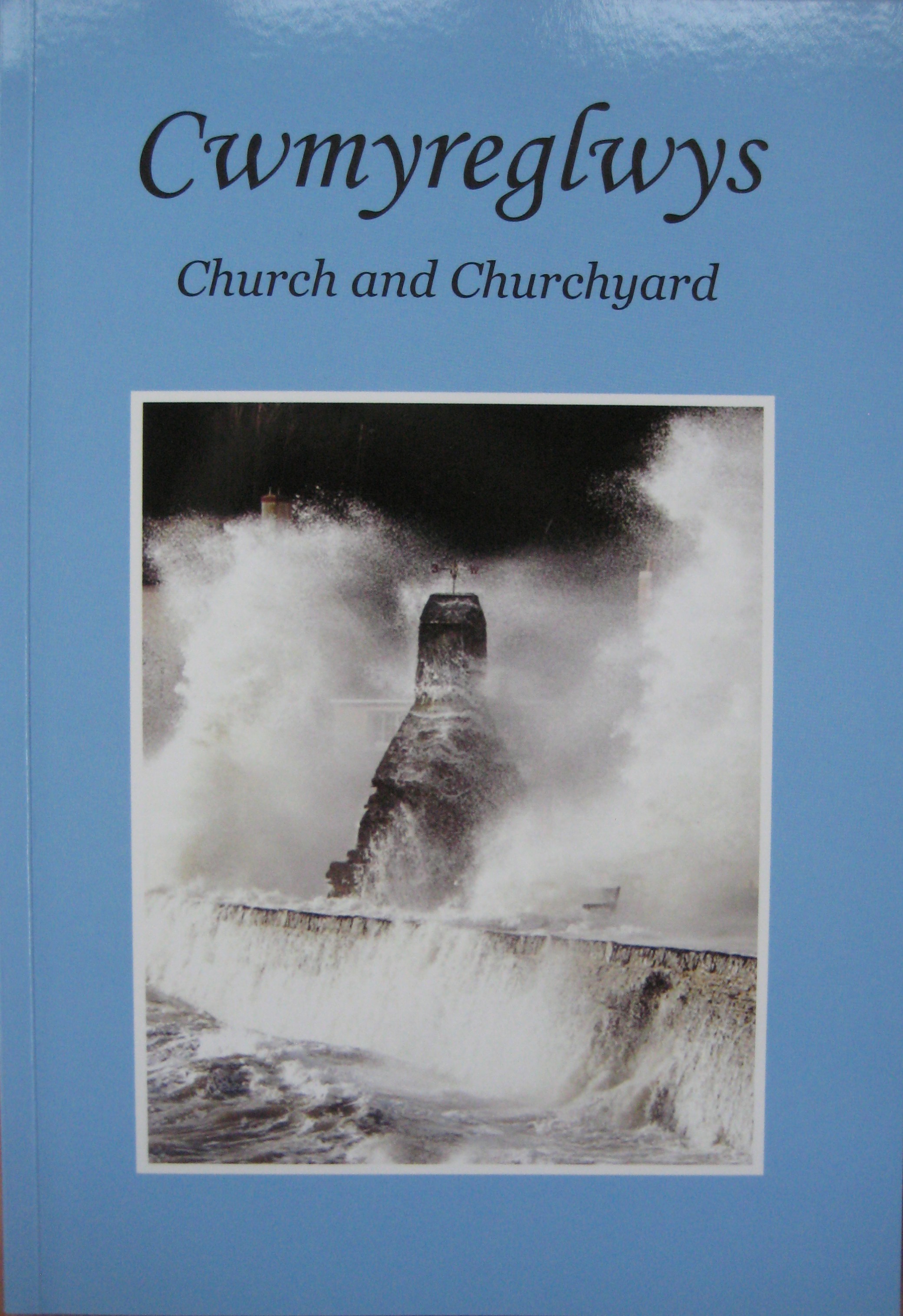
Cwmyreglwys - Church and ChurchyardMost of the information above has come from this fascinating book:  ‘Cwmyreglwys – Church and Churchyard’ by Rex Harries and Rhiannon Comeau. Its scope extends from the early history of the Church to modern times. There are lots of photos and illustrations, references to the families and houses of Cwmyreglwys and quotations of commemorative poetry. I strongly recommend it to anyone who has any connection to Dinas.

The book is on sale from the ice-cream van in Cwmyreglwys or from Rex Harries himself.


Posted in History, Religion, Sea, Uncategorized | Tagged , , , , , | 2 Comments

What did the Sea Captains from Dinas do with their money?

The first thing many of them did was to build a house and change the shape of the village.

Dinas had originally been sited in the bay of Cwm yr Eglwys, where all the land was owned by large land owners and the (unnamed) houses rented out to the villagers.*

Sea captains retired with cash to buy and build, so they settled further inland where plots were available. As they moved, they took the name of the village with them, extending Dinas to Brynhenllan and along the main road.

Many fine new houses were built; Capt Howell, Commodore of the Red Star line, built ‘Redlands’** (on the left, going to Newport) and Capt James built Glanteg (on the right).

Additionally they were very generous to Tabor, a Baptist chapel where you might have expected Puritan sobriety but which accommodates an unusual richness of decoration.

However, as many of headstones in Dinas’ graveyards testify, a seaman’s life was fraught with danger and while an unusually high number of young men from Dinas reached the position of Master Mariner, many men from the village died at sea.

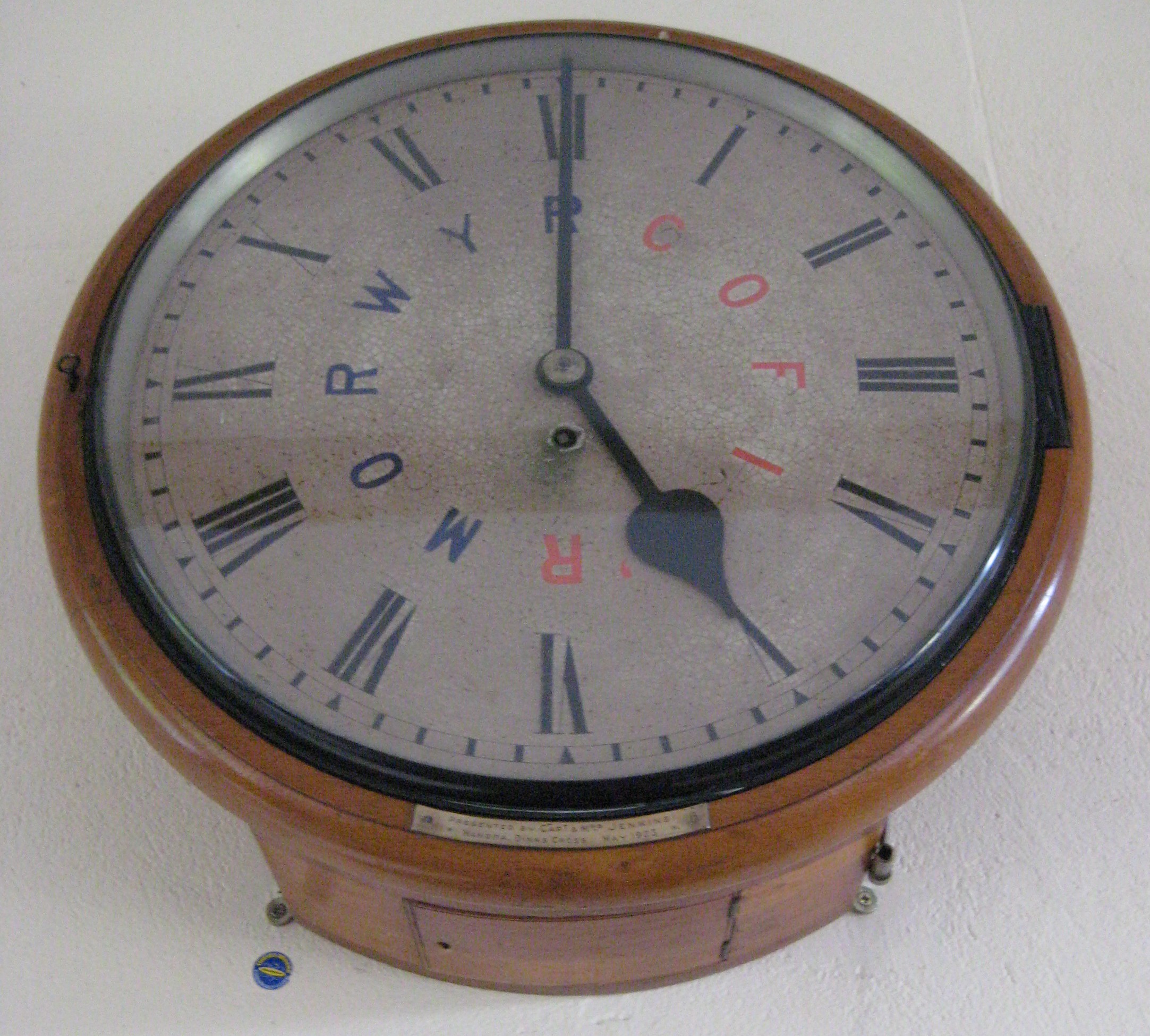
Tabor Vestry clockThe beautiful clock in the vestry of Tabor is another gift from a sea captain – see the brass plate attached below the mechanism. The sobering instruction on the clock face tells us to ‘Remember the sailors’.


*For more information on Cwmyreglwys I recommend “Cwmyreglwys – Church and Churchyard” by Rex Harries and Rhiannon Comeau. This fascinating history can be bought from the ice-cream van at Cwmyreglwys or obtained from Rex Harries himself.
** Many of the names of the ships on the Red Star Line ended with ‘land’ – Thomas Howell had captained the ‘Zeeland’,’Lapland’ and ‘Belgenland’ before retiring to Redlands.
Posted in Art, Crafts, History, Religion, Sea, Welsh language | Tagged , , , , | 3 Comments

Home spun treasure

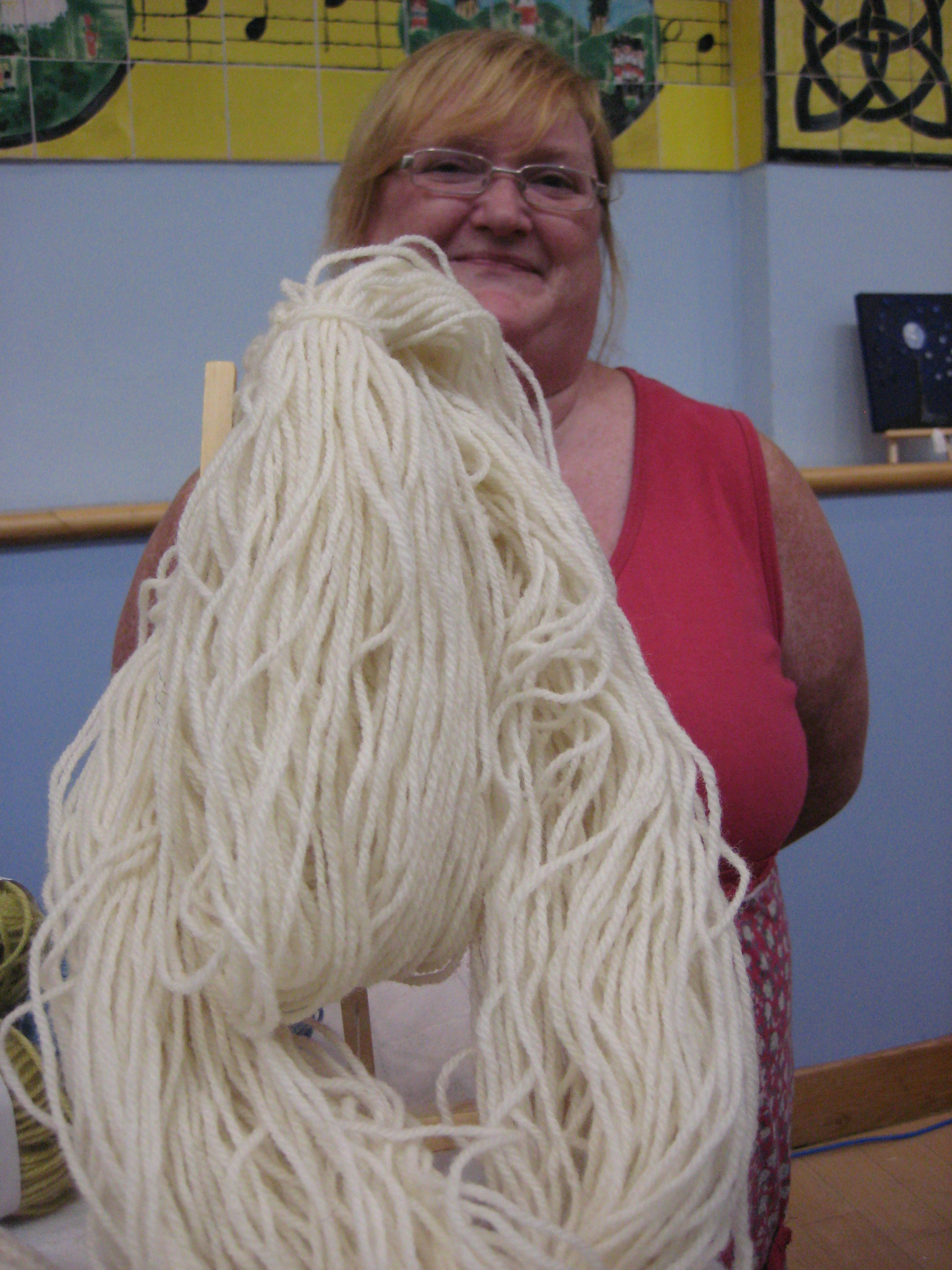
This beautiful skein of pure new wool comes from a flock of Llanwenog sheep on a small holding in Llanllwni near Lampeter. You don’t have to travel far from Dinas, however, because you’ll find it on Jana Davidson’s ‘Leafy Lion’ stall at Fishguard market – held every Thursday at Fishguard Town Hall.

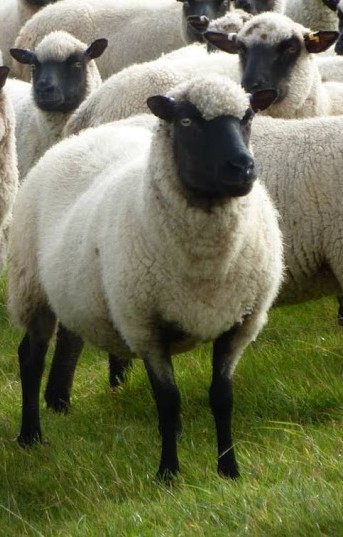
Llanwenog sheepThis wool is a pure Welsh product and the breed originated from west Wales. Until recently Llanwenogs were on the Rare Breeds Survival Trust ‘watch list’ but their calm temperament and good looks have been winning farmers over and their popularity has grown.  The Llanllwni fleeces are spun at a small woollen mill near Newcastle Emlyn and the wool is sold un-dyed.  Sue Ullrich, who farms the small holding, is a keen knitter herself and has achieved a firm yarn with good stitch definition – just the thing for cables or Scandinavian patterns.

If you’re looking for other natural colours, Jana has a selection of those too. Sue’s neighbours have supplied her with wool from Black Mountain Sheep, Grey Shetlands, Zwartbles and more, so you’ll find a wonderful range of grey, mottled and black yarns.

If you are knitter or you know a knitter, I’m sure you’ll find this wool hard to resist.

(If you can’t get to Fishguard market you can contact Sue Ullrich direct on Blaenpant@yahoo.co.uk )

Posted in Crafts, Farming | Tagged , , , , , , , , | Leave a comment

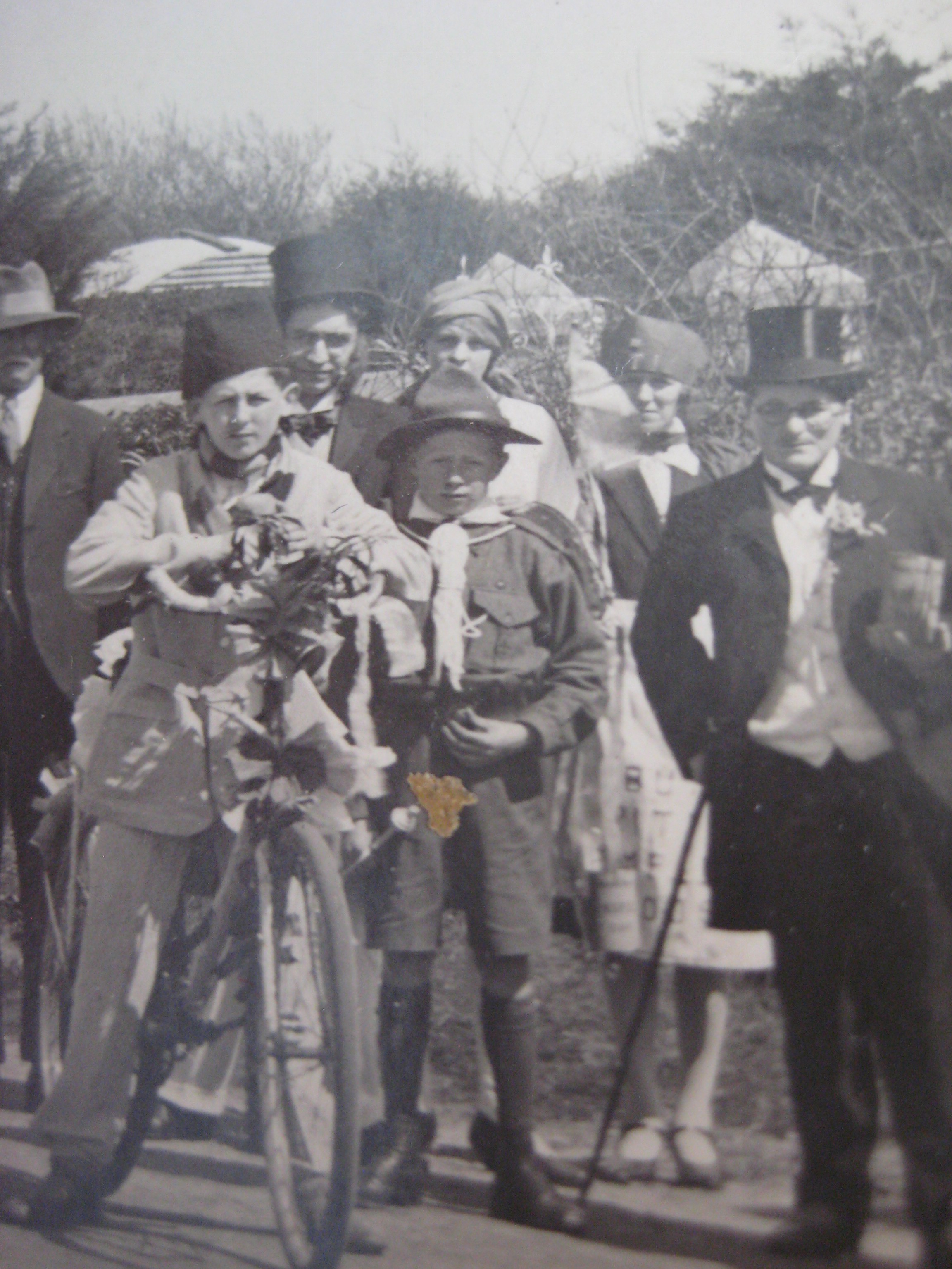
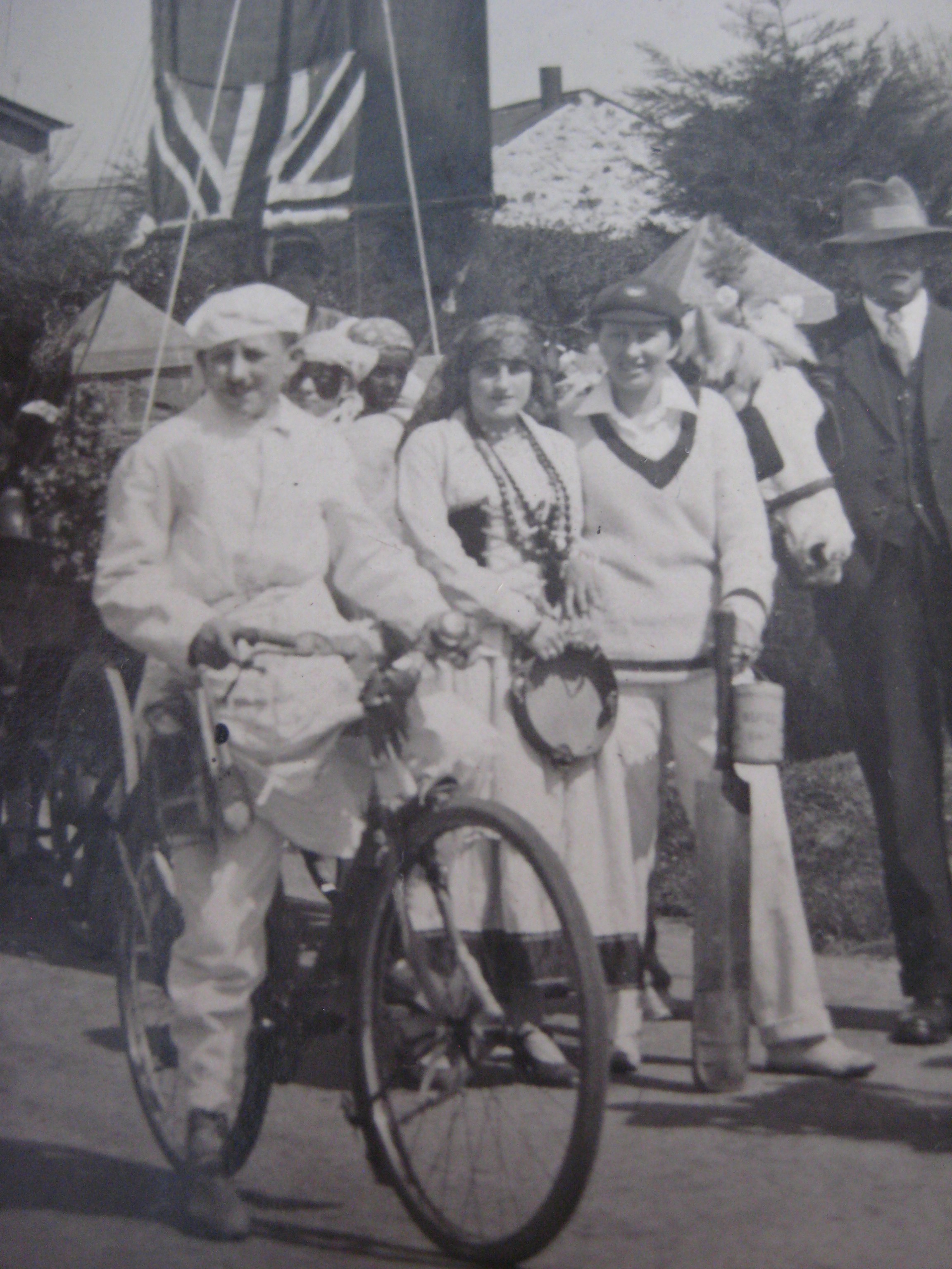
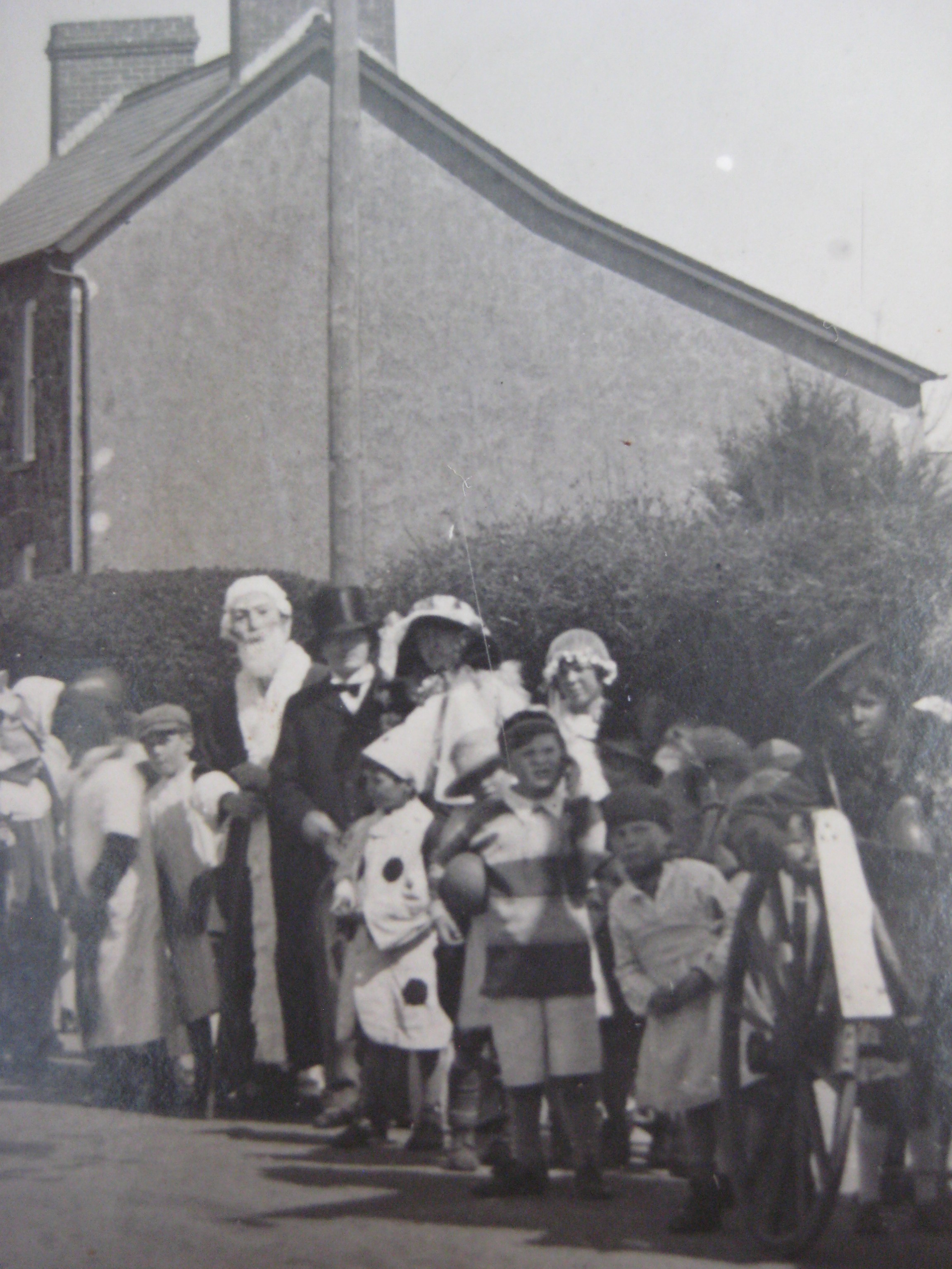
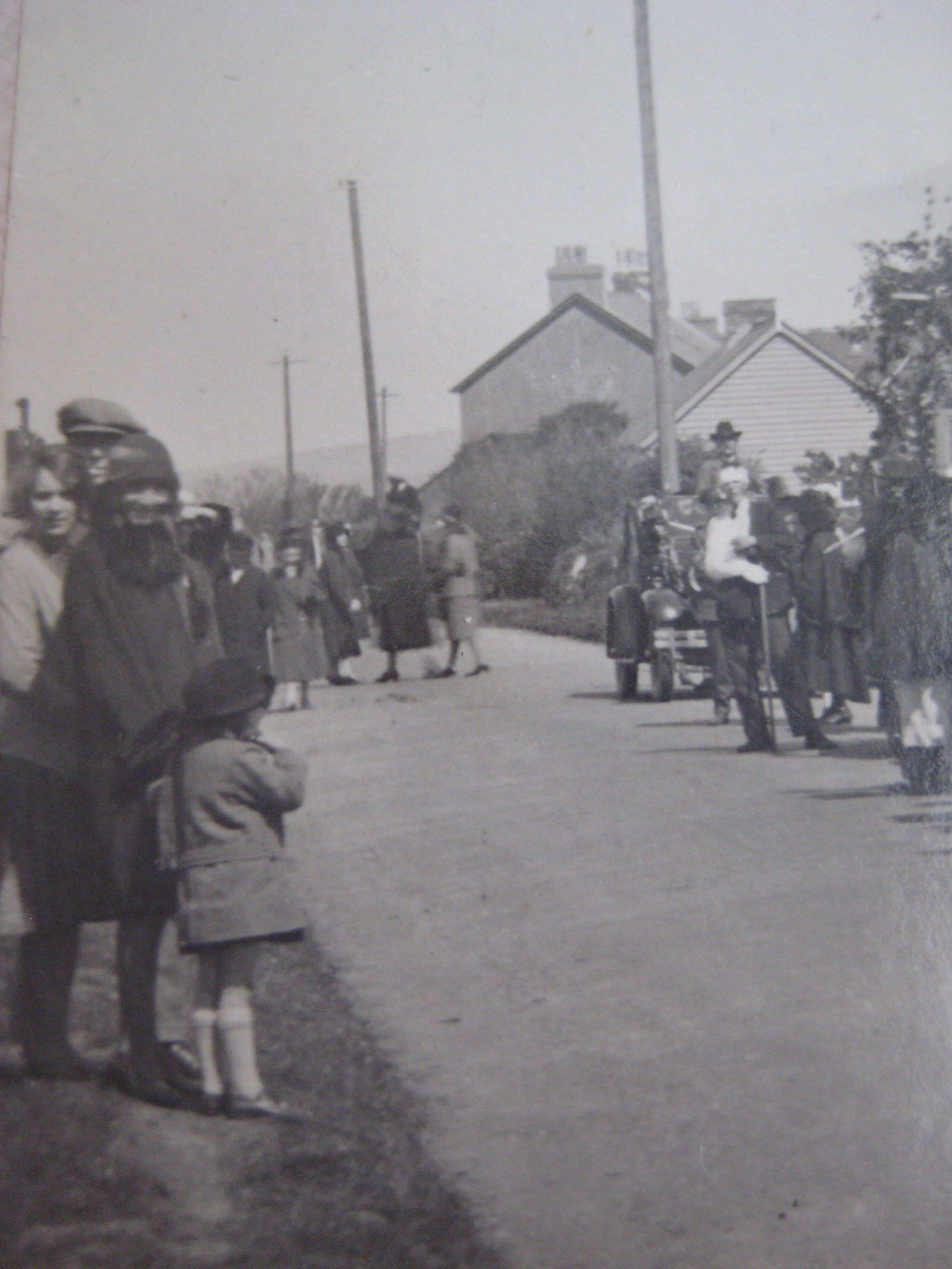
Dressing up for Dinas Carnival c1930

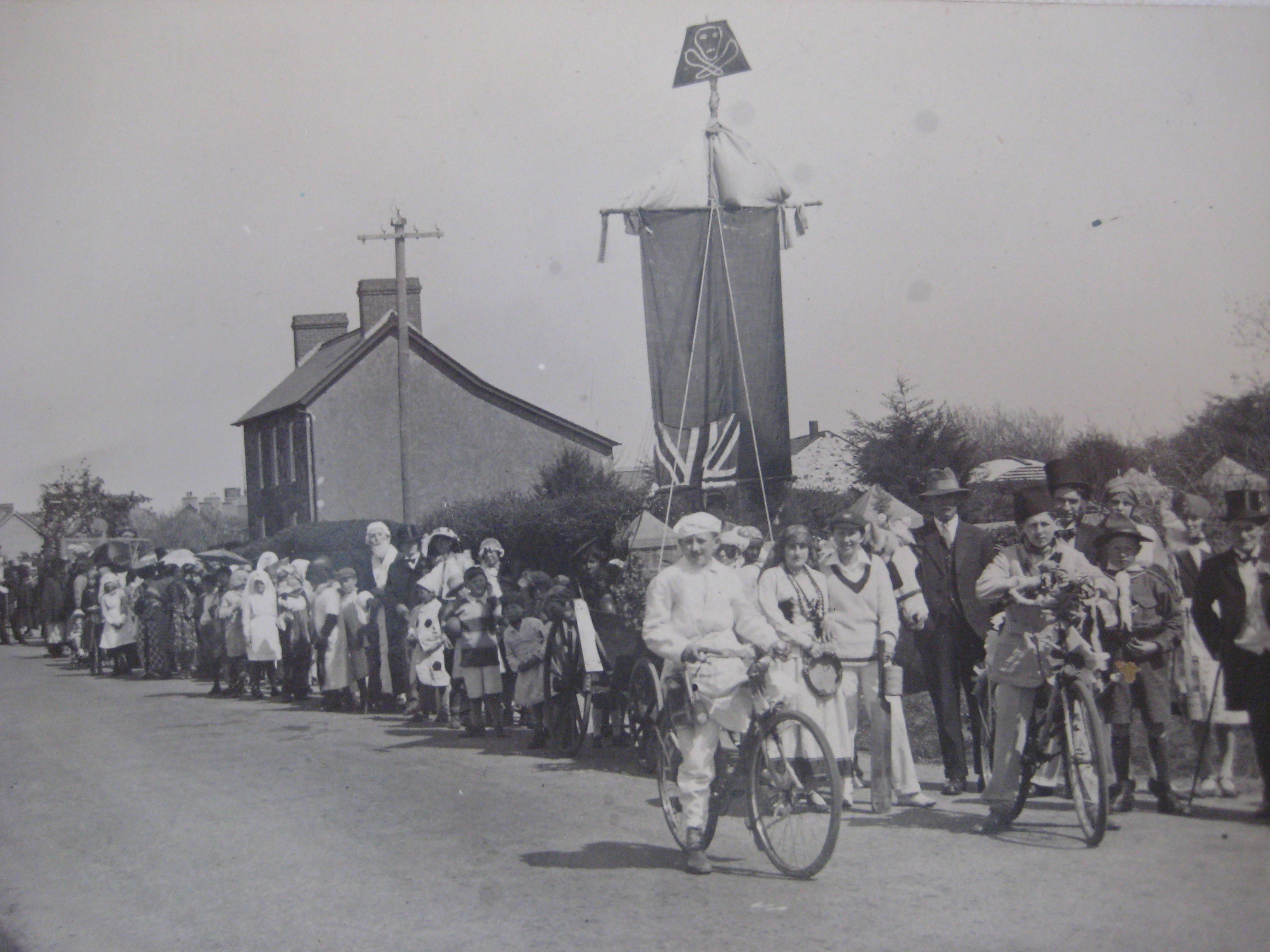
Dinas carnival 1This photo survives from the early 1930s (pity about the nasty mark) and was probably taken at the time of Dinas’ Carnival at the beginning of August. I’d say that the person with the camera was a friend or relation of the Walters, because David George,wearing a fez and riding a bike, is there in the front – outshone only by the baker on the bike – and his sister, Esther, is just behind, standing to the left of the man with the glasses and the shiny black hat. The dressing-up is wonderful so here it is in more detail. If you can identify anyone in the photo, please let me know.

IMG_4589 Dinas Carnival 2 IMG_4590 Dinas carnival 3 IMG_4591 Dinas carnival 4 IMG_4592 Dinas carnival 5 IMG_4593 Dinas carnival 6

Posted in History | Tagged , , , , , , | 1 Comment

Marie Elsie and the Man with the Golden Gun

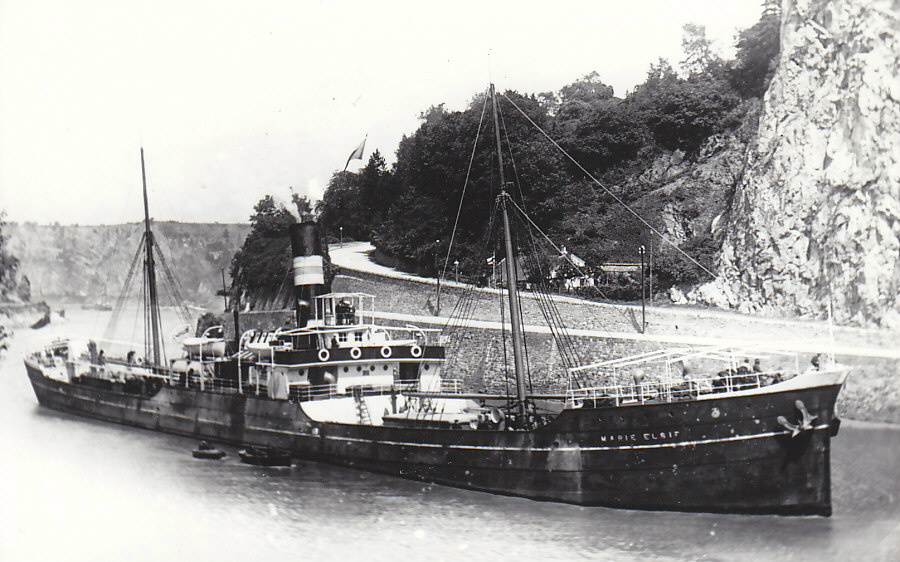
Capt. Joe Francis (of Eryl, Dinas) was captain of SS Marie Elsie in 1915 – a dangerous time to be a sailor. Fortunately, by the time the Marie Elsie was torpedoed and sunk on its way to Arkhangelsk in June 1917 he had moved on to be captain of the steam ship ‘Carmelite’. SS. Carmelite was also to be torpedoed by a German submarine and she sank with a cargo of iron ore, just off the Isle of Man in March 1918. Captain Francis survived and went on to captain larger ships in safer waters.

SS Marie Elsie

scaramanga letter to Capt Francis

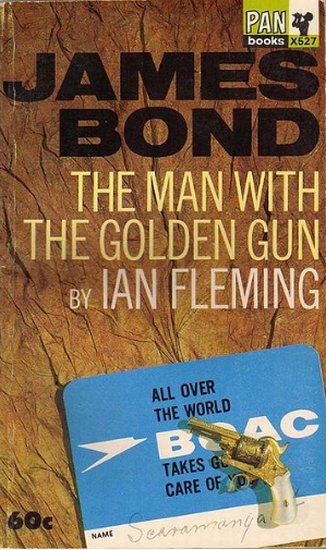
The_Man_with_the_Golden Gun_SS Marie Elsie was owned by ‘Scaramanga Brothers’, a Greek family that had fled to England from the Greek-Turkish conflict in the C19th. They built up a fleet of 8 tramp steamers and a shipping business that enabled the family to send their sons to Eton. Ian Fleming, also at Eton, and renowned for finding the names of his villains from his circle of friends and acquaintances, clearly liked the sound of “Scaramanga”, who ended up as Bond’s adversary – doomed to lose the final duel but providing plenty of excitement with high-tech equipment along the way.

Posted in History, Sea, Transport | Tagged , , , , , , , , , | 1 Comment

John Brett’s holiday rental

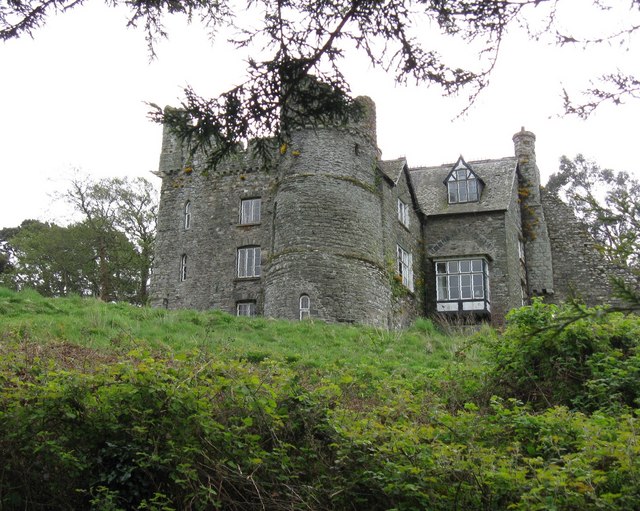
Newport Castle

The restored part of Newport castle. Photo credit John Voller

When the artist, John Brett, decided to paint on the coast of West Wales in the 1880s he became a regular summer visitor to the Dinas area, renting Newport Castle to accommodate his large family. This was handy for visits to the bays and cliff tops of Dinas, which can be recognised in a number of his works.

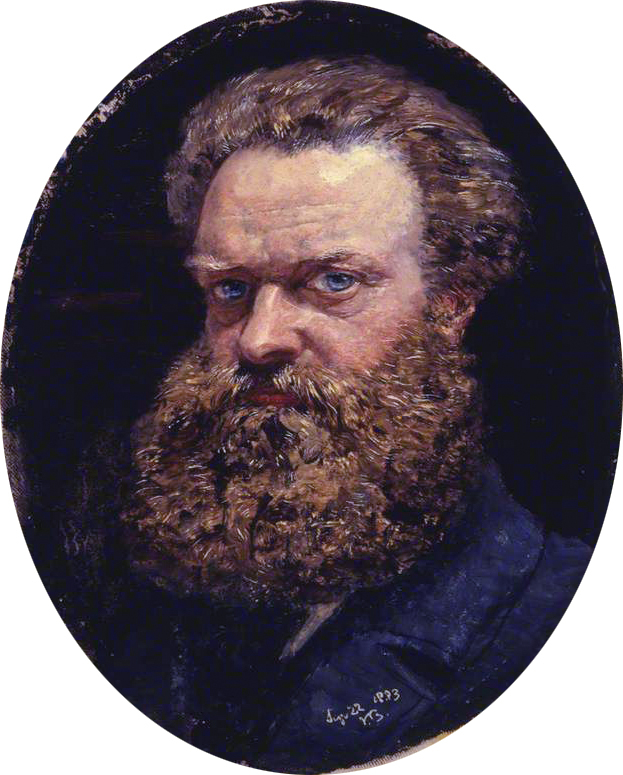
Self portrait  by John Brett 1883

Starting as a protege of Ruskin’s and influenced by Holman Hunt, Brett had made his name with paintings of Swizerland and the Italian Alps. After a visit to Naples, however, he started painting seascapes and by the time of his visits to Pembrokeshire he was well established and was receiving commissions for his work.

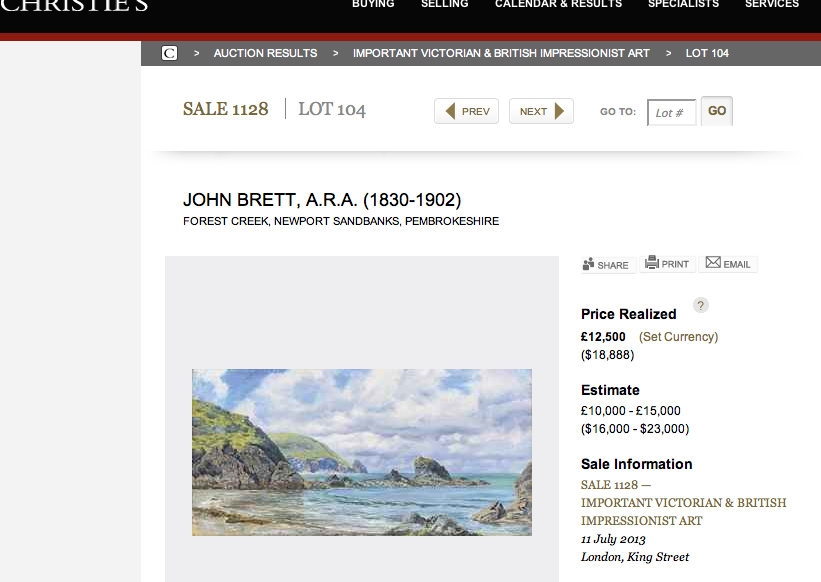
He painted Fishguard bay, Skomer and Skokholm and a view of Aber Fforest (entitled Forest Creek) that was recently auctioned by Christie’s.

John Brett at Christie's

I’m most interested, however, in his depiction of the cliffs at Pwll Gwaelod. These cliffs are really tremendously impressive – the wild beauty of the plunging rock face, the sea, the vegetation and the sky above;  everyone has a go at trying to capture the scene.

Early postcards are now sepia tinted and have a charm of their own, but, in my opinion, they never did  justice to the view. Today’s visitors have the advantage of digital colour and maybe their efforts are more effective at conveying the majesty of the rock face as it meets the sea but the number of photoshopped images available might indicate that even modern cameras aren’t quite up to the job.

Perhaps you just have to visit and see the cliffs for yourself.

Posted in Art, History, Nature, Sea | Tagged , , , , , , , | Leave a comment

A bill from Mr Thomas, the blacksmith

Ploughing with Bank house horses

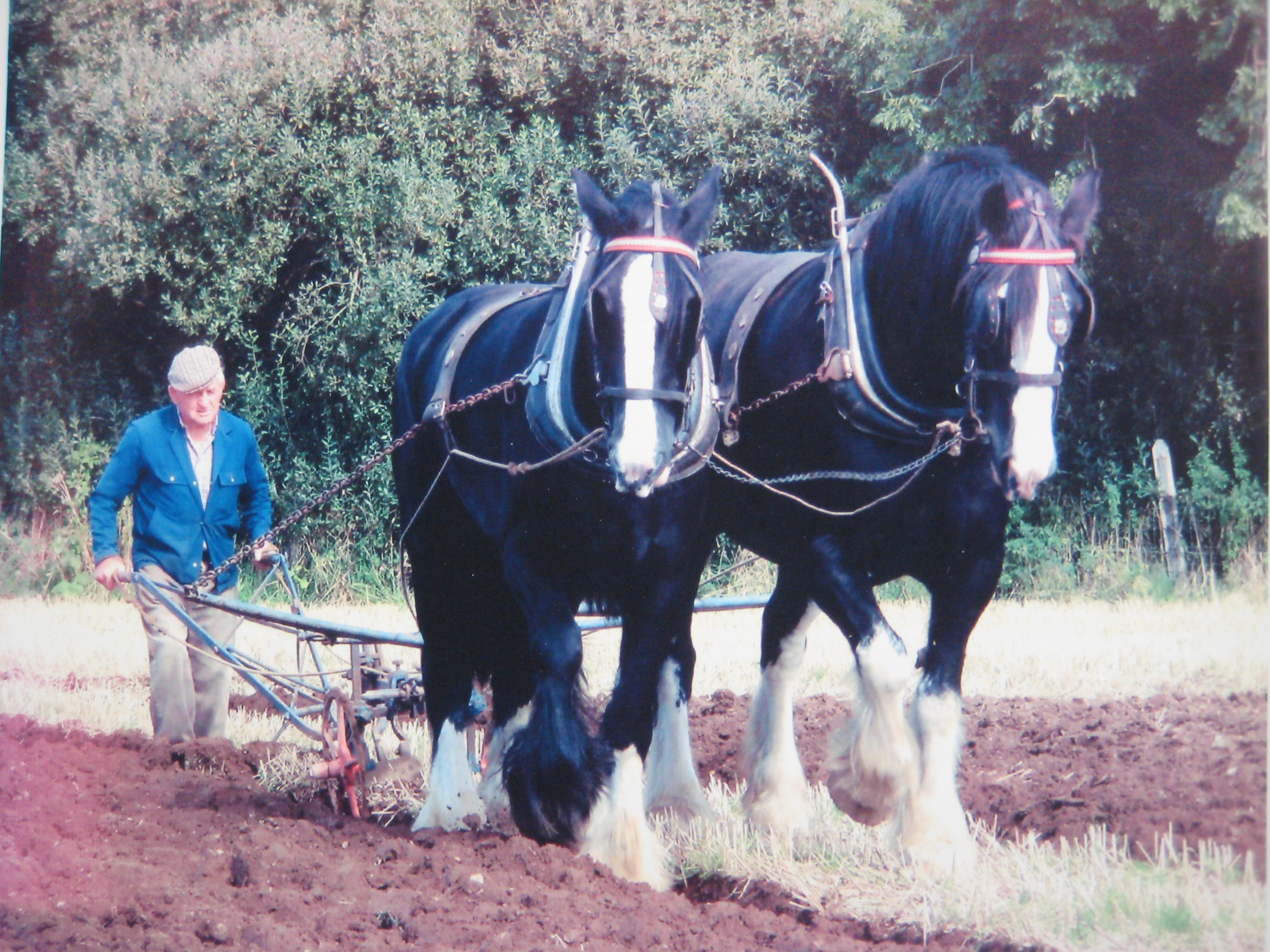
Here is Mr Selwyn Harries, at a local ploughing match, showing us how farming used to be done.

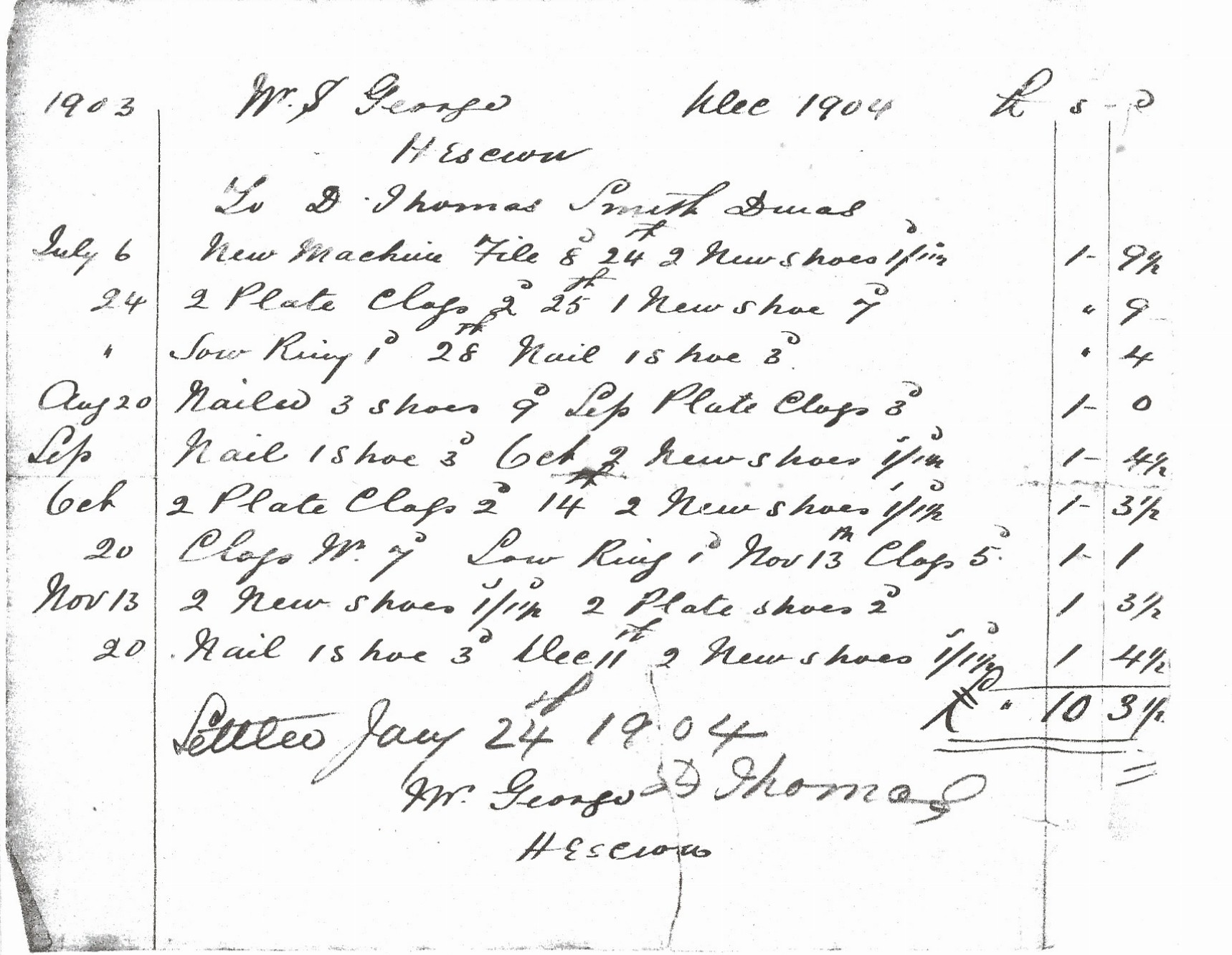
Before the age of tractors, the horses on my great-grandfather’s farm at Hescwm worked hard and the proof is in the number of horse shoes they went through. This bill shows that the Thomas family were already the Dinas blacksmiths and that they expected to be paid twice a year, not an unduly long interval when you consider that many accounts were settled annually on a Lady Day.

A bill from the blacksmith

Selwyn Harries’ beautiful horses can often be seen grazing in the fields between the main road and the path down to Aberbach, where you can admire their strength and enormous feet.


Posted in Farming, History | Tagged , , , , , , | Leave a comment

Tycanol Wood and its magic mossy ways

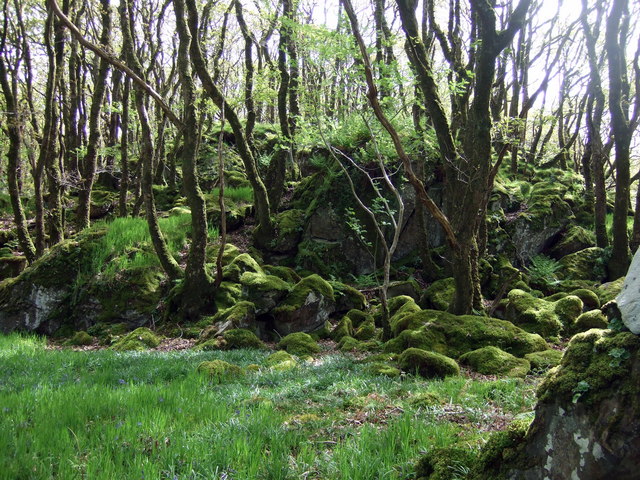
The roots of this oak tree must surely offer shelter to many small animals that venture out when the coast is clear. On the wet day of our visit to Tycanol Wood, however, we saw only the sheep that nibble the saplings and help keep this ‘wood pasture’ open and light – just right for the 400+ species of lichen* that make it a rare and important site.

Picture credit - Ceridwen

Picture credit – Ceridwen

This is an ancient woodland, described by George Owen in 1603, where every rocky outcrop, every living branch and every fallen tree is wrapped in mosses and lichens. We walked through this fairy tale wood on a warm drizzly misty day and it was easy to believe that the openings in the low cliffs would lead to magic kingdoms, the small spring-fed streams would drop to hidden rivers and that every wet-weather creature had a message to deliver.

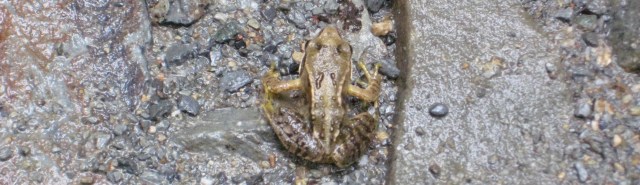
Tycanol Frog

Tycanol Wood is alongside the Pentre Ifan neolithic burial chamber, about 3 miles east of Newport.  It’s close enough to Dinas for several visits.  For a different experience, visit at bluebell time, in winter after a snowfall or even on a summer’s sunny day. It’s magic!

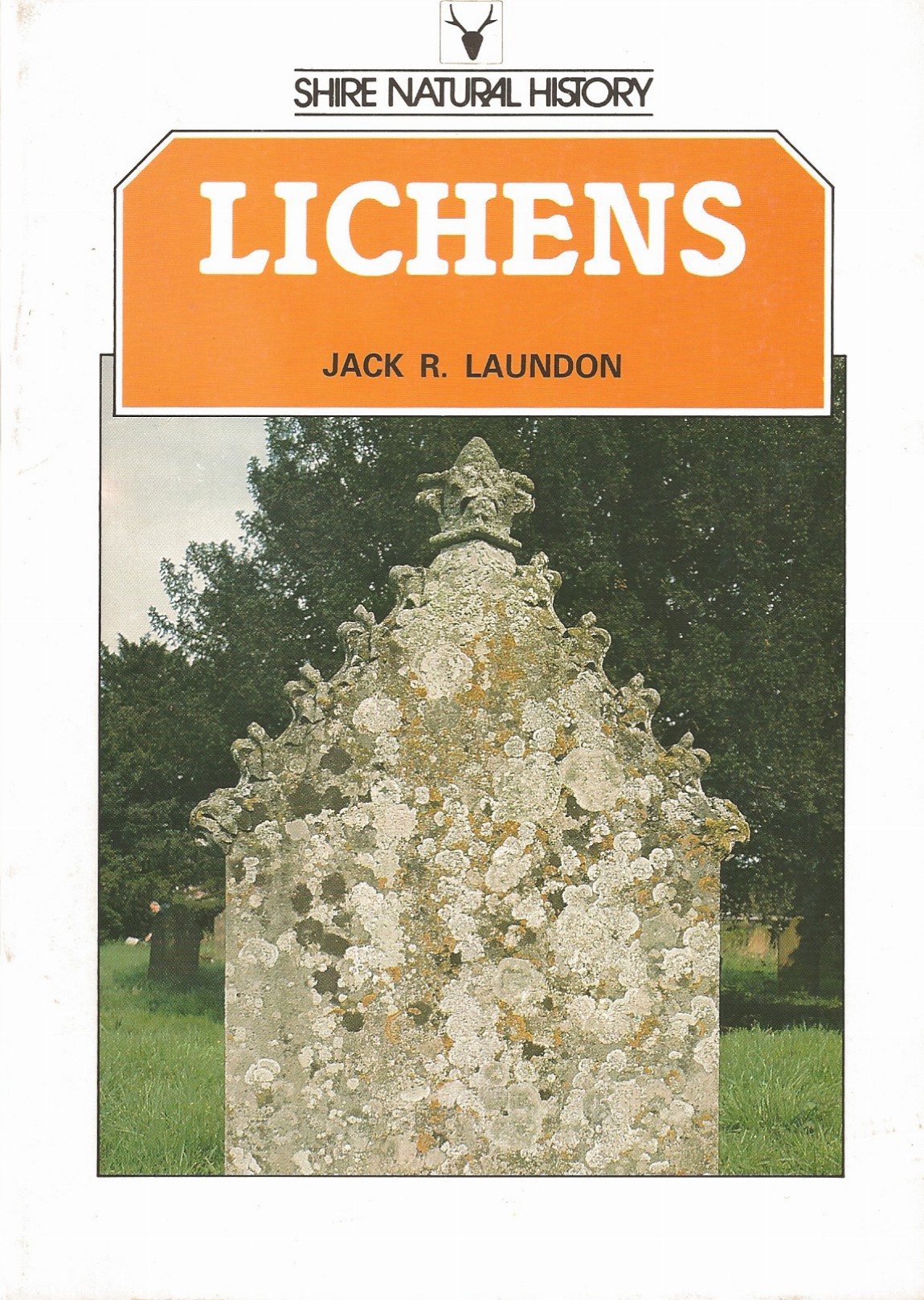
Lichens by Jack Laundon*Jack Laundon who wrote this little handbook on lichens was a founder member of the British Lichen Society. They have a brilliant website you must visit if you want to find out more about these fascinating organisms that grow 1mm a year and are extraordinarily sensitive to pollution.


Posted in Art, books, Nature, Wildlife | Tagged , , , , | 2 Comments

Dinas fashions c1912 (or More than you ever thought you’d want to know about gentlemen’s hats)

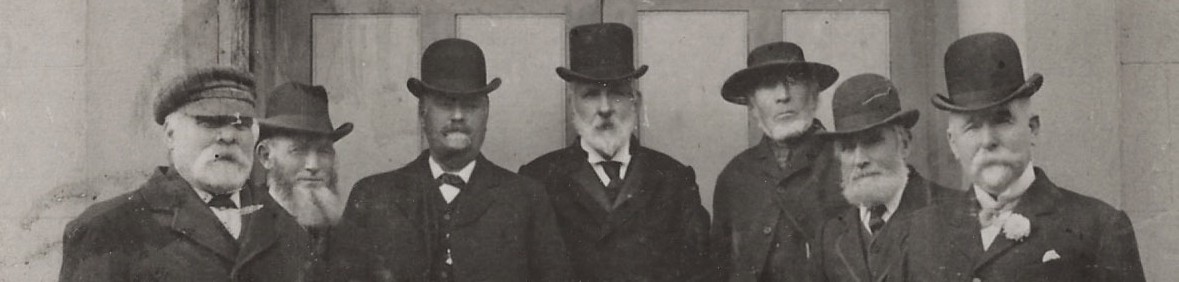
Before I learnt the names of these men, who served as Deacons at Tabor Chapel (Dinas) in about 1912, I became fascinated by their hats. Did their choice of headgear tell us anything about the individuals beneath? John Stephenson of Lock and Co.* , who is an Oxfam supporter and immensely knowledgeable,  helped me investigate.
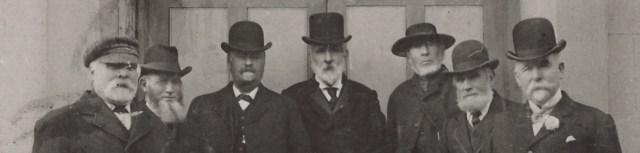
Tabor deacons' hats

From the left:

Captain James Harries is wearing a ‘yachting cap’ of the sort that Kaiser Wilhelm wore when he went yachting at Cowes. These caps were often made of corduroy but it looks as if Captain Harries’ cap was made of ‘melton’ – a heavy woollen fabric that would have been dyed navy blue; the same cloth was used to make a sailor’s ‘pea coat’.

Stephen George is wearing a felt hat with a turned up brim – similar to a Homburg, (popular after the prince of Wales’ visit to Bad Homburg in the 1890s)  – made of rabbit fur and stiffened with shellac dissolved in water.

George Davies is wearing a bowler.  The first bowler was made by Lock’s for the Earl of Leicester who was looking for practical headgear for his gamekeepers at Holkham Hall. The gamekeepers had been wearing top-hats that would get knocked off by low branches as they went about their work. So, at his request, round about 1850, Lock’s came up with a better design. It was made of rabbit fur and stiffened with shellac dissolved in alcohol. The Earl tested it by jumping on the hat – and it met with his approval.

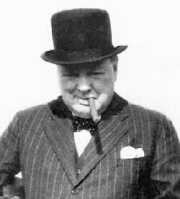
Churchill in square crowned bowlerThe Minister, Rev. J W Maurice, is wearing a square crowned bowler –  like Churchill, in this photo on the left. These sold, slowly but steadily, until quite recently at Lock’s.

Dan George is wearing an old fashioned flat brimmed felt hat.  This hat became popular late 18th/early 19th century and replaced the the three cornered hats that had been worn (with wigs) until that time. But in 1795 Pitt the younger (Prime Minister of the day and a customer of the 3rd James Lock) imposed a tax of a guinea a year (collected by the hatters themselves) on wig powder, and this proved quite an incentive to abandon wigs and develop a style of hat for the un-wigged head; the cocked hat died a death and the round hat became very popular.

Evan Evans’ bowler hat has an unusually round crown and is lower than average. Maybe because he himself was quite a short man – shorter in the photo than Captain James who is standing on the step below him. According to John Stephenson his hatter would have advised him on a hat to suit his stature.

Captain James’ bowler hat is taller – but looks as if it’s a poor fit. It shouldn’t just be perching on the top of his head.

So, can you tell anything about a man from his hat? Maybe you can. What do you think?

* Lock and Co is the oldest hat shop in the world and has been run by the same family since 1676. It belongs to a small exclusive group of 9 ‘tercentenarian’ businesses in the UK, the oldest of which is a Butcher’s in Bridport, Dorset, that was founded in 1515. And while we are on this side-track you might like to know that there is a vineyard in France that has been run by the same family for 1000 years and a shrine-maker in Japan whose family business was established in 575.
 

Posted in History, Religion, Sea | Tagged , , , | 2 Comments

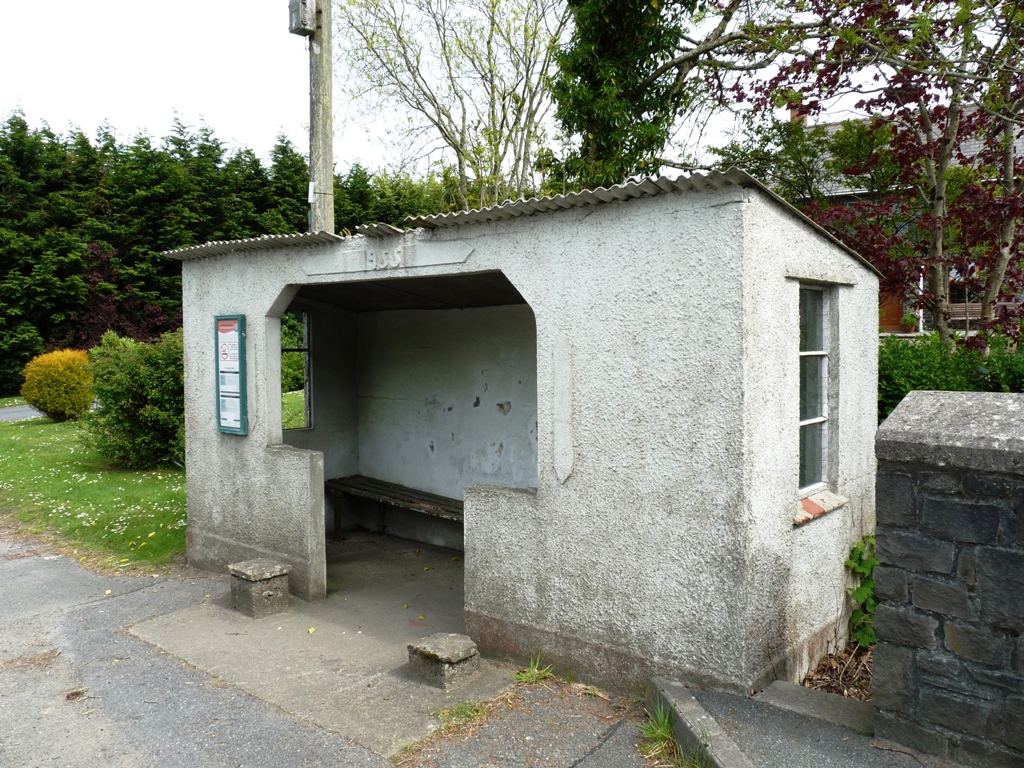
The bus shelter at Yet y Bontbren (or Teenage passion c1955)

Bus Shelter Dinas Yet yr Bontpren

Photo credit: Gareth Jones

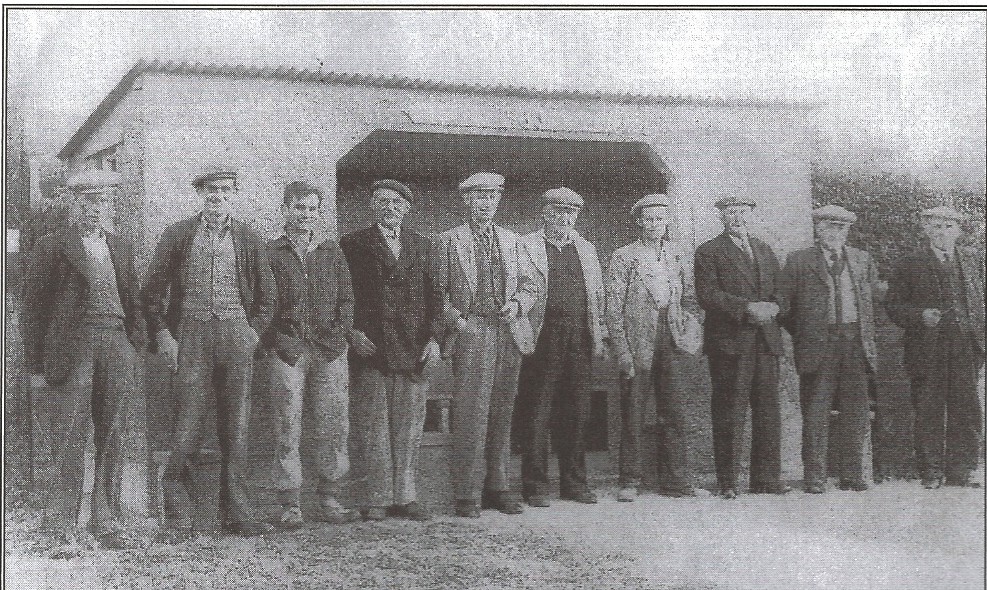
Have a good look at this bus shelter because it will soon disappear and be replaced with something much more modern and probably flimsier. Before it’s demolished, however, we should celebrate its beginnings and give thanks for the community spirit that inspired its builders. Ten men from Dinas worked as volunteers and lined up in front of the shelter for this photo when they had completed the job.

Elwyn Williams, Glyn Harries, Norman Thomas, Hoffi Harries, Bill Harries, Tom Mabe, Ezec Williams, Tom Battin, David Nicholas, Jim Rowlands,.

From the left: Elwyn Williams, Glyn Harries, Norman Thomas, Hoffi Harries, Bill Harries, Tom Mabe, Ezec Williams, Tom Battin, David Nicholas, Jim Rowlands. (Photo: Y Llien Gwyn)

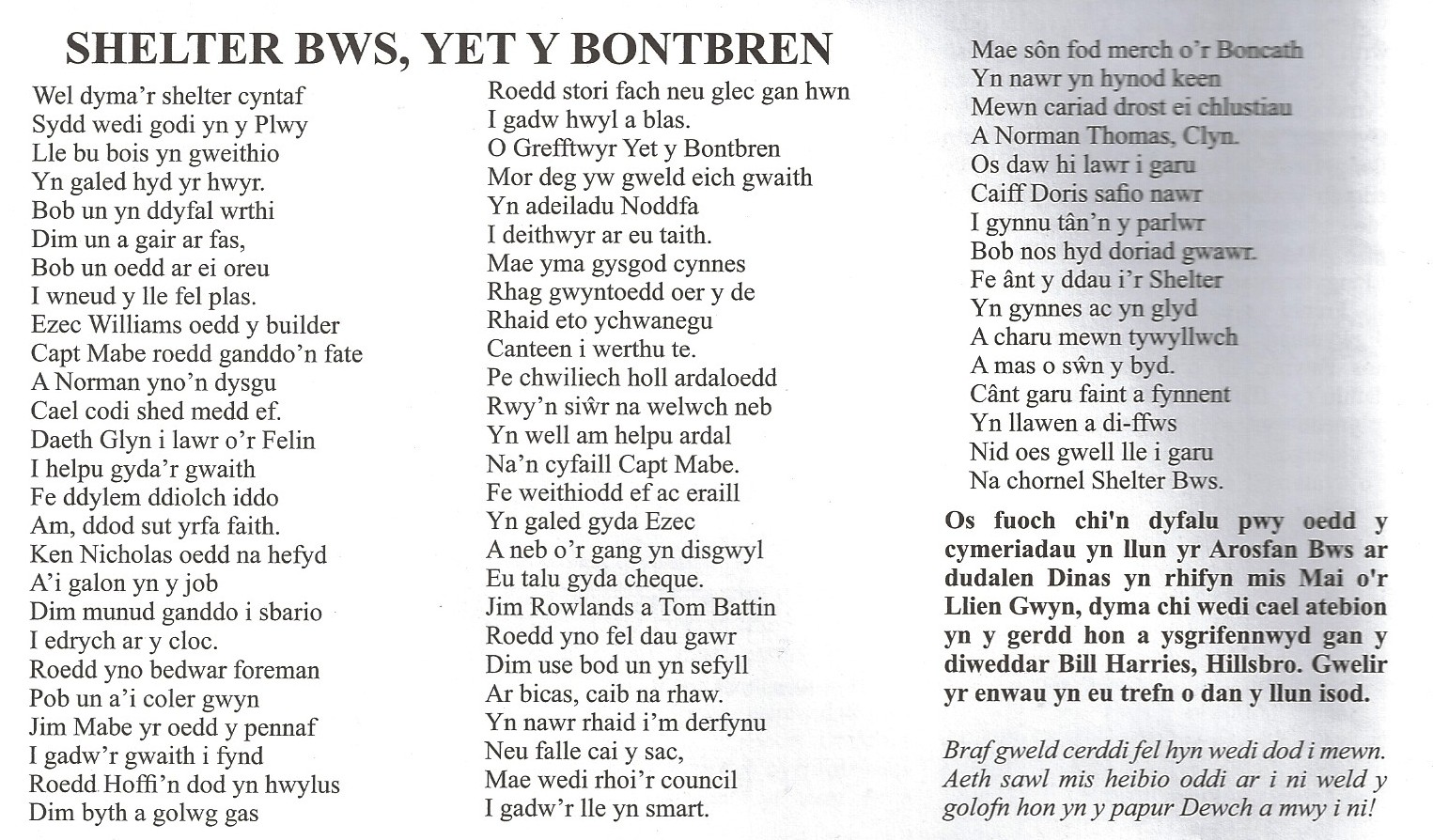
Of course, all the hard work was undertaken with the idea of offering travellers a refuge from the wind and the rain. However, even at that time, they appreciated its potential as a quiet place where teenagers could meet for some canoodling, away from the prying eyes of their ever-vigilant parents. The following poem, lauding the achievement, was written at the time by Bill Harries, Hillsbro (see photo), and published in the June 2014 edition of ‘Y Llien Gwyn’.

Bus shelter builders-1

I’m very grateful to Morys Rhys for this literal translation.
Well this is the first shelter /Built within the Parish /Where the boys were working/ Really hard until late. /Everyone working diligently /Not one cross word, /Each one doing his best /To make the place a mansion. /Ezec Williams was the builder/Capt Mabe worked as his mate /And Norman was there learning /How to build a shed says he. /Glyn came down from the Mill /To help with the work /We should really thank him /For coming such a long way. /Ken Nicholas was also there /With his heart in the job /Not a minute had he to spare /To look at the clock. /There were four foremen/ Everyone with a white collar /Jim Mabe was the foremost /To keep the work going /Hoffi came along cheerfully /Never with a stern glance /Always with a story or tale /To make the work fun. /Oh craftsmen of Yet y Bontpren /How fair your work appears /Building now a refuge /For travellers on their journey. /There is here a cosy shelter /From the cold southern winds /All that is now required /Is a canteen for selling tea. /If you searched throughout the districts /I’m sure you wouldn’t find /Anyone better for helping his community /Than our friend Capt Mabe. /He as well as others /Worked hard with Ezec /And none of the gang expected /To be paid with a cheque. /Jim Rowlands and Tom Battin /Were there like two giants /No chance for anyone to lean /On a pickaxe, mattock or shovel. /And now I must conclude /Or else I’ll face the sack /It’s now been given to the Council /To keep the place smart. /There’s a rumour that a girl from Boncath /Is now extremely keen /In love over her ears /With Norman Thomas, Clyn. /If she comes down to court him /Doris* can make savings now /No need for a fire in the parlour /Each night till break of dawn /The two’ll be in the Shelter /So cosy and so warm /Courting in the darkness /Away from the world’s noise /They’ll be courting as long as they want to /Happily and without fuss /There’s no better place for courting /Than the corner of a Bus Shelter.
*Norman Thomas’ mum.


Posted in History, Welsh language | Tagged , , , , | 3 Comments