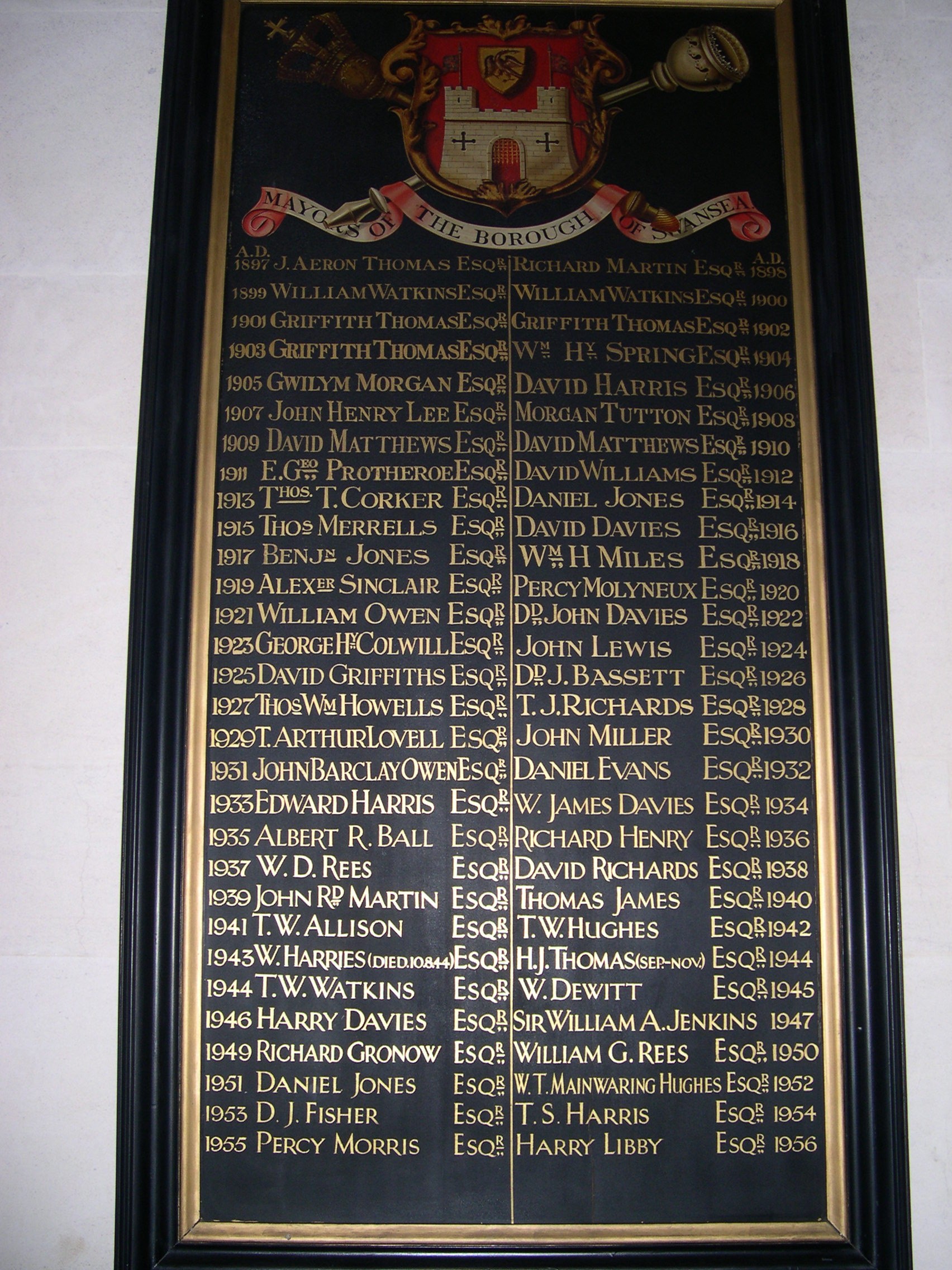
Dinas boy made good

DSCN0510-1

William Harries, whose family came from Dinas, was Mayor of Swansea for a few months in 1943/1944 before being killed in a road accident on the Mumbles Road.

Here he is as a young man with his parents, brother and sister. Unlike the Dinas family photos, where the setting is usually outside in the sunshine, these family members must have gone to a photographer’s studio, where a fancy backdrop gives an illusion of domestic opulence.
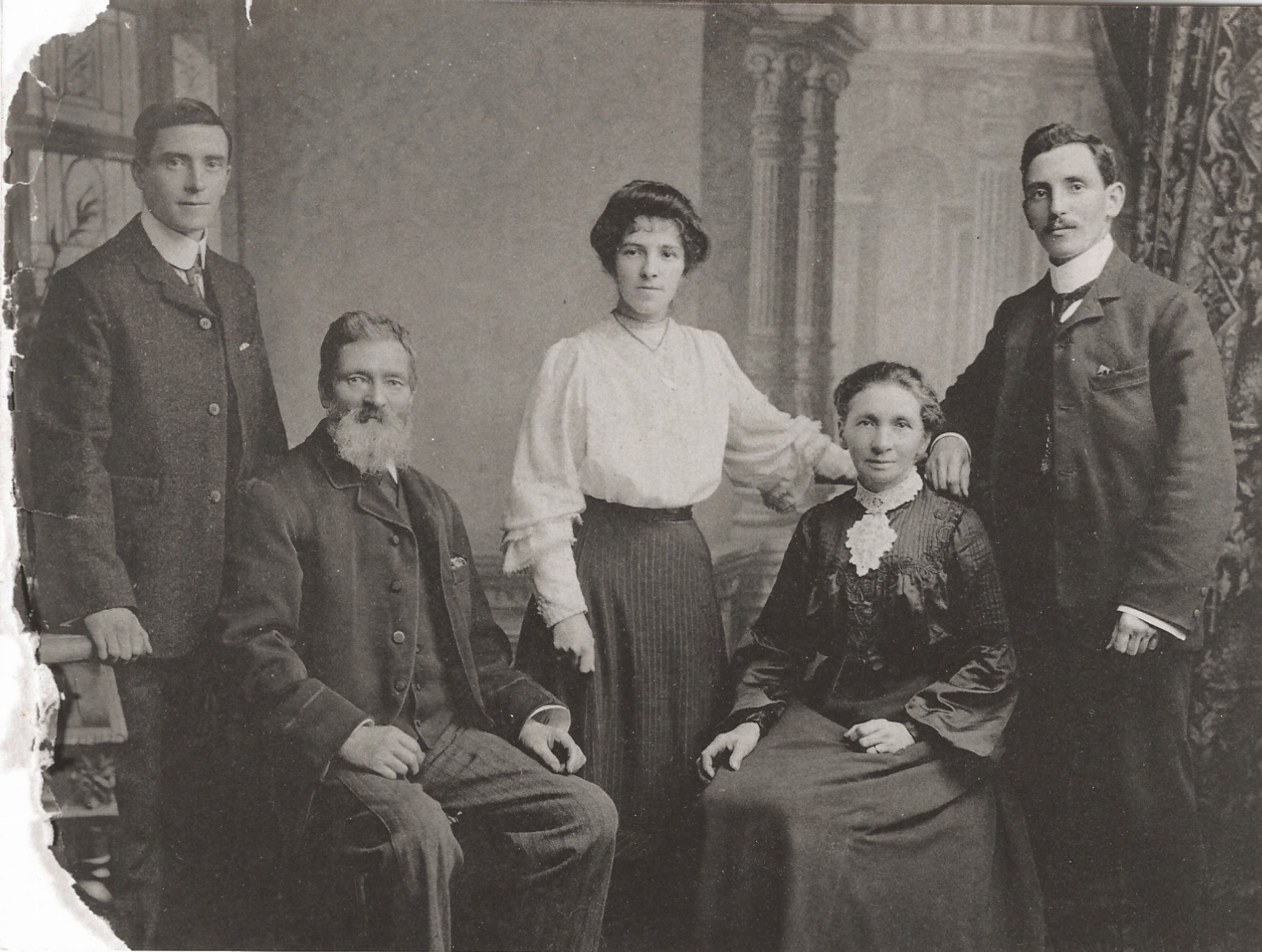
Harries family Swansea

The future Mayor of Swansea is on the left. His parents James Harries and Ann Harries (née Thomas) are seated with their daughter Mary Ann between them and their son, David Harries on the other side. Mary Ann was a primary school teacher who married my grandfather and moved with him to London. I know that she learnt of the death of her brother from the newspaper headlines on a billboard.

I was told that she never really recovered from the trauma of the war-time blitz and died soon after. I know little about her family.
Posted in History | Tagged , , , , , | 1 Comment

“Don’t cry William bach”

St Brynach's churchyard1

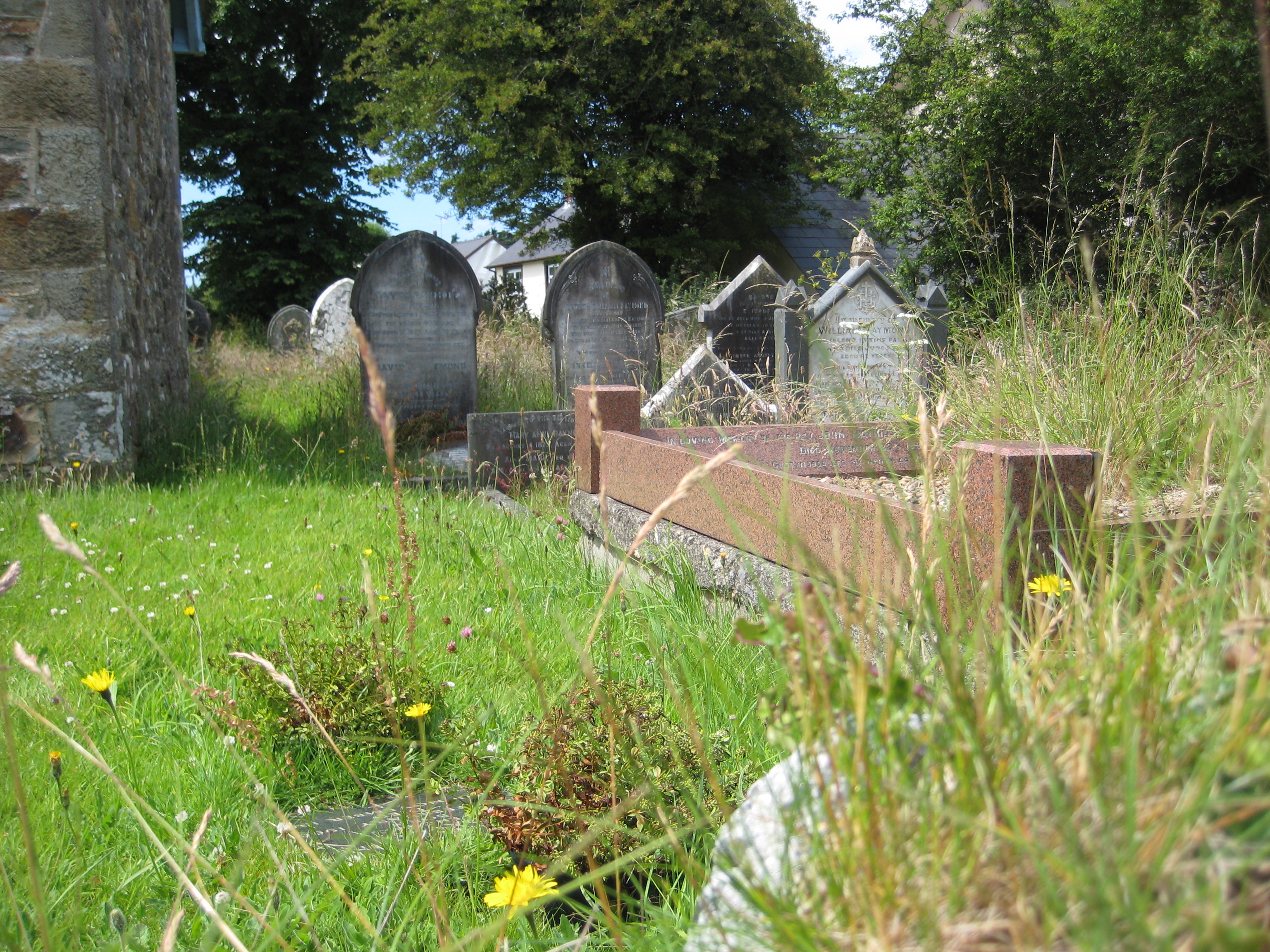
In the least visited part of St Brynach’s churchyard, Dinas, a gravestone tells of tragedy.

IMG_4454

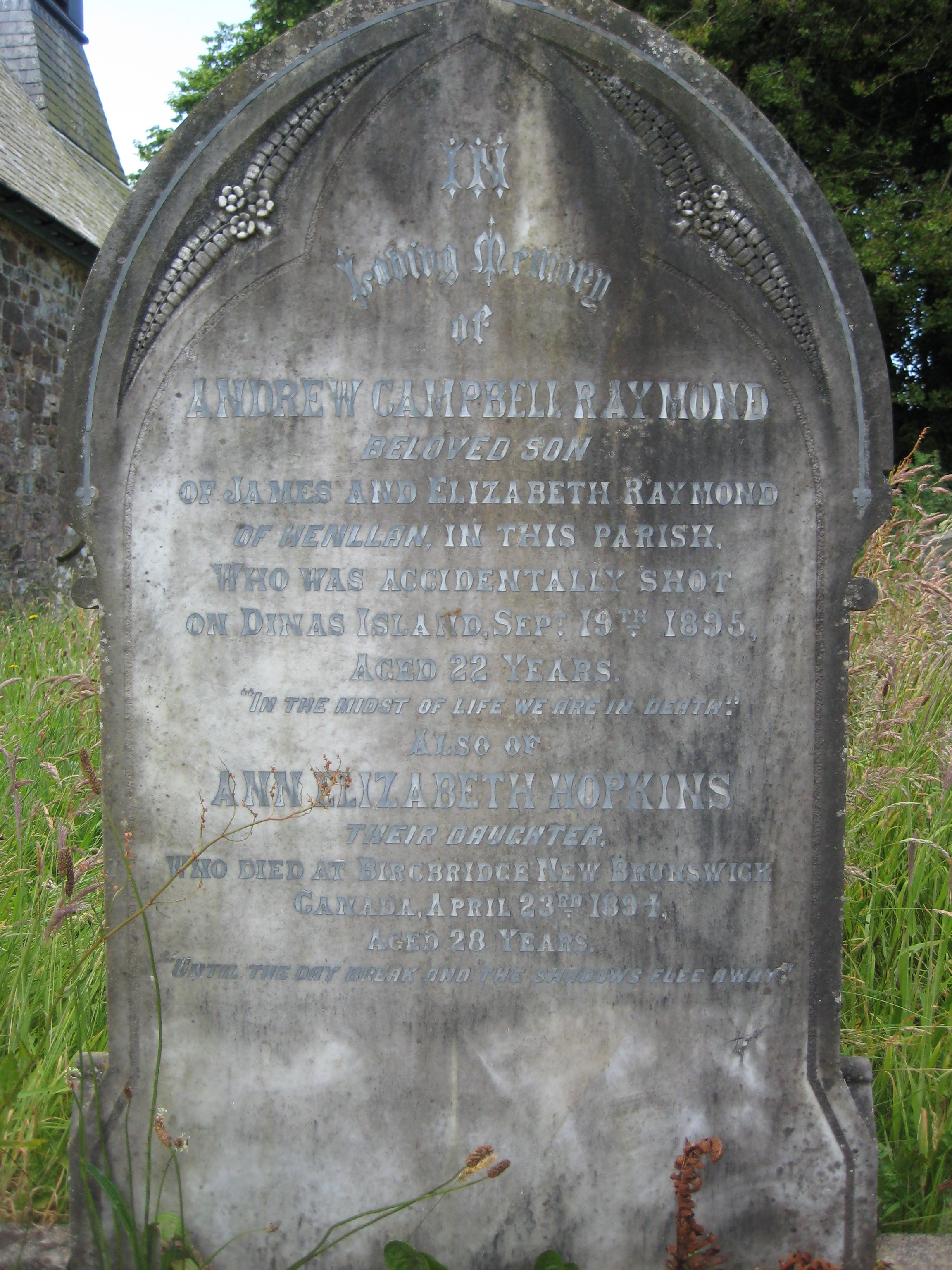
In loving memory of Andrew Campbell Raymond, beloved son of James and Elizabeth Raymond of Henllan in this parish, who was accidentally shot on Dinas Island, Sep: 19th 1895, aged 22 years. “In the midst of life we are in death.”

On Thursday 18th September 1895  two young men, William James and Andrew Raymond, set out to shoot rabbits on Dinas Island. On the rough ground at Carreg y Fran, William stumbled, his gun struck the ground and discharged, leaving his best friend, Andrew, mortally injured. Other villagers arrived quickly at the scene and heard the dying man insist that William was not to blame. The doctor was called for but he knew at once that there was nothing he could do and Andrew Raymond died the next day at the age of twenty-two.

Four days later an inquest was held at the Island Farm, before the Coroner and a jury of local men*.  A full report appeared  in the County Echo of September 1895.

At the inquest, William James addressed the jury. Here is his account, with a poignant attempt at the formality required by the occasion:

“I live in Bryn Henllan and am working in a colliery in Glamorganshire. I knew the deceased. We were brought up together since children. I spent the greater part of my time with the deceased when I was at home. On Thursday last, I was out with deceased shooting rabbits. We went out early in the afternoon and got to the Island about six o’clock. We were there about quarter of an hour before we came to the place where the accident happened. We had parted for a while, then met up again. We met Mr Prowse the coastguardsman. The right barrel only of the deceased’s gun was loaded, the other had been discharged at a rabbit. I did not try to put the hammer down. I did not hear the deceased say there was a rabbit. He said he was going further up to look for a rabbit. Mr Prowse was walking alongside of him. I was walking abreast of them, but a little further down. I slipped over a stone as it was very rough there. The stock of the gun struck the ground and the barrel was discharged. I did not know that Andrew was shot until Prowse shouted out. I carried the gun in my left hand as I expected to see a rabbit. When Prowse went to get assistance, deceased told me not to cry as I could not help it.”

After some consideration the jury concluded that ‘Andrew Campbell Reymond …died of shock occasioned by the gunshot wound accidentally received’.

* The members of the jury were:

  1. Capt. D Harries, JP, Dinas (foreman)
  2. Thomas Davies , Laurel Villa
  3. Thomas Mendus, Dyffryn
  4. John Symmons, Tanybryn
  5. Thomas Davies, Cwmyreglwys
  6. William Meyler, Soar Hill
  7. R Richards, Cwmyreglwys
  8. William Gwynne, Cwmyreglwys
  9. O D Harries, Dinas Cross
  10. Benjamin Harries, Bay View
  11. D Thomas, Rose Cottage
For a fuller account of this accident see “The News of Dinas 1894-1900” transcribed from The County Echo by Ann and John Hughes for the Dinas History Series. This is an absolutely fascinating publication that is now out of print and sold out. A copy can be downloaded by clicking countyechofinal. Phone John and Ann Hughes on 01348 811255 for information on their other publications.
Posted in Farming, History | Tagged , , , , , | Leave a comment

The old hay barn

IMG_4459When Mr Rowlands constructed his hay barn, about seventy-five years ago, his wife and daughter were not impressed; it was rather a dangerous contraption, in their view.

Over recent years the farmers in the Dinas area have taken to new ways of storing the hay and although the corner posts of Mr Rowlands’ barn have remained more or less vertical, the garden has crept upwards. Soon there will be little to remind passers-by of their original use.

When I first noticed these poles, by the lane that takes you from Bwlchmawr to the quiet little bay of Aberbach, the barn had been abandoned for some time; I could only guess at its original shape and the reason for the family’s misgivings.

My travels this summer, however, gave me an answer when I saw this beautiful hay barn near Svetvinčenat in Istria. The poles, pulleys, chains and corrugated roof were all still in place so that the roof could be raised or lowered to fit snugly over the hay that was being stored.

IMG_4251

Posted in Farming, History | Tagged , , , , , , | 2 Comments

Questions it’s too late to ask

Waldo Williams and David George at Dinas CP School

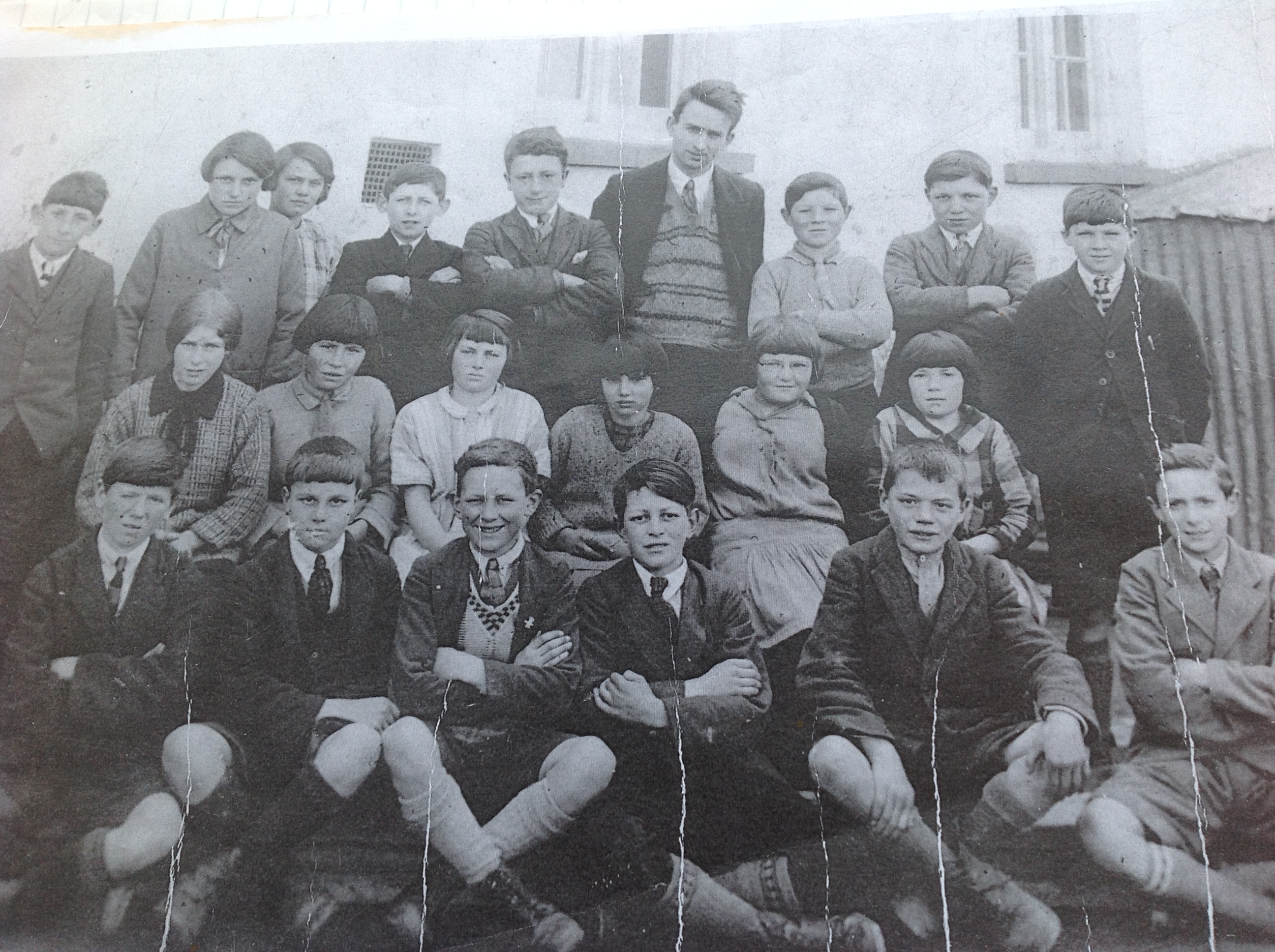
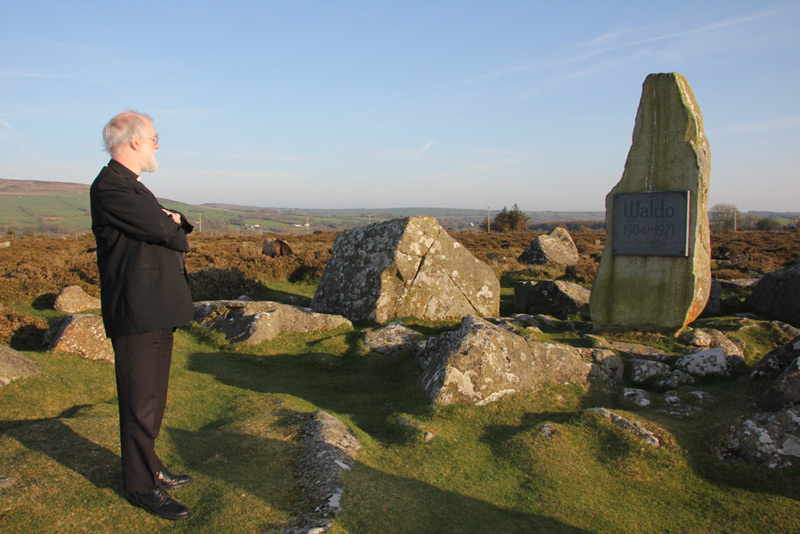
Of course I was excited to find a photo of my Uncle Davy George with his class at Dinas County Primary school. Here he is in about 1928, standing with his arms crossed in the back row – fourth from the left. But  I didn’t know until yesterday that his teacher  (hair swept back, stripey jumper and kind face) was Waldo Williams: the Waldo Williams with a memorial at Mynachlog-ddu and whose writing has been translated into English and celebrated by The Archbishop of Canterbury, Rowan Williams (no relation).

What was it like to be taught by this gifted idealist? My dear Uncle Davy George died twenty years ago and so it’s too late to ask.

Waldo Williams was born just down the road in Haverfordwest and was  23 or 24 when this school photo was taken. Was this his first teaching post?

He is now remembered as being one of the foremost Welsh Language poets of the last century but locally he is also remembered  for his pacifism – he was twice imprisoned for refusing to pay his taxes, in protest again the Korean War and compulsory national service.

The Archbishop of Canterbury-at-Waldo-Williams-site-800

The Archbishop of Canterbury at the Waldo Williams memorial stone in Mynachlog-ddu. – See more at: http://rowanwilliams.archbishopofcanterbury.org/articles.php/2426/waldo-williams-poetry-and-peacemaking#sthash.QSGK35mB.dpuf

For more information about his life and work click this link to the Waldo Williams Society.

With many many thanks to Gareth Francis (Waldo Williams’ nephew), who helped identify the other pupils in the photo, here are all the names – from the left:

Back row : David Morris, Stella Rees, Lily Thomas, David George Walters, Alun Thomas Y Gof (the blacksmith ), Waldo Williams (teacher and notable Welsh poet who lodged at Bennet Terrace – now known as Greenbanks), Merddin Williams, James John Rowlands, William Henry James.

Middle Row: Maggie Mary Jenkins, Dilys Davies, Lizzie John, Nelly George, Nancy Murrow, Mary E Harries.

Front row: Albert Warth, David John Murrow, James David Howells (Kiel House), Jimmy Harries, Seth Morris, Cromwell Davies (he emigrated to Australia).


Posted in books, History, Religion, Welsh language | Tagged , , , , , , , , , | 8 Comments

Beehive pigsty – a pig’s eye view

As you can see, the pigsty (on the left) is in much better condition that the house of its owner (on the right). The cottage has fallen into disrepair and fencing prevents the unwary walker from straying into an area where rotten beams and falling masonry constitute a hazard.

The pigsty, however, has recently been beautifully restored and the curious passerby can get a pig’s eye view with no danger to life or limb.

Although Tegfan and most of the other houses in Dinas kept a pig, this beautiful pigsty is a rarity and the traditional exterior gives no hint of its structure. Once you are inside you can appreciate the roundness and height offered by the beehive design. I was able to stand upright in the centre but couldn’t take a photo that illustrated its shape. This was the best I could do.

The Museum of Wales at St Fagans has more photos (some with pigs), together with information on this unusual style of construction, typically dating from about 1800.

To visit this pigsty walk up the mountain from Dinas, past Machpelah graveyard, until you reach the viewpoint on your right. On your left, on the other side of the road from the viewpoint, there is a narrow path that widens out beyond a gate. Continue for about 200 meters, go through yet another gate and the house will be on your left and the pigsty on your right. While you are there perhaps you could do a little weeding!

Posted in Crafts, Farming, Food, History | Tagged , , , , , , , | 2 Comments

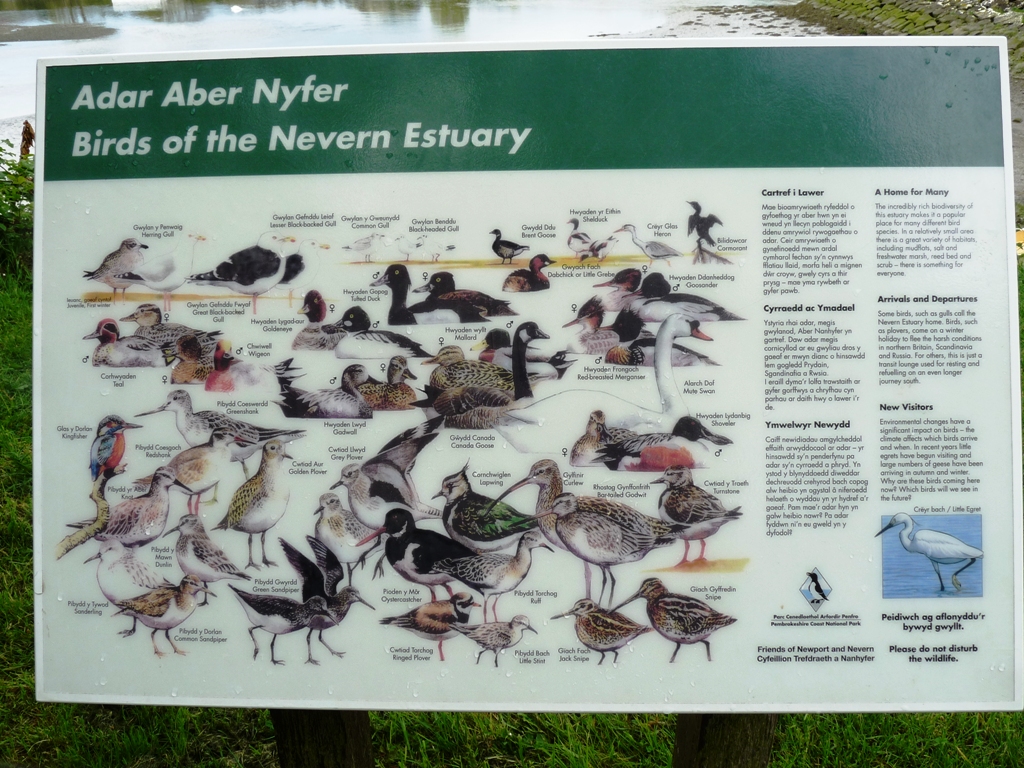
Bird watching in the Nevern estuary

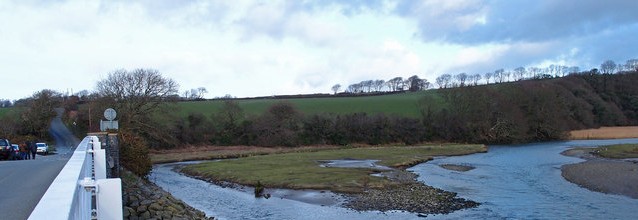
Newport white metal bridgeThe cars you can see parked on the far left may belong to visitors looking for a signal for their mobiles but they are more likely to be bird watchers, who know that the Nevern River’s tidal estuary at Newport attracts a wonderful variety of birds. At low tide the salt marches extend into acres of grey mudflat that are rich in the molluscs, worms, insects and shrimps that make good feeding for ducks and waders.

Birds of the Nevern Estuary

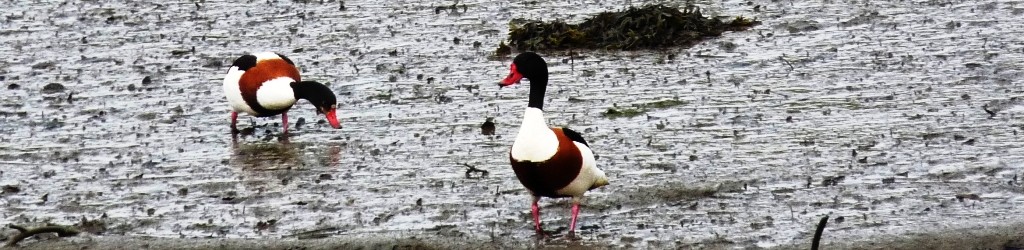
The mud isn’t exactly pretty but some birds do their best to brighten it up

Shelduck on the estuary at Newport

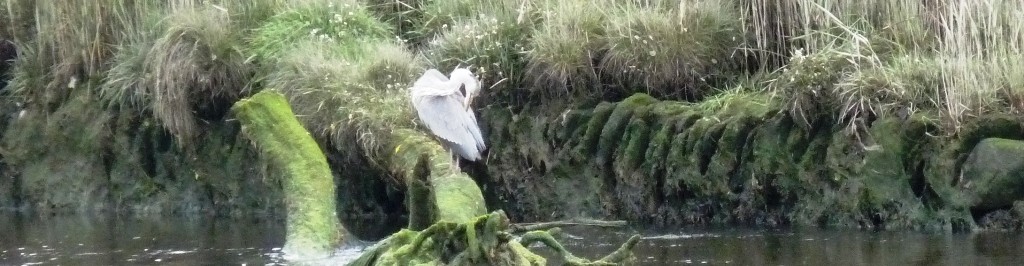
while the preditors prefer to blend in with their surroundings.

Heron at Newport bridge


Posted in Nature, Sea, Wildlife | Tagged , , , , , , , , , , | Leave a comment

A thousand years at Nevern

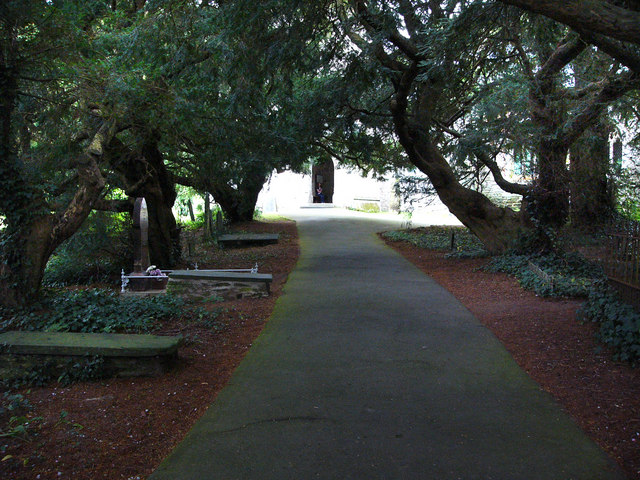
Yew tree avenue at Nevern Churchyard. Photo credit Chris Gunns

Yew tree avenue at Nevern Churchyard. Photo credit Chris Gunns

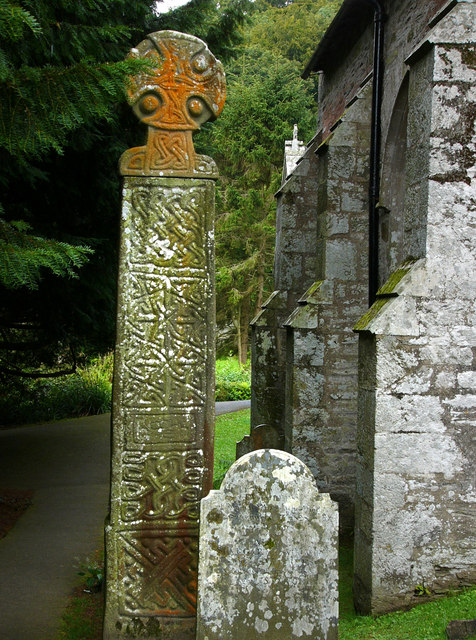
As a child , it was the shady avenue of ancient Yew trees, one of which intriguingly bled thick dark red sap, that would make my visits to Nevern’s St Brynach’s Church special.

Nevern Cross (photo Chris Gunns)

Nevern Cross. Photo credit Chris Gunns

Now, my treat awaits at the end of the shadows, where this beautiful high cross has stood for a thousand years. The cross and its decoration, carved from hard volcanic rock, have survived amazingly well.   The mortice and tenon joint that fixes the upper wheel head to the base is intact and the detail of the designs is still clear. It’s the patterns that I find so delightful – on all four sides.

There is a Latin inscription on the front: H/AN/.EH for which I have found no explanation – could it be the name of the sculptor or the person who commissioned the work? On the back are the letters DNS which are assumed to be short-hand for Dominus.

While I was in Istria a few weeks ago (a region that changed nationality three times while my mother was living in that part of the world and has changed again since) I was dazzled by the mosaics in the basilica at Poreč/Parenzo. Of course the 6th century Byzantine wall mosaics are stunningly beautiful but the floors, made by local craftsmen, also held my attention  and I loved being able to make links to the Nevern cross.

There were many other similarities between this coastal area and our part of North Pembrokeshire: the drystone walls, the wild flowers, the small abandoned churches, the maritime culture and history of fishing and boat building. The Istrian sheep, however, wore bells and looked different.

Posted in Art, Crafts, Farming, History, Sea | Tagged , , , , , , , , , , , | 2 Comments

A mystery solved

Tabor deacons scan 2

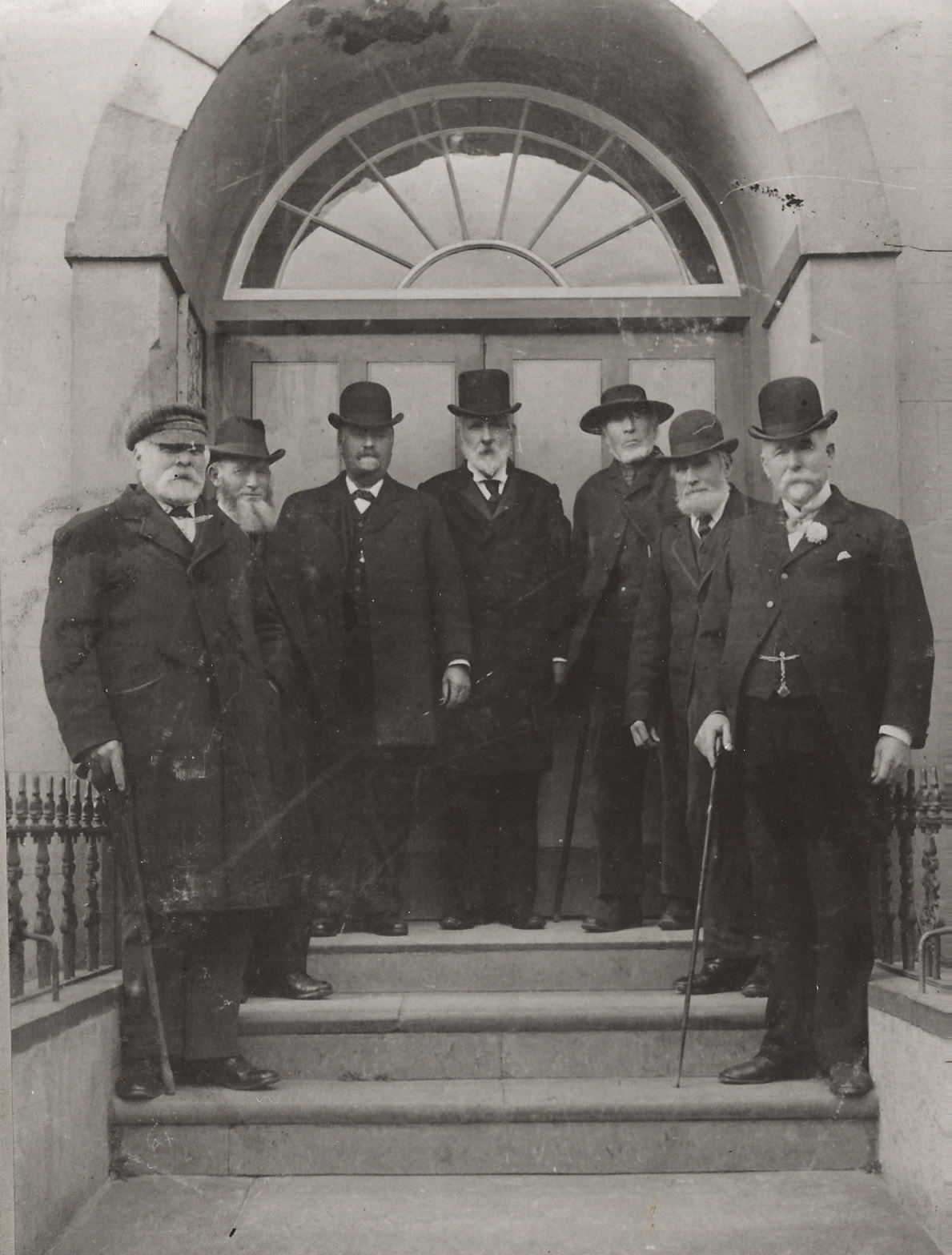
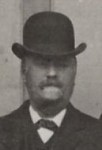
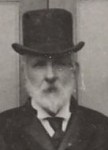
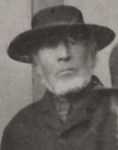
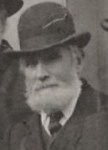
While I have been trying to identify the people in this photograph (all deacons of Tabor Chapel, Dinas), I have become increasingly fascinated by them. I’m interested in what I can guess of their characters but also the possible significance of their style of hats, beards and walking sticks.  Did they know, when they set out from home that morning, that they would be posing for a group photo? Did the photographer consciously place the two sea captains to flank the group on the left and the right, so that we can reflect on their similarities and differences? Now that I have discovered their names and a tantalisingly small amount of information about them, I remain interested to learn more. Note that each man is also identified by the name of his house or, in Evan Evans’ case, the part of Dinas he lives in. The house name is also added to the personal information on many of the gravestones in local churchyards. Is this a custom elsewhere?

Many thanks to Rex Harries, Ty Rhos, Dinas, who has an original of this photograph on the reverse of which the names of the deacons are listed. We think the photo may have been taken around 1915;  Captain James Harries died in 1918.

So from the left as you view the photograph we have:-

* Click here to see the house Captain James built. It has recently been up for sale.


Posted in Farming, History, Religion, Sea | Tagged , , , , , | 11 Comments

More tales from the rubbish heap

Our privet hedge from FishguardI’m sure that the people who now live in this lovely house don’t realise that their flourishing hedge came from a rubbish heap in Fishguard.

We moved into this house 25 years ago and knew that the unfinished thin front wall needed a privet hedge so, on our Tegfan holiday, we decided to buy the plants in a local nursery and take them home – as a kind of holiday souvenir.

We hadn’t paid attention to the fact that the ‘hedges’ in Dinas front gardens are much prettier than those on our London Victorian estate. If we had been looking for Hydrangeas, Escallonias or Fushias we would have had an amazing choice but we couldn’t find boring old privet.

Eventually, in a plant nursery on a steep road behind Fishguard I noticed some discarded privet plants, upturned on the compost heap in a corner. They were just what we wanted and the kind owner flatly refused payment.

We moved away over 20 years ago – but hasn’t the hedge done well?


Posted in Nature | Tagged , , , , , , , , , | Leave a comment

Industrial dereliction

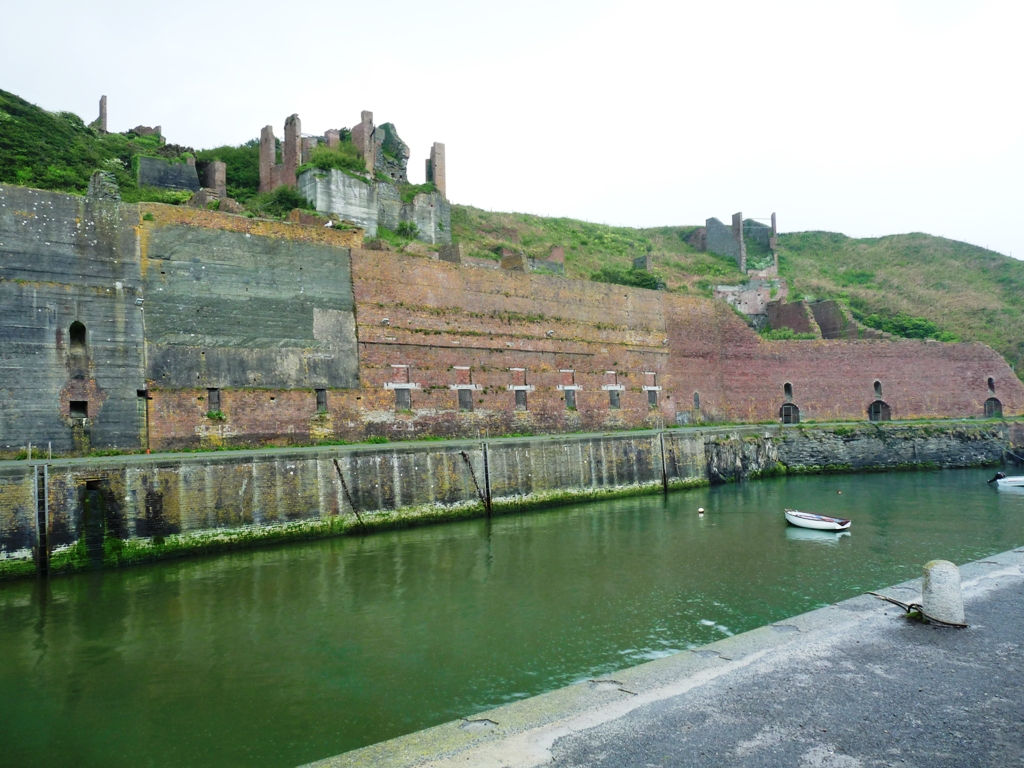
Porthgain

It’s fifteen miles or so from Dinas to Porthgain but it’s worth going just for the ruins. In the early 1900s this was a prosperous harbour, where local slate was processed and shipped. When the slate workings were no longer profitable, the waste from the process was used for brick making and locally quarried dolerite was used for road stone.  But all this came to an end in the early 1930s and local employment is now mainly provided by the small fleet of boats, fishing for crabs and lobsters. The abandoned industrial workings are  now a designated conservation area, but it’s a place to wander through rather than look at from a distance. The old photos in the Sloop Inn will bring the scenes to life.

Photo credit The National Trust

Photo credit The National Trust

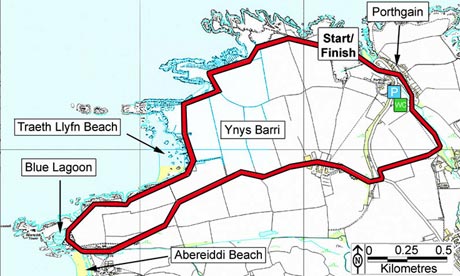
The industrial area is now being reclaimed by plant and bird life and this four mile walk was Number 1 in the Guardian/National Trust’s series of top 10 UK walks. Both the Blue Lagoon end and Porthgain are dominated by old industrial works and the coastal scenery is wild and dramatic. The return takes you inland and starts by the old railway line that ran from the slate quarry to the port of Porthgain.


Posted in History, Nature, Walking | Tagged , , , , , | Leave a comment

Handmade dolls – Welsh Working Women

These beautiful dolls are made by Nicola Owen in Newport. You might also find them on sale in the Seaways Bookshop, Fishguard.

Posted in Crafts | Tagged , , , , , , , , , | 1 Comment

Which of these are works of art?

Click on the first picture for the answers.

The brilliant Yorkshire Sculpture Park notes:

Serge Spitzer’s work is concerned with human perception. Through performance art and sculpture in a wide variety of materials, he raises questions about the process of looking, as opposed to seeing.

I’m not quite sure of the implications – but the abandoned farm machinery on your Pembrokeshire rambles can be easily be redefined: dumped rubbish, scrap with possibilities, subject for a photo, work of art? It can raise a thought on changing local lives and perceptions of beauty.

(Click here for more photos of North Pembrokeshire by Ceridwen)

Posted in Art, Crafts, Farming, History, Walking | Tagged , , , , , , | 1 Comment