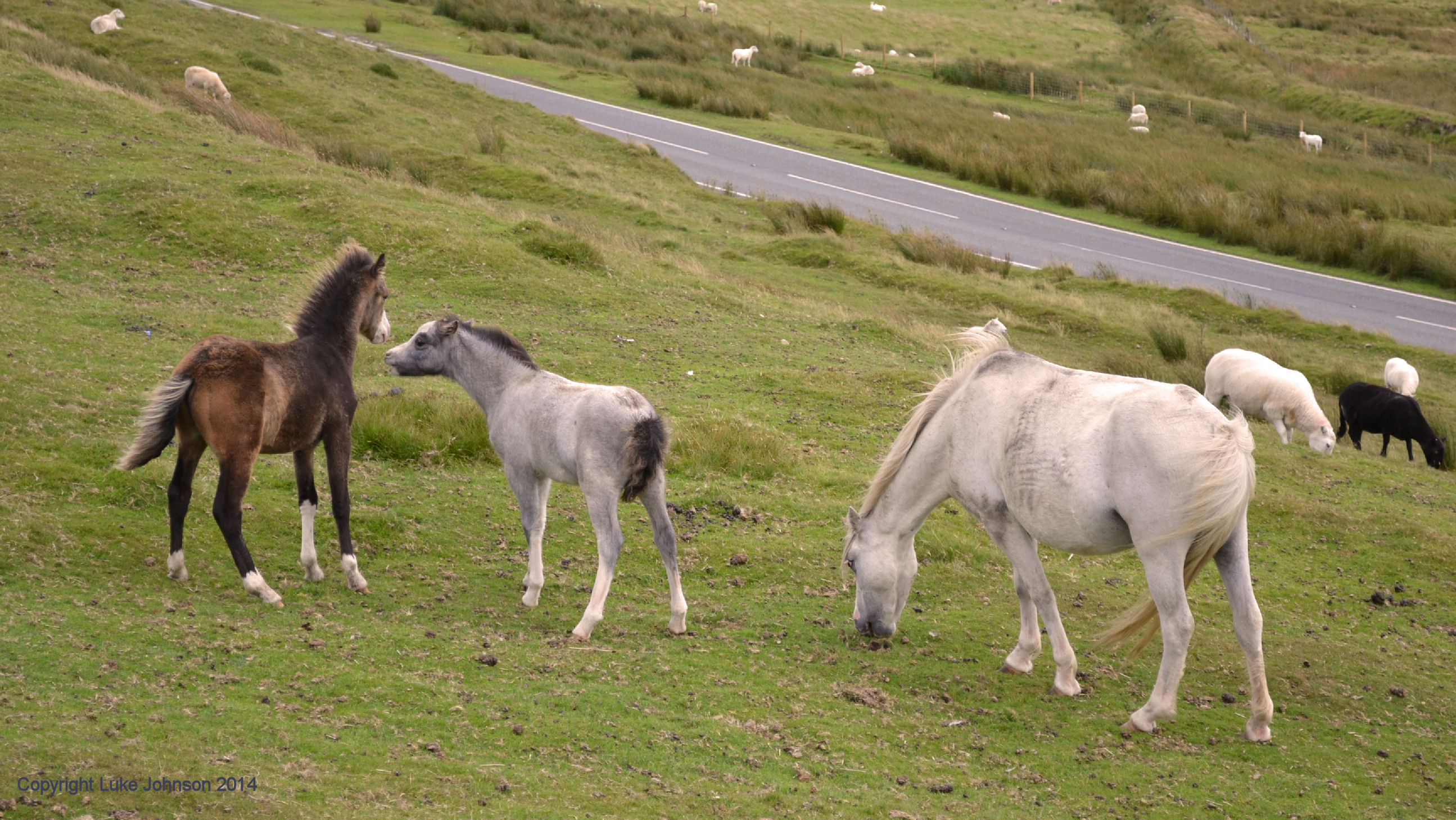
Wild horses on the Preselis


(Semi) wild horses on the Preselis near Dinas

This photo was taken by Luke Johnson who writes a wonderful local blog and whose photos introduce you to his view of the Preselis. Click here to visit.

You can often see horses, roaming wild in the Preselis around Dinas. They seem to be quite friendly and may come close to you if you stop for a rest while out walking.

I remember, as a child, being encouraged to sit on what appeared to be a very docile horse from the mountain. The horse had acquired a name so maybe an owner also. Anyway ‘Boyo’ was patient while I was helped up and as soon as I was firmly up high, out of my father’s reach, the horse took off with no warning and tremendous acceleration. I had the presence of mind to crouch down when we sped under a low branch and then my mind went blank and to be honest, I don’t remember how we managed to stop or how I got down. Since then I have occasionally sat on a horse, but only when a refusal would involve too much loss of face.

Posted in Farming, Nature, Walking, Wildlife | Tagged , , , , , , , , | Leave a comment

An acquired taste

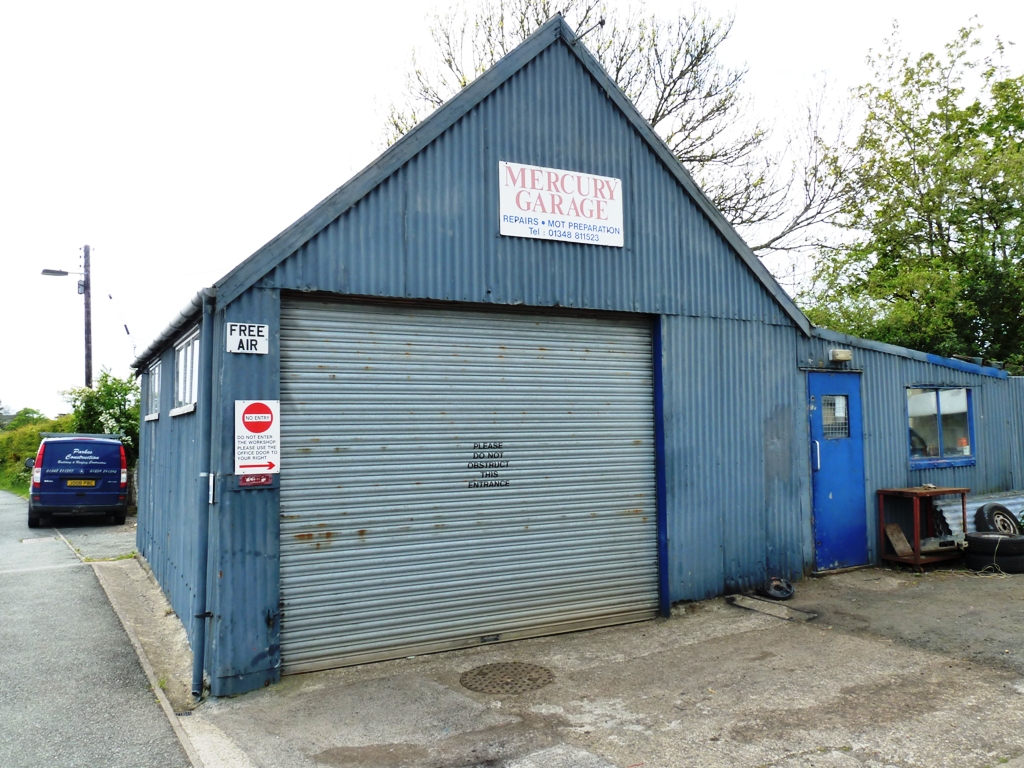
If you associate corrugated iron with shanty town poverty – a cheap, light, waterproof building material that soon crumbles into rusty shards – you might be surprised by the ‘Tin Tabernacles’, some of which are listed buildings, or Dinas’ Mercury Garage.

2cvI didn’t really pay attention to this building before driving a car myself, but as soon as I acquired a small corrugated car, it became obvious that Dinas’ Mercury Garage was its spiritual home.

Mercury Garage DinasThis business, with its generous offer to the passing motorist, proved efficient and kind on the few occasions we had to make use of its expertise.

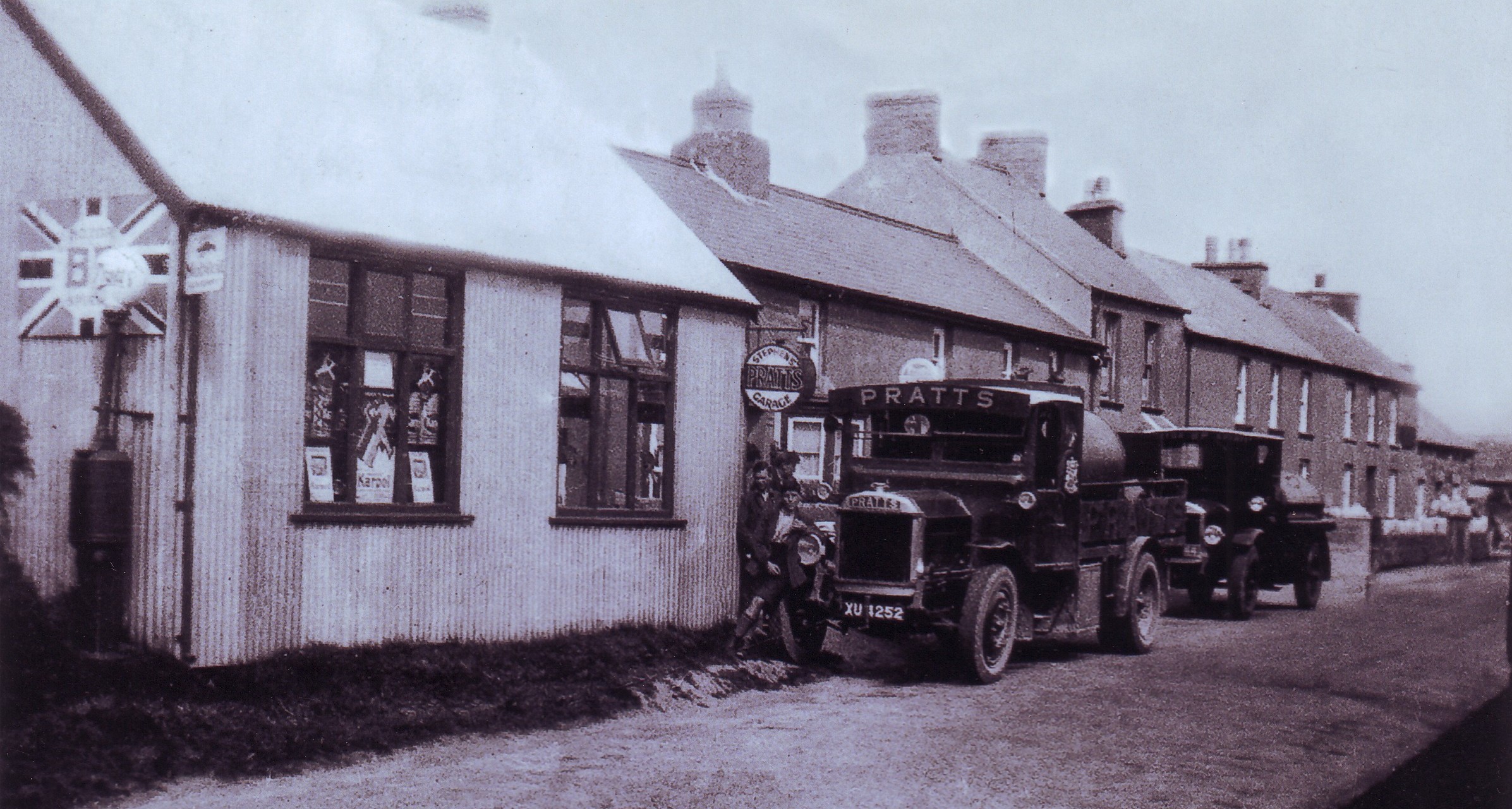
What’s more, like other Dinas businesses, Mercury Garage has more history than you might imagine. I don’t know anything of its beginnings but here is a photo of its early days. The truck parked by the garage looks as if it has PRATTS written across the front and a tank on the back. Does anyone know anything about it?

Mercury Garage, Dinas

Photo courtesy of Ann Hughes

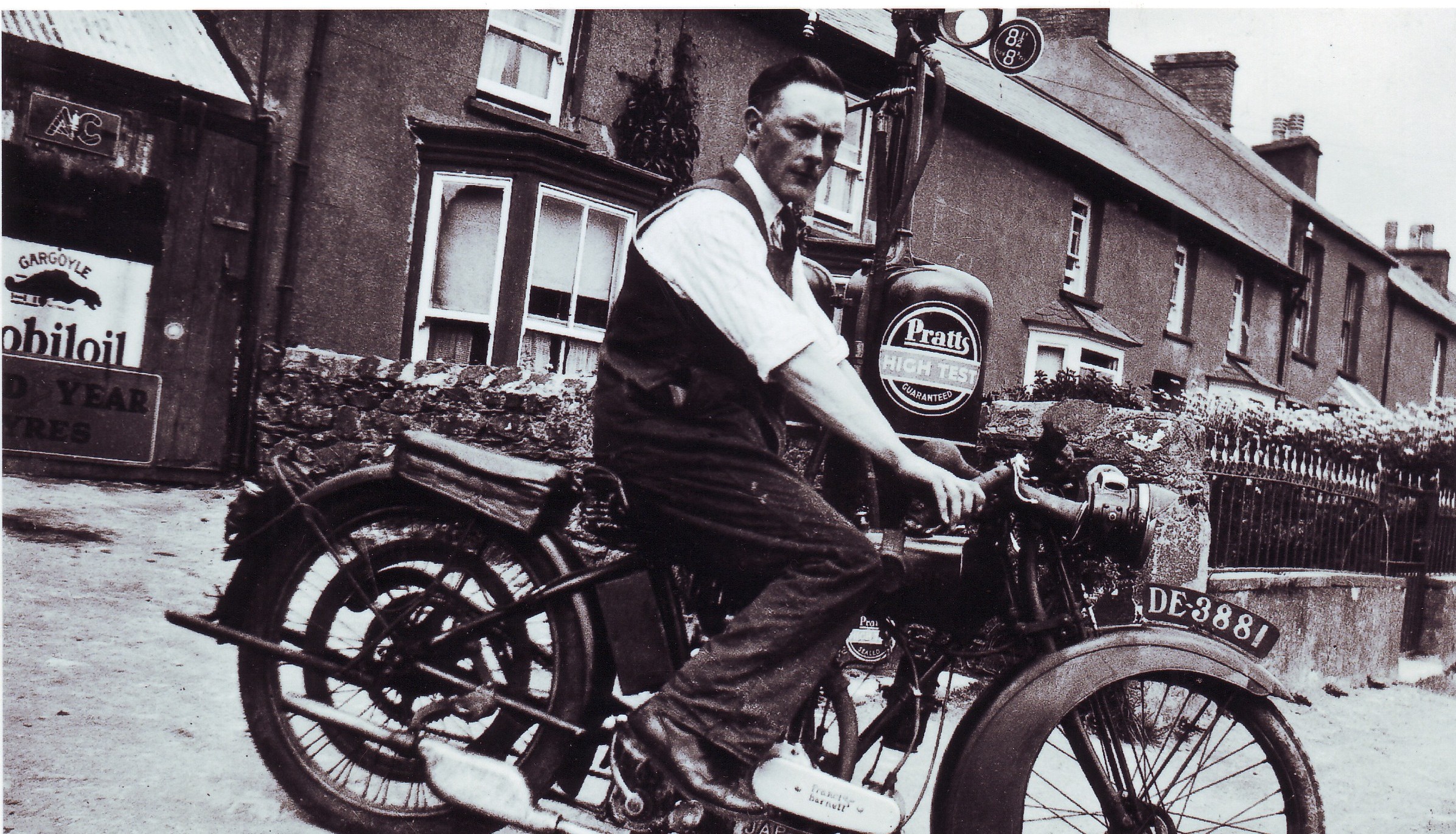
The owner of the garage at the time was Joe Stevens, whose niece still lives in the village. Joe  also ran the pub, Rose Cottage, along with his sister Maggie Mary. Unlike the garage, the pub didn’t survive his death in 1968.

Joe Stevens, Mercury Garage, Dinas

Photo courtesy of Ann Hughes

I now have a fondness for the corrugated iron buildings in the Dinas area; I may introduce some of the others to you in the future.

Posted in History | Tagged , , , , | 5 Comments

A blank slate

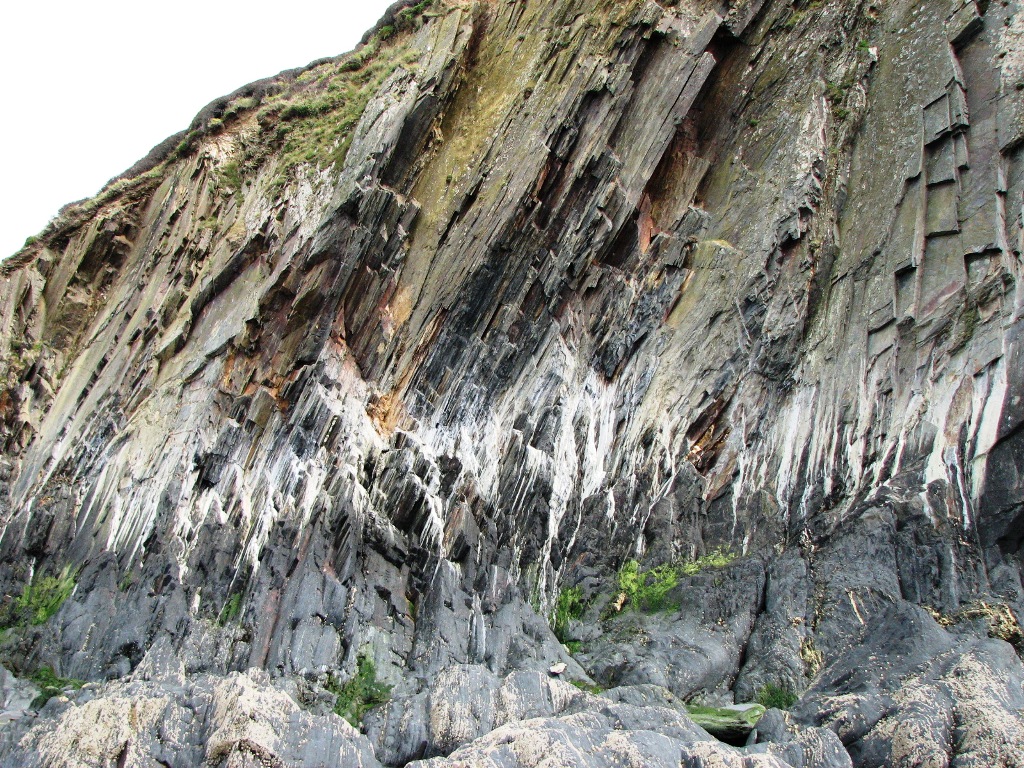
Slate

I no longer flinch and go into shutdown when I hear the phrase ‘Ordovician mudstone’ because Andrew Lingham (geologist and recent Tegfan visitor) has taught me a little and encouraged me to read further: http://www.pembrokeshireonline.co.uk/geology2.htm. This is obviously a simplified historical overview of the rocks in our area – which I, shamefully, did not find a particularly easy read. However, it’s just what was needed to upgrade my knowledge from nil to superficial (where I am happy to leave it for the time being).

But I do love slate – on the beach – on  roofs or floors. I love the colours and the feel and the shapes it makes along the coast where the vertical lines hint at earth forces of unimaginable power. So, don’t drift off because I’m going to give you a condensed version of the abbreviated history so that you too can add Ordovician mudstone to your vocabulary (if it’s not there already).

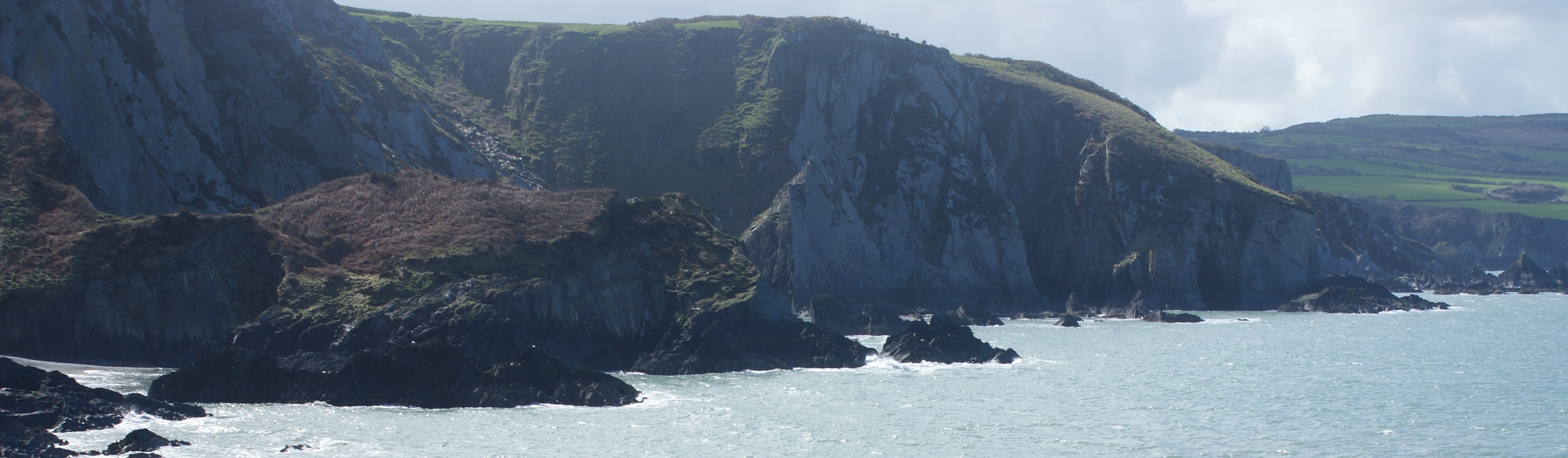
These vertical sheets of slate originated as fine mud on the sea floor in deep oceans further south than the tip of S America. And the mud, laid down in horizontal layers 450(ish) million years ago, has been turned into slates by pressure of earth movements. Movement of the crustal plates then relocated the rocks thousands of miles to the north and introduced the different orientations of the joints in the slates; the jagged rocks seen today at our local Pwllgwaelod and Cwm yr Eglwys beaches are the result.

Cliffs at Pwllgwaelod


Posted in History, Nature, Sea | Tagged , , , , , | 2 Comments

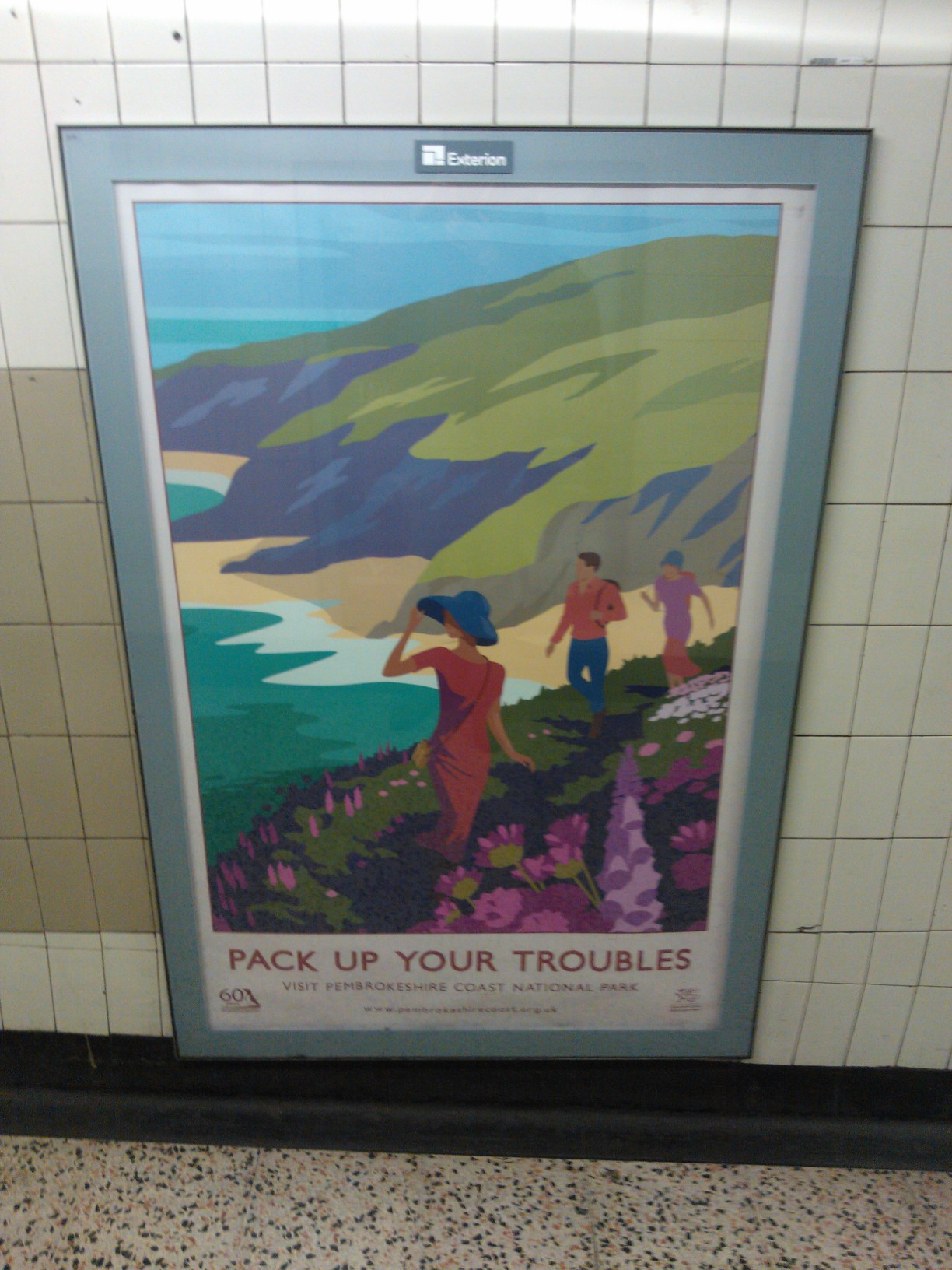
On the tube at Moorgate?

Never mind. Look out onto the platform and cheer up!

Pembrokeshire Coast National Park

Posted in Art, Walking | Tagged , , , , | Leave a comment

The usefulness of arsenic

In the late 19th century, when doctors were still speculating about the possible causes of typhoid fever and worried about the high mortality of children working in factories, they already knew that arsenic in the home constituted a health risk.
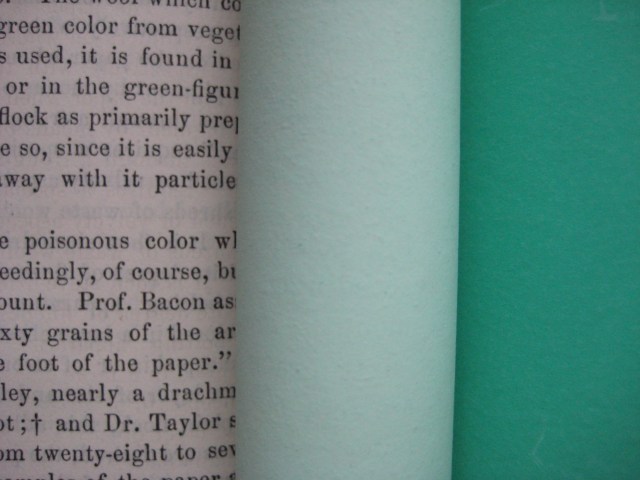
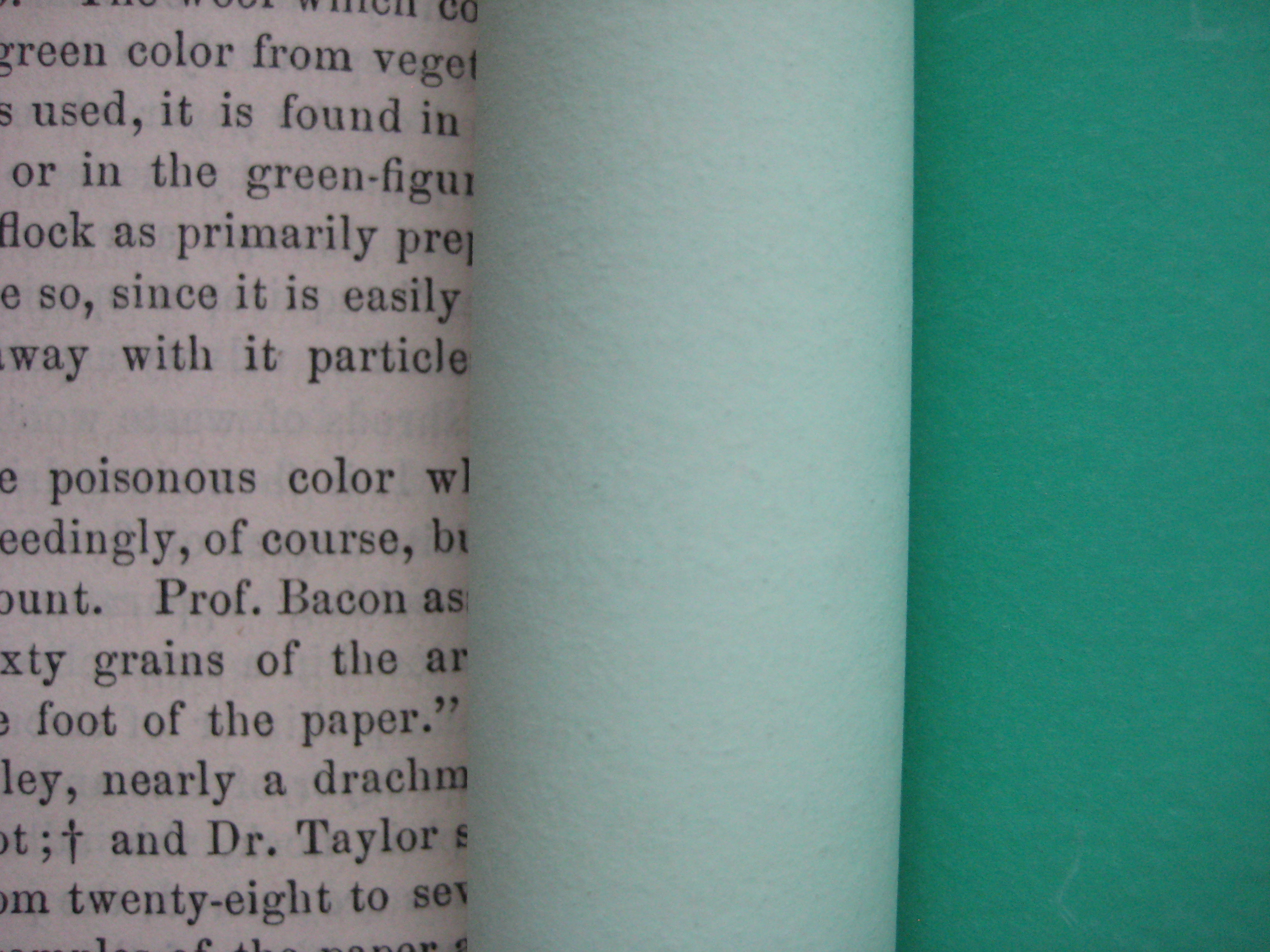
Arsenic green wallpaper

Two samples of arsenic green wallpaper contained in the Second Annual Report of the State Board of Health, Massachusetts, published Boston 1871. For information on a possible link to the death of Napoleon, click here.

But, before the discovery of penicillin, this poisonous element was  the recommended treatment for both syphilis and gonorrhea; a lady could still go to the chemist and  buy enough arsenic to dose her husband’s venereal complaint or, if the relationship deteriorated further, to finish him off altogether.

In February 1897, this knowledge informed the judge who, presiding over the first ever murder trial in the British Consular Court in Yokohama,  thrilled the onlooking public by donning his black cap to condemn Edith Carew to be hanged – and commended her soul to God.

Mrs Carew had certainly purchased arsenic and the investigation into the death of her husband caused quite a scandal, forcing several important men to leave town. Her husband, Walter, secretary of the Yokohama United Club, was well known locally and his complicated relationships and tiresome behaviour became general knowledge within the British community. Perhaps as a consequence, Mrs Carew’s sentence was later commuted to life imprisonment and, after many years in Holloway prison, she ended up in Dinas.

Miss Carew (always Miss Carew in Dinas), whose first name was not known to her neighbours until after her death, was originally from the West country where her father had been three times Mayor of Glastonbury. She was a gifted violinist, had an encyclopaedic knowledge of gardening and a cut-glass accent that intimidated the local villagers who had, nevertheless, gleaned some information about this new arrival.

Word in the village was that she had married an older colonial who led her a merry dance with his louche alcoholic lifestyle and, being at her wits’ end, she had dispatched him by some means or other – never elaborated upon. For this she had been found guilty and although sentenced to hang, was subsequently released on compassionate grounds. Thus she arrived in the Dinas backwater of Cwm yr Eglwys where she lived a quiet life cultivating her garden with the help of a good looking young man, who appeared to be thirty years her junior. Nobody was entirely clear about his relationship to /with Miss C but, as they both exhibited a degree of social refinement alien to the village, they were accorded the benefit of the doubt.

My father’s cousin, a friendly person who always impressed me with her encyclopaedic knowledge of the people in her neighbourhood, was out with her young son when she met Miss Carew in Cwm yr Eglwys and they were invited through the little gothic style entrance into her garden. Starting at the wrought iron gate, a circuitous stone or crazy paving path acquired an air of mystery and intrigue from the bamboo (or was it gunnera – those large rhubarb like exotics, or yuccas?) that immediately baffled the enquiring eye. Miss Carew showed them around and bedazzled them with her knowledge of the plants.
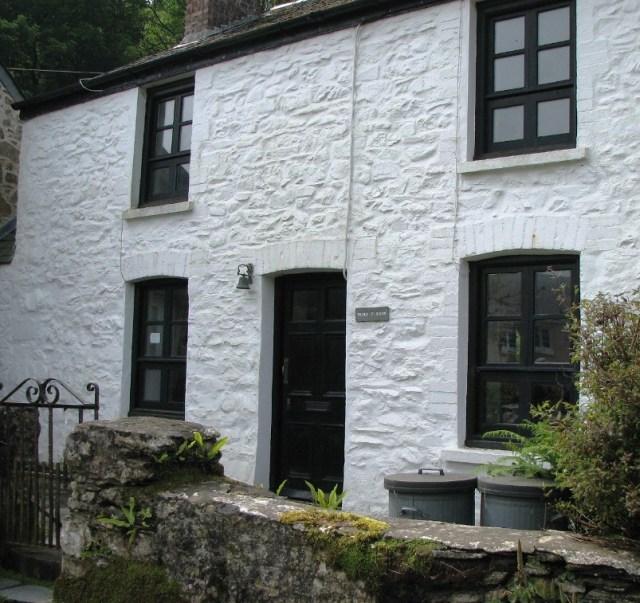
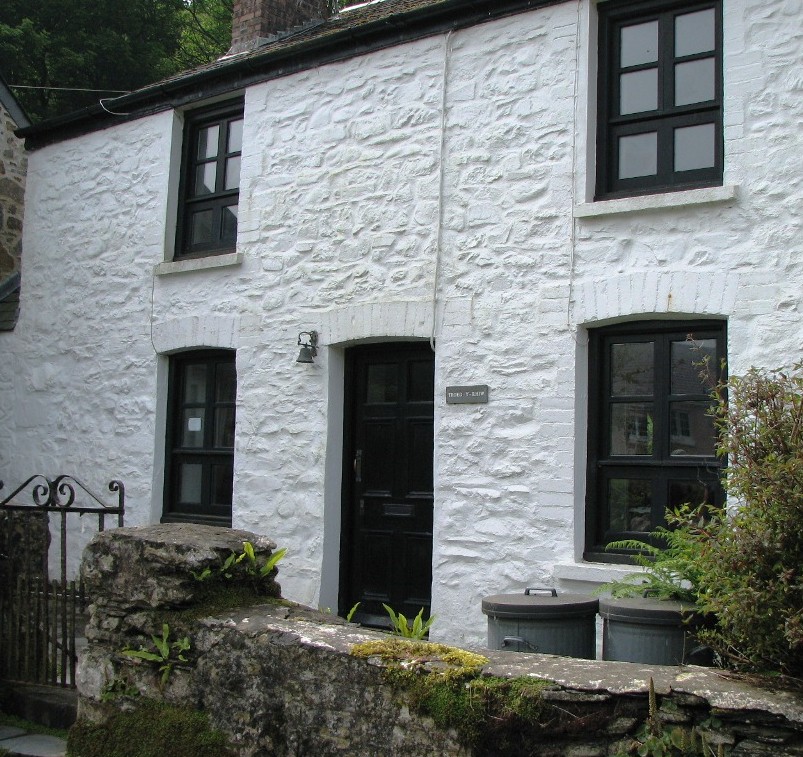
Troed y Rhiw‘Penfeidr’* was Miss Carew’s home for 25 years and she became totally integrated into the local community; her history was never touched upon nor her circumstances discussed. When she died her house was sold and the name changed. You may, however, still see bamboo from her famed oriental garden (or Mediterranean garden as it was known in our family).

*Welsh for ‘End of the Road’
Posted in History, Nature | Tagged , , , , , , , | 1 Comment

Matisse in Dinas

The door on the left was designed by Matisse for the Chapelle du Rosaire at Vence. The door on the right was inspired by Matisse’s work and made by Dinas potter, Len Rees.

If you have enjoyed the Matisse exhibition at Tate Modern and the paper cutouts that he made when he could no longer paint, you may be interested in his Chapelle du Rosaire project. Matisse embarked on his ambitious design work for the chapel in 1947 when he was already elderly and frail. His much-loved carer, who left his employment to become a nun, subsequently asked for his help in designing a chapel for the convent. The chapel was consecrated in 1951 and Matisse, who wasn’t well enough to attend the ceremony, sent this comment to be read on the occasion:

« cette œuvre m’a demandé quatre ans d’un travail exclusif et assidu, et elle est le résultat de toute ma vie active. Je la considère malgré toutes ses imperfections comme mon chef-d’œuvre »

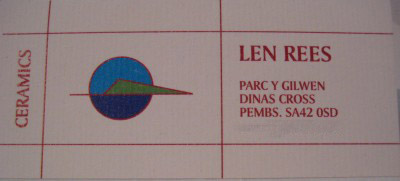
In Len Ree’s beautiful gallery you will find other reminders of the south of France and some of Len’s recent work in porcelain. I found it difficult to take good photos. The items are exquisite. The photos should just be a spring board to the real thing. Believe me.


Len Rees card

Posted in Art, Crafts, Religion | Tagged , , , , , , | 2 Comments

What to get for the person who has everything?

Doesn’t every family have someone who is a nightmare to buy for? They already have everything they need or don’t care much for possessions; they don’t want anything at all and certainly don’t want you spending any money on them. They are usually the kindest, most generous people themselves and they have  a birthday and Christmas Day like everyone else; it’s a problem has to be faced by the rest of us – a couple of times a year at least.

I had an aunt, with a good sized vegetable garden, who fell squarely into that category and one year I was persuaded by recent reading to believe I had found the answer.

This little book (with 56 works cited at the back, ranging from Lucretius and Pliny the Elder to Montesquieu and Voltaire, not to mention  contemporary agricultural scholars) was written by a Dominican friar and is a wonderful treatise on dung – animal droppings, manure, excrement, poo, cow pats and more of the stuff that is left lying around in the countryside to be gathered up for free. It convinced me that I had discovered the perfect present – one that could be repeated after every holiday trip to Dinas.

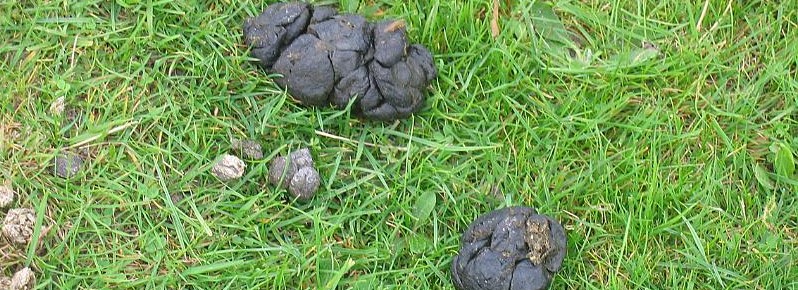
So, on the last day of our holidays  (a rainy day, unfortunately) we stopped by a field that had contained sheep and zigzagged over the grass, manually scooping up  as many of the had-been-dry-but-now-rained-soaked little turds that we could fit into an old fertiliser bag. We were surprised by how many it took to fill it.

The bag then went into the boot and, given the design of the car we had at the time, we were constantly reminded during the long, slow journey back to London, of how clever we had been.

Sadly, this present (like most of the others that I had ever come up with) was greeted with plenty of gratitude, but also a slight puzzlement that persuaded me that perhaps it wasn’t an experiment to be repeated.

Sheep dung

Surely she can’t have known that our offering was only second best and that the ne plus ultra, according to Maurice Lelong, is chicken or pigeon droppings that could be collected more easily in town:

Si haut que soit le sommet où nous a portés le mouton … le fumier par excellence, le super-fumier, le fumier des fumiers, l’Anapurna …du fumier (c’est) la poulaitte …

Posted in books, Farming, Food, Nature | Tagged , , , , , , , , | 4 Comments

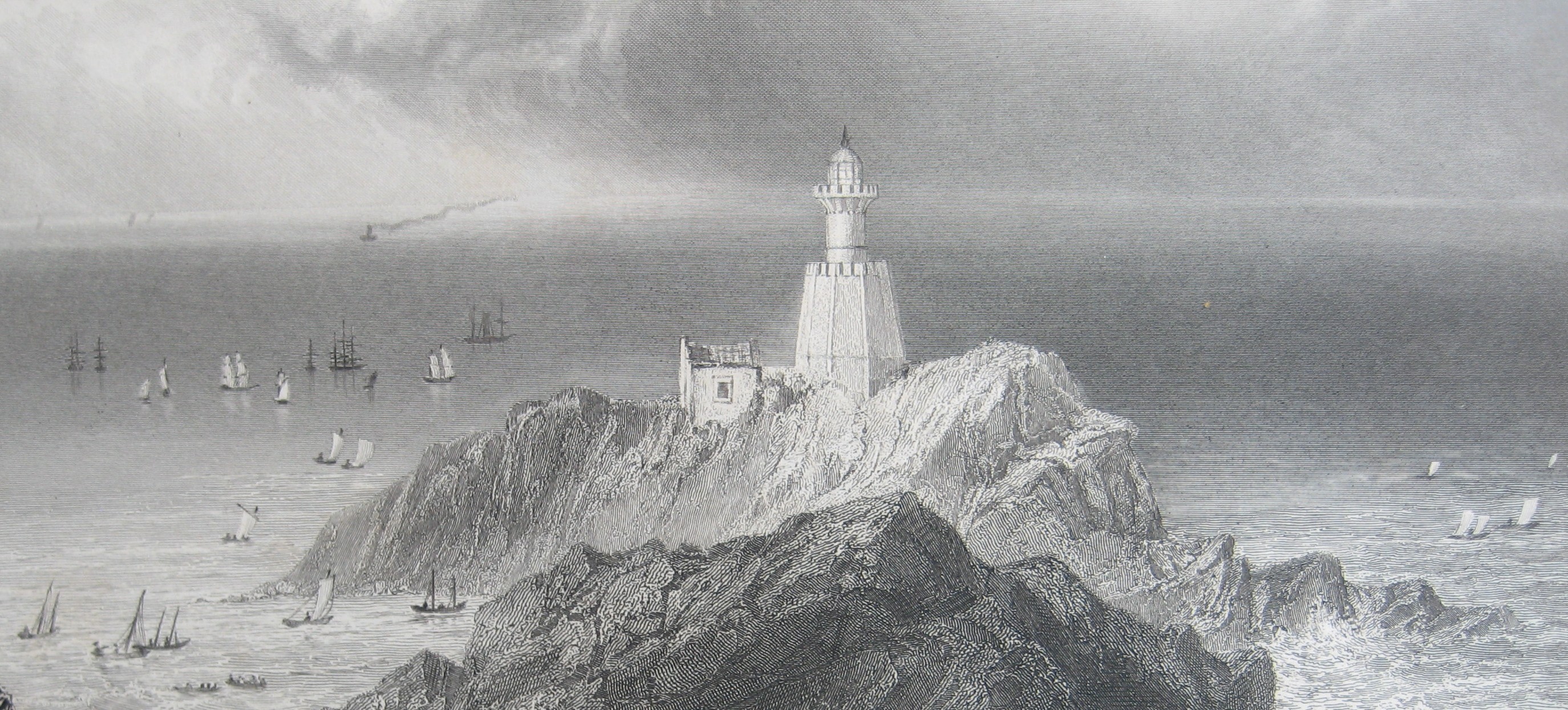
Finden’s Splendid View of The Mumbles Rocks and Lighthouse

IMG_4165

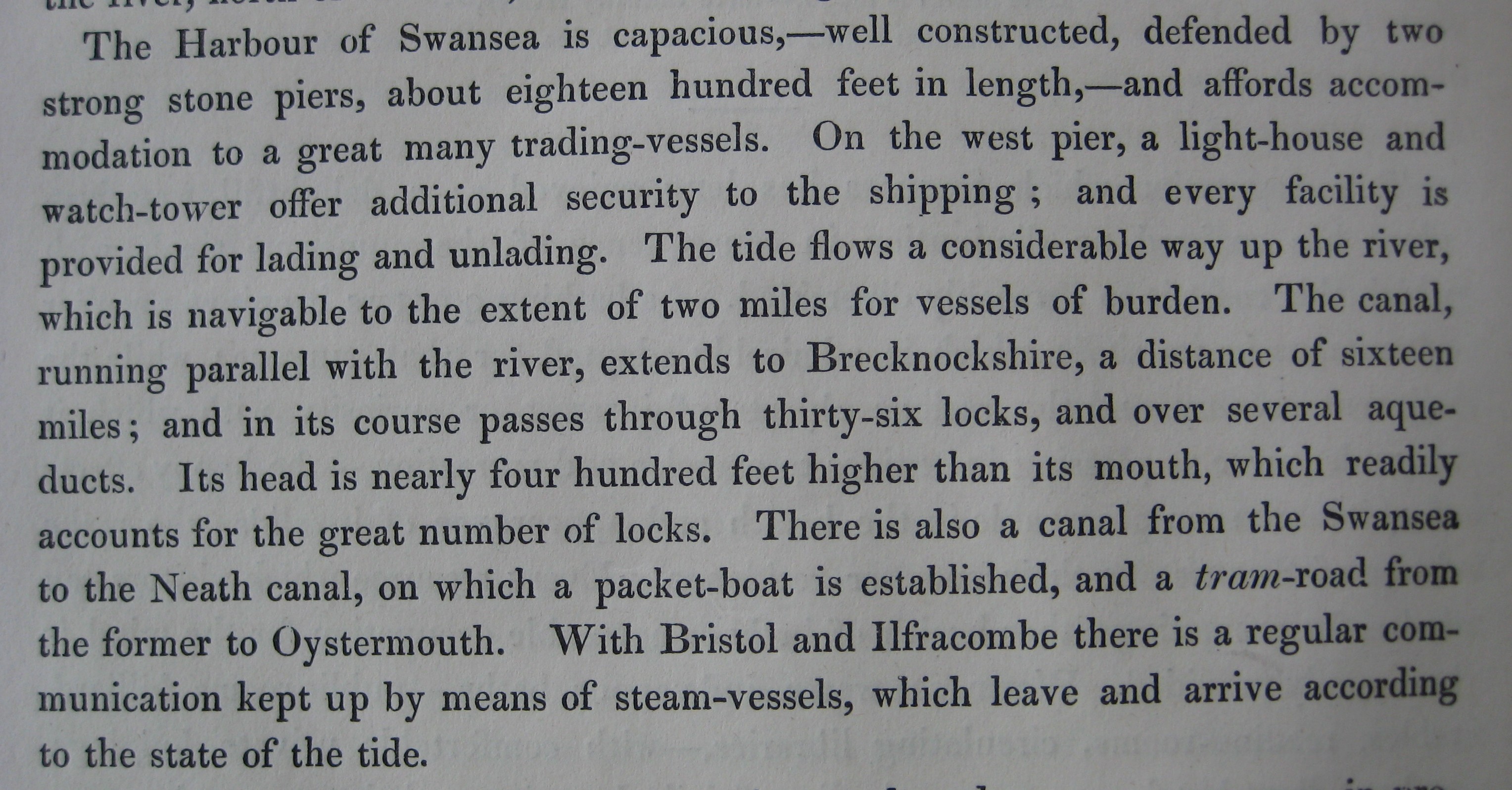
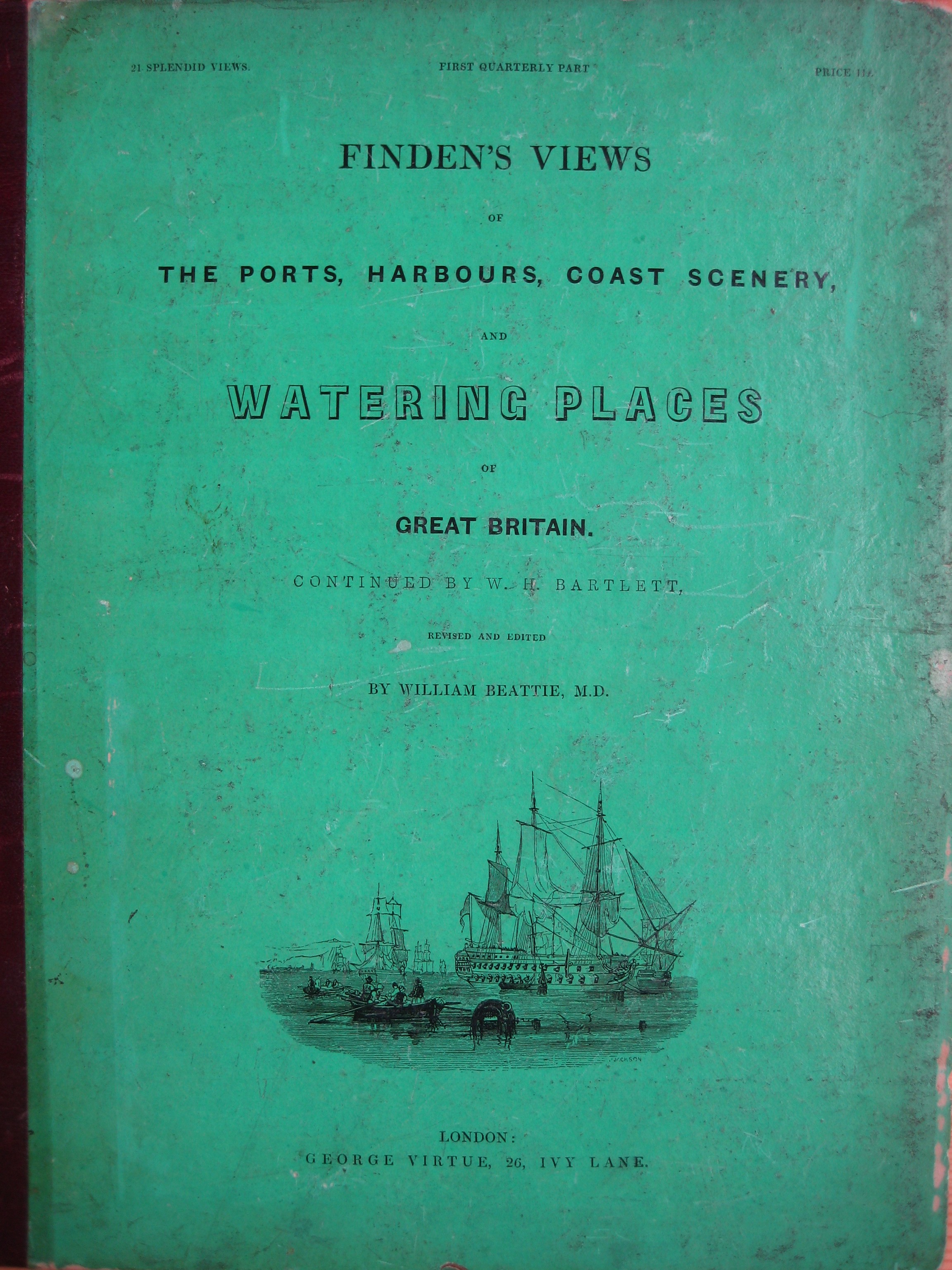
If you want to see Swansea as it was known by the many Dinas mariners who were apprenticed to masters from that port, have a look at a copy of ‘Finden’s Views of the Ports, Harbours, Coast Scenery and Watering Places of Great Britain’. The engravings and commentary date from the late 1830s and early 1840s.

Finden's Views - commentary on Swansea

As might be expected from the date of the publication, the author was much concerned with the dangers of a mariner’s life. There are numerous engravings and discussions of ship wrecks, life boat design (the RNLI had just been founded in 1824) and light houses. The commentary on the Mumbles rocks includes a plea:

The number of ships lost or driven ashore, in 1833, amounted to eight hundred. It is probable, then, that the annual loss by shipwreck is not much short of a million sterling. If one fifth of this loss could be prevented by additional lighthouses, the saving of money would amount to a million in five years, – to say nothing of the still more important saving in human life. We are anxious – not on the store of economy only, but of humanity – to place these lamentable facts before the eyes of Government, from whose hands the mitigation at least, if not the removal, of such disaster is confidently expected.

Finden's Views of the Ports, Harbours, Coast Scenery and Watering Places of Great Britain


Volume 1 and volume 6 of ‘Finden’s Views’ (both smelling very strongly of coal dust) are on sale at Oxfam Wilmslow.

Posted in books, History, Sea | Tagged , , , , , , , , , , | 2 Comments

How long have you had your surname?

I have been wondering why most of the common Welsh surnames end with an ‘s’: Jones, Edwards, Davies, Harries, Philips, Evans, Howells, Thomas, Williams, Owens, Hughes, Roberts, Jenkins, Stevens, Lewis, Richards and more.

This observation lead me to think further about surnames and remember someone who had stayed with us a few years ago. We had met when I was visiting some wonderful schools for working children in NW Pakistan.*

Her name was Neelofar. Just Neelofar. That was normal and fine until she decided to travel and her application for a passport required a surname. She didn’t have one so she added her sister’s name to her own and bureaucracy was satisfied.

Surnames, as we now know them, have not been established in rural West Wales for very long either. I have noticed  Dinas residents referring to relations in their great grand parents’ generation by the family surname and seen that official or press reports have added an ‘s’, influenced, no doubt, by naming conventions. This was happening until late nineteenth century and complicates life for anyone researching their family tree.

Len Urwin (of Dinas) has been studying local families and explains some of the background:

Wales has a history of patronymic naming whereby the father’s first name became the last name of his children. So the “surname” changed with every generation and was a means of conveying male lineage. This applied to the ancient Welsh names like Morgan and Rhys, and to more recently settled names like William and Evan. All derived from the first name of the father, and slowly mutated to become fixed surnames, often with the addition of the letter “s”, like Williams and Evans….. (This) patronymic system continued in some rural Welsh-speaking areas in the north and west, up to the early nineteenth century.

Leonard H Urwin’s “Survey of George Family Interments in North Pembrokeshire, Wales from 1654 to 2012 ..plus author’s notes and commentary” is a fascinating document and can be found by clicking here. If you have difficulty using that link, the paper can also be found at www.dyfedfhs.org.uk on their resources page. At present it can be found by looking at Recent additions to the website.

*For information about Khwendo Kor and their projects in Pakistan click here.


Posted in History, Welsh language | Tagged , , , , , , , , , , , , | 4 Comments

Bethan’s cawl

Cawl (photo by Rhyshuw1)

Cawl (photo by Rhyshuw1)

Cawl (broth) has been part of the staple diet of Wales for centuries and this recipe* has pedigree. It’s the real thing, handed from mother to daughter 70 years ago and cooked in West Wales for generations. And like all traditional recipes, Bethan’s instructions are a little imprecise. She assumes you will use your common sense and improvise!

 It is important that you have a reliable butcher. I use a shin of beef and boil the meat the previous evening and allow it to cool overnight. In the morning the fat can be removed by skimming. Prepare the vegetables – potatoes, swede, carrots, leeks. Add salt to taste. Fresh thyme and parsley give a good flavour. Reserve some of the chopped parsley to be added to the individual servings. The cawl can be reheated the next day. It is known in Welsh as “Cawl Eildwym” and is often better than the first serving.

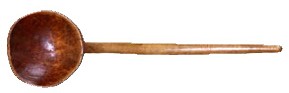
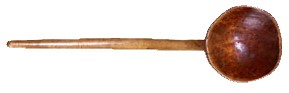
I haven’t got the recipe used at Bethan’s village primary school where, 70 years ago, the school dinners consisted of cawl everyday. It was cooked and then heated up in a cauldron outside. At lunch time every child was issued with a bowl, a wooden spoon and a helping of cawl. The spoons lasted for ever and horrified Bethan with their teeth marks.

CawlSpoons2_edited-1

Cawl spoon


*This recipe comes from a village about twenty-five miles from Dinas. If you have a more local version, a different recipe or would like to add some more detail to mine, I’d love to hear from you.
Posted in Food, History, Welsh language | Tagged , , , | Leave a comment

Don’t let the sheep lead you astray


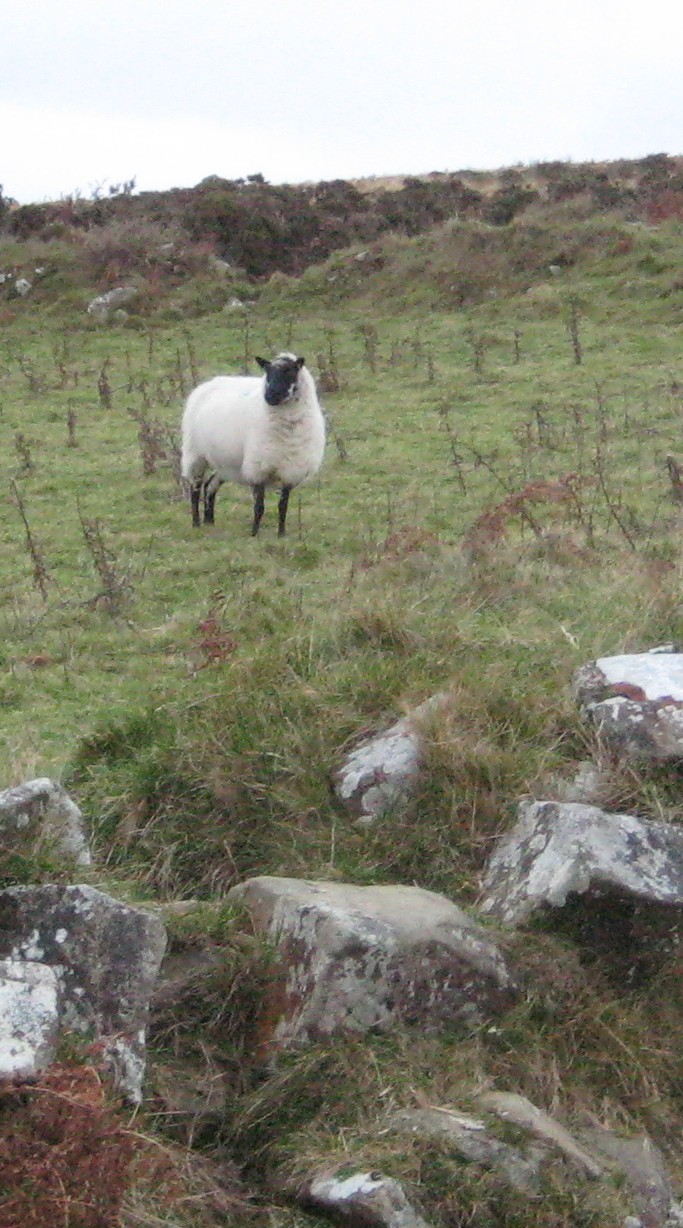
Sheep in the PreselisDon’t let the sheep lead you astray when you walk on the mountain above Dinas.  They won’t try to disturb walkers, in fact they are generally timid and scamper away even when you are keen to take a photo, but they make tracks that are easily mistaken for the real thing.

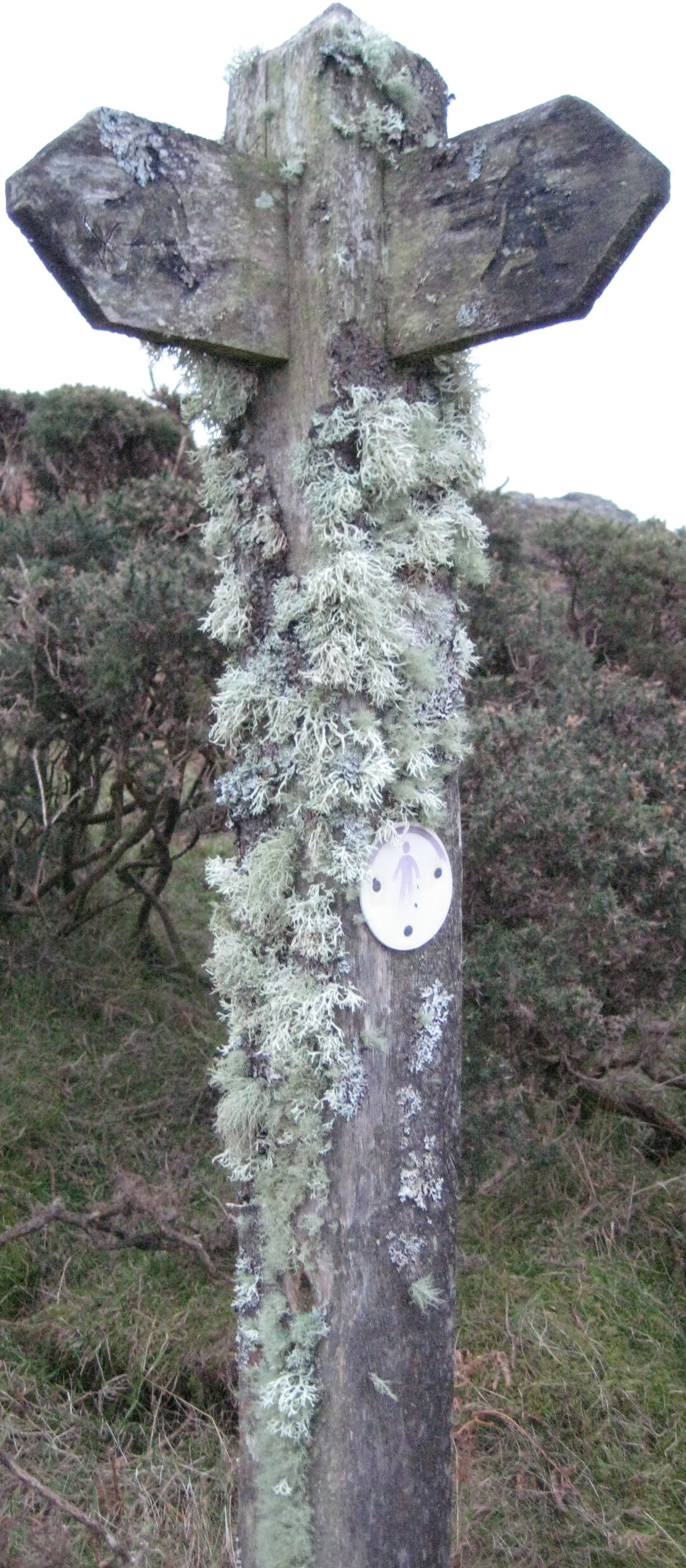
Woolly footpath sign

There are plenty of woolly footpath signs (not always legible) on the mountain and I couldn’t say that we get lost, but we don’t always end up following the route we had intended. If you’re not familiar with the area it’s best to walk on a day with good visibility and take a map.

For anyone interested in finding out more about the sheep they are likely to meet on a Tegfan holiday I am adding a new book to our collection. Its author is an expert on Welsh rural life at the Welsh Folk Museum, St Fagans, and the book is published by Gomer Press, a long established Welsh publishing house in Llandysul, Ceredigion.


Posted in books, Farming, History, Walking | Tagged , , , , , , | 4 Comments

First quarry your stone ….

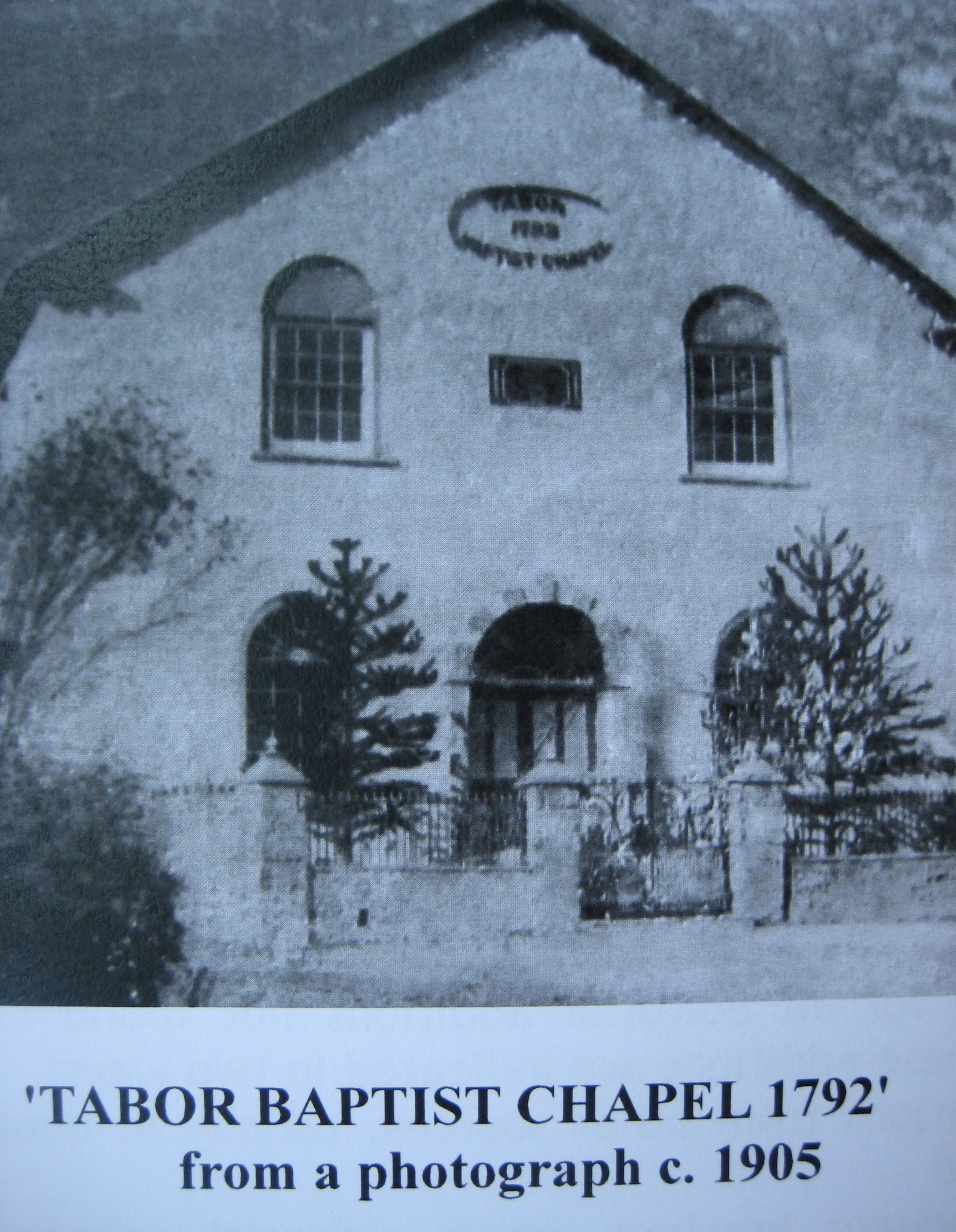
Taken from TABOR CHURCH DINAS CROSS Edited by Ann Hughes and John Hughes in the Dinas History SeriesUntil recently, if you wanted to build in Dinas, you dug the stone out of the hill-side first. The first Baptist chapel in Dinas was built at the end of the eighteenth century. After acquiring the land

“preparations were made to build. The local people were most ready to help. Forty labourers came together for three days to quarry and cut the stones, and,  for twenty-four days, three carts carried them to the spot. After that, the work progressed very swiftly and successfully until it was finished..”

Taken from TABOR CHURCH DINAS CROSS by J W MAURICE, edited by Ann and John Hughes for the Dinas History Series. Copies can be obtained from Ann and John Hughes. Phone 01348 811255 for information.
As a result there are a number of small quarries in Dinas. Most are almost hidden by gorse and bracken now but if you look towards the sea behind the fine houses at the Fishguard end of the village or towards the mountain behind the tennis court you’ll see the evidence.  The biggest quarry is on the single track road that takes you past Macpela burial ground up the mountain and I’m guessing that this, with Dinas Head behind it, was the inspiration for this beautiful giclée print by Stan Rosenthal.

Dinas Quarry by Stan Rosenthal

Dinas Quarry is one of many striking art works inspired by our part of West Wales. Stan Rosenthal now lives in SE England but has spent much of his professional life in Pembrokeshire. His long connection with West Wales includes having a studio and gallery at St Davids and being appointed Honorary Official Artist to the Chairman of Pembrokeshire County Council. Have a look at his website for many prints of the local area.

Posted in Art, Crafts, History | Tagged , , , , , , , , , | Leave a comment