Here are some Welsh words you already know

I’ll confess to taking comfort from ‘to-do’ lists. Most of my lists are very long and get lost or abandoned well before they have properly outlived their usefulness. But when I’m feeling over-whelmed by the backlog of tasks that I should already have tackled, a ‘to-do’ list can ease the anxiety. To lift my spirits I generally start the list with a number of jobs that I have already completed, so that I can award myself the immediate satisfaction of ticks on the sheet.

So, if you are like me and have been considering learning some Welsh, you might be reassured by the discovery that you already know more than you thought you did. You are not starting from scratch; your vocabulary book already has some words in it that can be ticked off as ‘learnt’:

Whether you live in a fflat or a castell you’ll be able to point to the

  • soffa
  • ffôn
  • carped
  • and the teledu (if you have one).

And if your taste in food extends beyond plain old-fashioned cooking, your Welsh vocabulary may also already be quite extensive

  • stêc
  • sbageti
  • salad
  • banana
  • ries
  • (for starters).

Welsh for Beginners by Angela Wilkes and John Shackell is published by Usborne and is linked to a number of language teaching web-sites at http://www.usborne-quicklinks.com. It was through my exploring of this site that I came across Derek Brockway, the BBC Wales weatherman. I love him. Go and look for him on:

http://www.bbc.co.uk/cymru/cymraeg/yriaith/tudalen/welsh_phrases.shtml

I’m sure you will love him too.

The book I have photographed on this page is on sale at Oxfam Wilmslow for £1.99. The new revised version of this course, however, will cost a bit more. It comes with an audio cd and brilliant reviews on Amazon. You’ll be able to get it from Fishguard’s Seaways bookshop.
Posted in books, Welsh language | Tagged , , , | Leave a comment

Same old same old

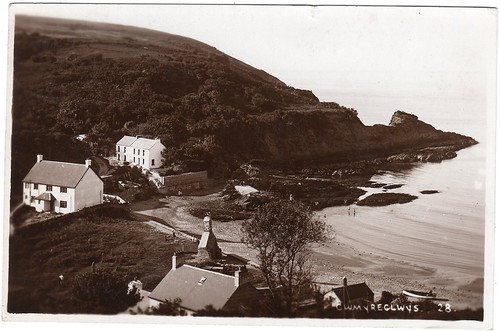
Had we kept all the post-cards received over the years, our long-standing family connections with Dinas mean that we would now be able to paper a room with versions of this one.

Cwm Yr Eglwys 1938 postcard

The countryside side around Dinas is one of the most spectacular and beautiful but these superlatives have never been adequately captured and communicated by the post-card publishers.

But now Sarah Earl’s art has infiltrated the postcard spinners. Her love of the area, evident in her creative interpretations of this corner of North Pembrokeshire have finally given us a choice. She tells us:

Walking in Pembrokeshire has always been my passion – I must have walked hundreds of miles over the years in all seasons and in all weathers – along the rugged coastal path above cliff-bound coves, across wide, windy beaches, on the bare blue-stone hills and in the ancient oak woods and secret green valleys of this marvellously varied county…

The things I see while out walking inspire my paintings: low white-washed cottages and grey-stone farmhouses, small lichen-walled fields of early potatoes, black-faced sheep dotted across hillsides, wind-bent hawthorn bushes and always the ever-changing sea.

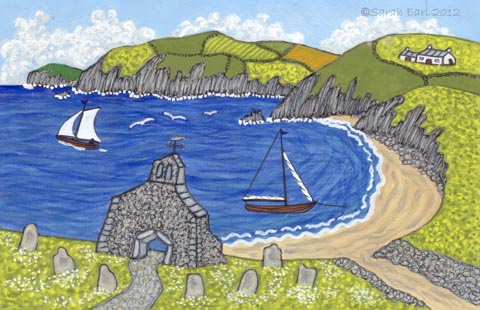
Here is her view of Cwm yr Eglwys on a sunny day; as a close neighbour she knows it well.

Cwm yr Eglwys by Sarah Earl

Her cards can be found at the Post Office in Dinas and I’ve seen her prints on sale in Newport. Visit the gallery on her web-site for a proper introduction to her work.

Posted in Art, Nature, Sea, Walking, Wildlife | Tagged , , , , , , , , | Leave a comment

Rubbish

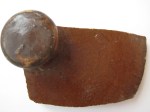
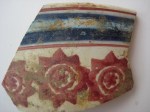
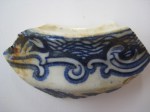
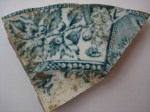
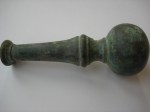
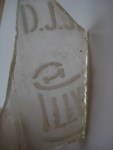
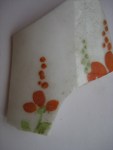
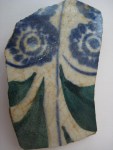
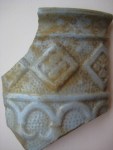
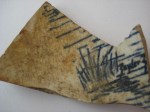
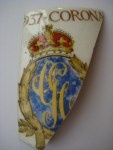
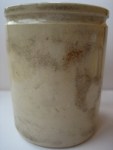
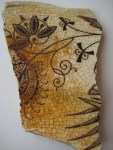
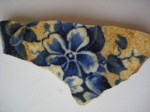
In the old days, before poor people had much to throw away and before bin men were invented, one Dinas solution was to throw rubbish over the edge of the cliffs. There can’t have been much:  waste food would have gone to the pig, anything that would burn would have gone into the stove, clothing would have been endlessly recycled and so only pottery fragments lay in the brambles until we discovered them many, many years later.

Here are some of the pieces we found when walking along the coast path between Pwllgwaelod and Aberbach.

Posted in History, Walking | Tagged , , , , , , | Leave a comment

To Harrods for satin pantaloons

Mrs Tinne's WardrobeIn my role as  a book volunteer in Wilmslow’s Oxfam shop, I’m constantly delighted by the enormous range, quality and quantity of donated books.  When this wonderful book came onto my desk I lingered over it, remembering a childhood experience that I had not thought about for years.

Every November, when I was a child, my London-based parents had anxious communication with cousins in Dinas. We needed to know what to buy my great aunt for Christmas. Every Christmas the answer was the same and it led to the annual pilgrimage to Harrods to buy flesh-coloured, satin pantaloons. Not the baggy belly-dancing trousers we might see nowadays, but the kind of undergarment featured in the book I was examining and pricing for the Oxfam shelves. We ordinary Londoners were amazed that anyone could wear these knee-length slippery knickers but my great-aunt was not an ordinary lady. Like many of the other ladies in this unusually ambitious village, her husband had been a master mariner: in fact for a while he was the captain of the largest oil tanker in the world. She was well travelled, relatively wealthy, had style and knew what she liked. The local shops didn’t stock the lingerie  she had seen in Rotterdam, London and the other great European ports she had visited so she appreciated our attempts to make up for her rural isolation at Christmas . My mother, who did the shopping, wore a more modern style and was concerned to make it clear to the shop assistants who served her in Harrods that the pantaloons were a gift and not a personal preference.

After my much-loved great aunt had died, I had a brief glimpse into her wardrobe. Even at the time I was curious to have a better look but thought I was too young so to intrude into an adult’s private world. I remember that there was white lace and long black garments. It was such a brief, tantalising glimpse.

‘Mrs Tinne’s Wardrobe’ was about the clothes of a woman who was a close contemporary of my great aunt’s and it allowed me at last to delve into that wardrobe and rummage around. Every page was profusely and beautifully illustrated with decent sized colour photos and there was a detailed description of each garment featured. It may have been a vicarious experience, but I loved it all the same.

(A version of this post first appeared in oxfamwilmslow.wordpress.com on 9.7.2013)

Posted in books, History, Sea | Tagged , , , , , , , , , , , | Leave a comment

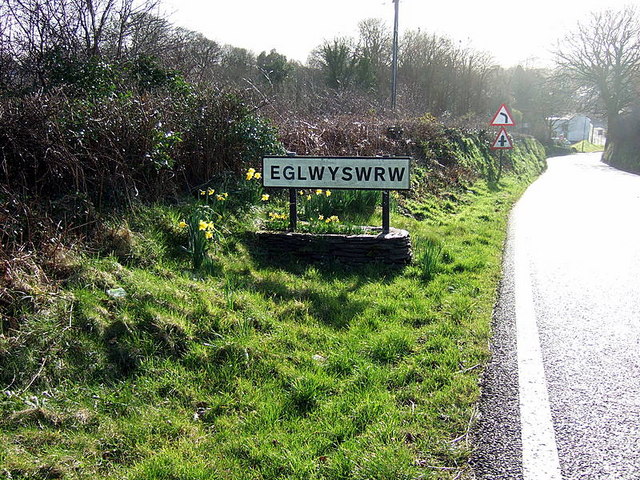
How do you say ‘Eglwyswrw’

Eglwyswrw

© Copyright ceridwen and licensed for reuse under this Creative Commons Licence.

I remember, with a pleasing glow of satisfaction, the look of surprise on a stranger’s face when, in a conversation through the car window that occurred because we were well and truly lost in narrow lanes between Newport and Cardigan, I pronounced Eglwyswrw so that he understood me. This was clearly a rare experience for the resident of a village whose name presents the visiting English with difficulties. It was as if I had passed a test. From that moment our relationship subtly and significantly changed as he revised his estimate of my IQ upwards and my Irritation Factor downwards. It’s a moment I have treasured ever since.

I can now offer you the possibility of that same, rewarding, self affirming experience: click here for enlightenment.

That treat came to you courtesy of John Ball’s admirable attempt to educate the foreigner in the pronunciation of Welsh place names. Click here to access the full list which, I have noticed, does not include as many N. Pembrokeshire names as it should. These locally useful places are missing:

  • Mynachlogddu
  • Llanychaer
  • Scleddau.

I suggest that foreign visitors look for a local informant on their visit to Dinas and then, as all language teachers will say, it’s practice and more practice.

Posted in Welsh language | Tagged , , , , , , , , | 5 Comments

Windblown Hawthorn trees

Windblown hawthorn on the Pembrokeshire coast pathAccording to the Met Office, Wales is one of the windier parts of the UK and the windiest areas are over high ground and along the coast. Look at the Hawthorn trees along the cliff-tops as you walk the Pembrokeshire coast path in Dinas and you’ll see the evidence for yourself.

Posted in Nature, Walking | Tagged , , , , , | Leave a comment

The first petrol station in Dinas

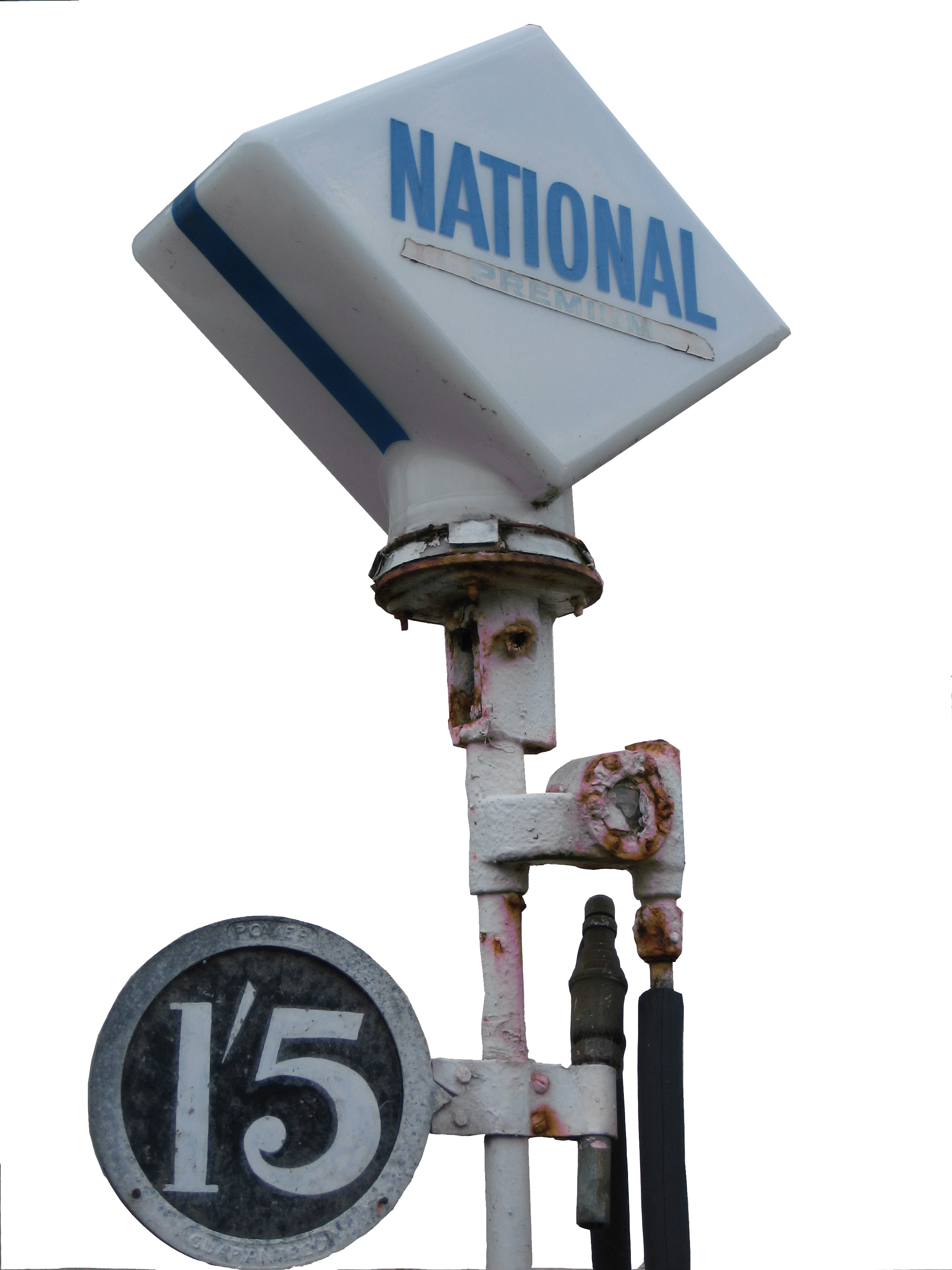
petrol pump_edited-2

Remember petrol stations where an attendant waited on the forecourt to serve petrol and accepted payment without the driver having to leave the car?

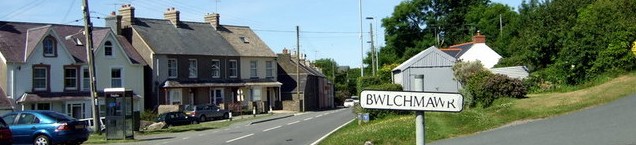
This pump, in Ravenglass, reminded me of the petrol station in Bwlch Mawr, Dinas. The pumps were on the right as you drove towards Newport and the garage owners lived in Garden Terrace, on the left.

When a car drove up to the pumps, a bell sounded in the house and my aunts would cross the road to serve the waiting motorist.

Before the introduction of the bell they had relied on a notice on the forecourt which read: “Blow horn if you require service”. To their distress,  passing motorists would hoot just to annoy them, or so they believed. There weren’t many customers, however, and the ladies were seldom disturbed.

In the summer, when there was a bit more traffic, their young nephew would be staying and would be deputed to run over, surprise the waiting motorist by being obviously much too young for such a responsible task and surprise them again by his competence in serving the petrol and dealing with the payment.

The arrival of the tanker, however, was more troublesome and required a longer absence from the kitchen by the adults themselves.

Bwlch Mawr

Photo of Dinas :copyright ceridwen and used under a Creative Commons Licence

Posted in History | Tagged , , , , , | Leave a comment

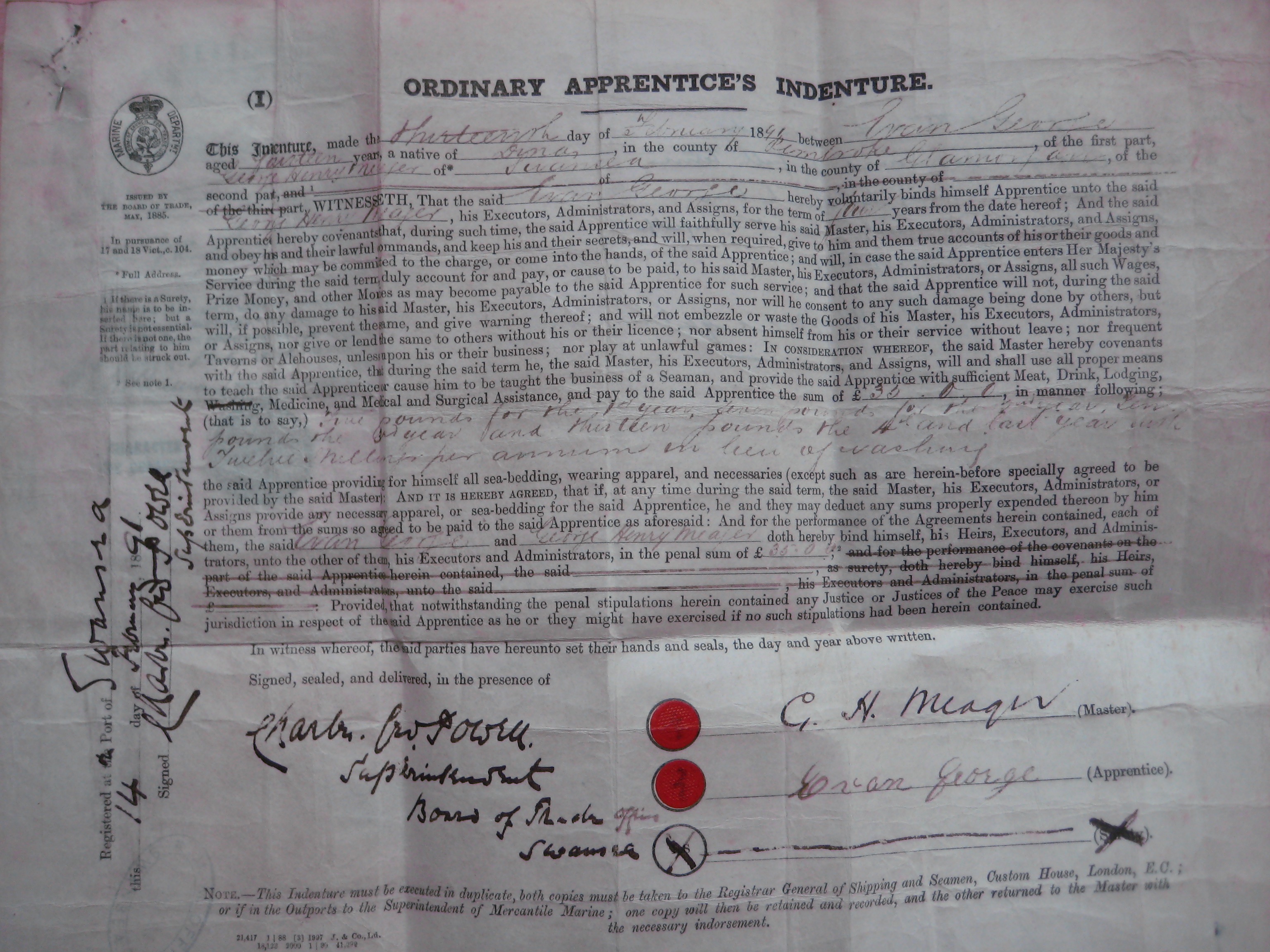
Bound apprentice: £35 for four years’ work, with twelve shillings per annum in lieu of washing

A barque

A barque

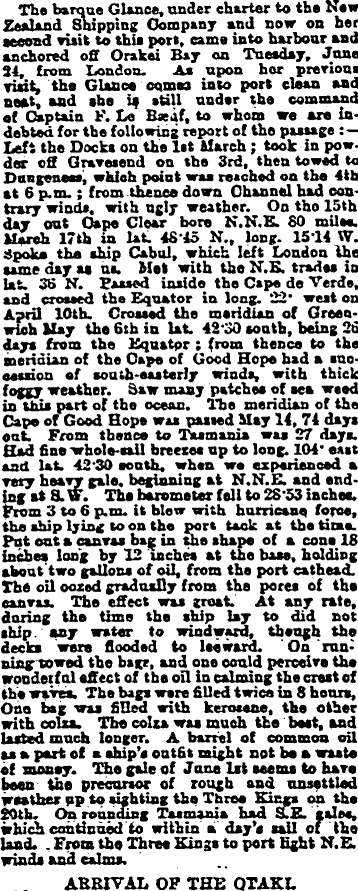
At the age of 14, 1n 1891, my Dinas-born grandfather went to sea, apprenticed to the master of the barque Glance. The Glance had recently been to New Zealand but, during my grandfather’s time, before the opening of the Panama Canal, they were sailing to S. America.

I remember, as a child, being entranced by his account of the storms round Cape Horn but didn’t realise until much later how very young he had been at the time.

IMG_3571

When he had served his four years as an apprentice, he stayed with the ship for a further three and a half years until July 1898.

From The New Zealand Herald 21.7.1884

From The New Zealand Herald 21.7.1884


Posted in History, Sea | Tagged , , , , , , , , | Leave a comment

A non-conformist guide to the Middle East

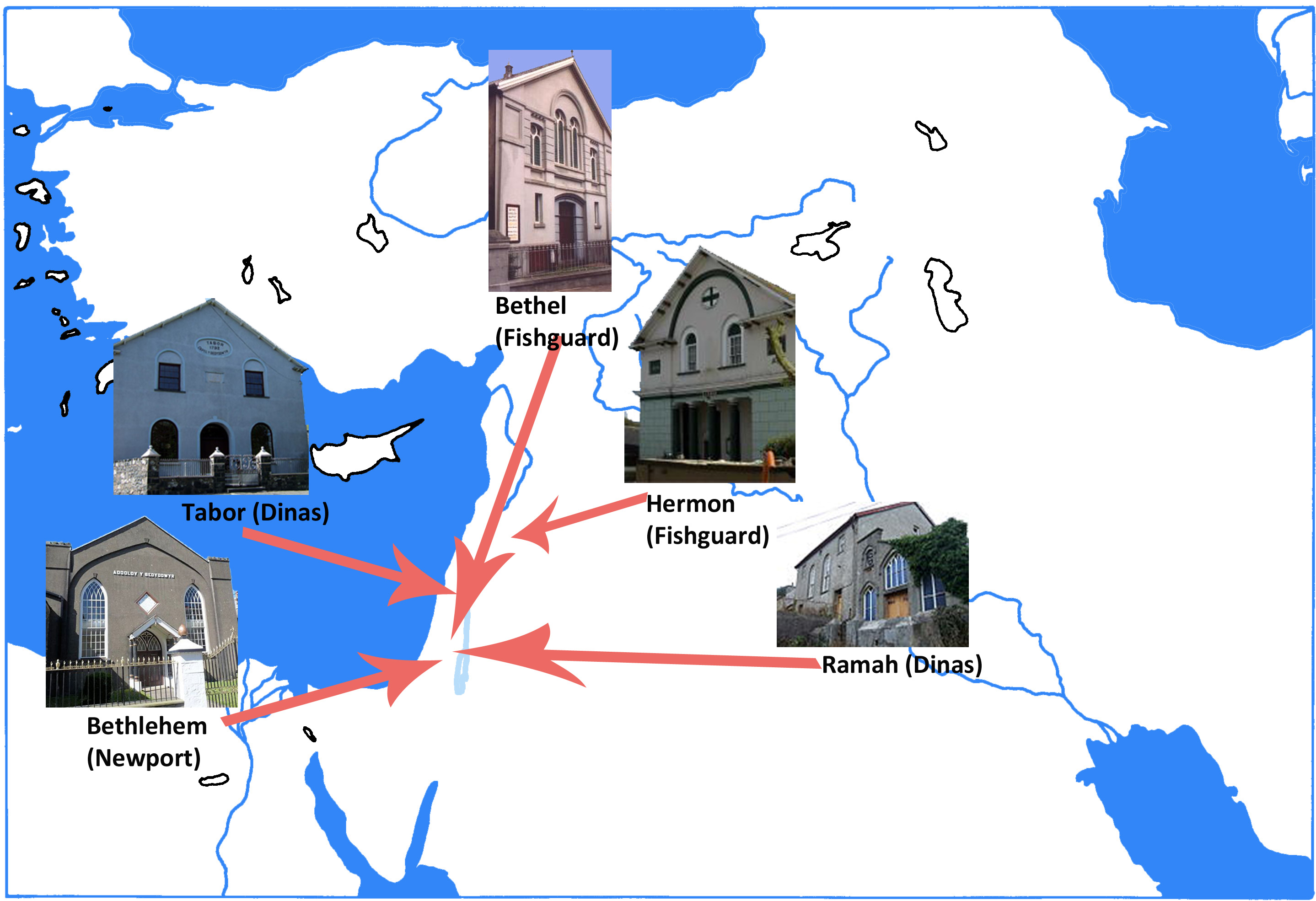
Chapels in the Dinas area

The density of chapels in this sparsely populated corner of Wales repays some study and the names transport the passer-by to the Middle East*. Some chapels survive as places of worship, many have been abandoned and others been converted to residential use but they all provide evidence for the importance of religion in these rural communities.

Fortunately many historians have been documenting these buildings, photographing, describing and making their history available to us while the chapels are still recognisable in the landscape. And even when they are not: this may be the site of Capel-y-Drindod in Dinas, as recorded by Dyfed Archeological Trust

Capel Y Drindod

For further information see:

*For this and further reflections on ‘Chapel’ in West Wales see the fascinating biography of Goronwy Rees by his daughter: Looking for Mr Nobody. The secret life of Goronwy Rees by Jenny Rees. Published W&N 1994.

Posted in History, Religion | Tagged , , , , , , , , | Leave a comment

The village shops

 © Copyright ceridwen and licensed for reuse under this Creative Commons Licence

Kiel House.
Photo © copyright ceridwen and licensed for reuse under this Creative Commons Licence

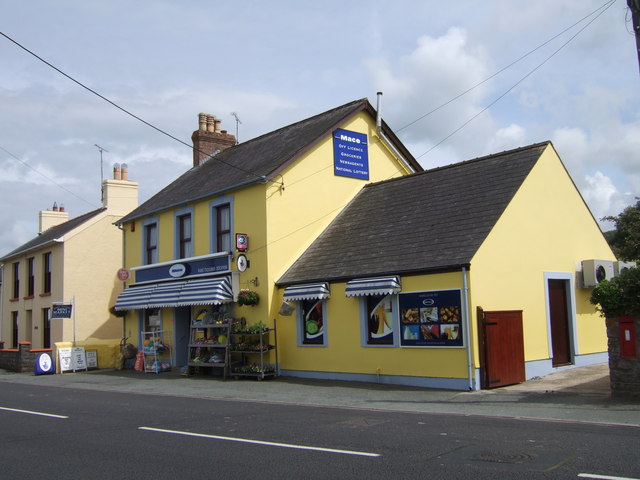
If your preparation for a self catering holiday at Tegfan involves tracking down the nearest Tesco and putting in your normal order plus some extras, please pause for a moment. There is an alternative to consider.

Driving along Feidr Fawr to Kiel House will take you 3 or 4 minutes; walking along the lovely Feidr Fach will take you 10 minutes and your custom will support a valued community resource for this small village.

Dinas’s village shop is surprisingly well-stocked. As well as the staples, there’s pesto and olives, not to mention local honey, dressed crab, pembrokeshire cheeses and other very local products on the shelves.

And the kindness of the shop-keepers is legendary:

The owners of Kiel House, in Dinas Cross, are “chuffed to bits” after scooping three prestigious awards in five months.

Philip and Meinir Simpson have run the busy local store for the past eight years. Their hard work was recognised in May when, as reported in the Western Telegraph, they won the Pro Retail Spirit of the Community award.

Since then the accolades have started to roll in. The couple won the My Shop is Your Shop gold award two months ago and more recently the Independent Achiever’s Academy Top 100 award, singling them out as one of the best 100 independent shops in the UK.

The awards were judged by mystery shoppers, who visited Kiel House unbeknown to its owners“The first thing we knew about it was the certificate coming through the post,” said Philip. “I was pleased but I didn’t much look at it. It was only a few days later I realised what it was. I’m chuffed to bits with that. There’s a lot of shops in the country.”

Philip and Meinir have worked hard to make Kiel House more than a village shop. They deliver to elderly customers and holiday cottages, run a laundry and dry cleaning drop off point, advertise local events and support local charities. Both are ardent fundraisers for Cardigan’s MS centre.

They are also first responders, who go to the aid of elderly customers if a personal alarm is set off, and check up on their regulars if they don’t come in for a couple of days. “I think the shop is an important part of the local community,” said Philip. “People meet here, see their friends and catch up with what’s going on in the area.”

When asked if the shop was in the running for any more awards he said: “I’ll keep an eye on the post.”

(From The Western Telegraph 27th November 2011)

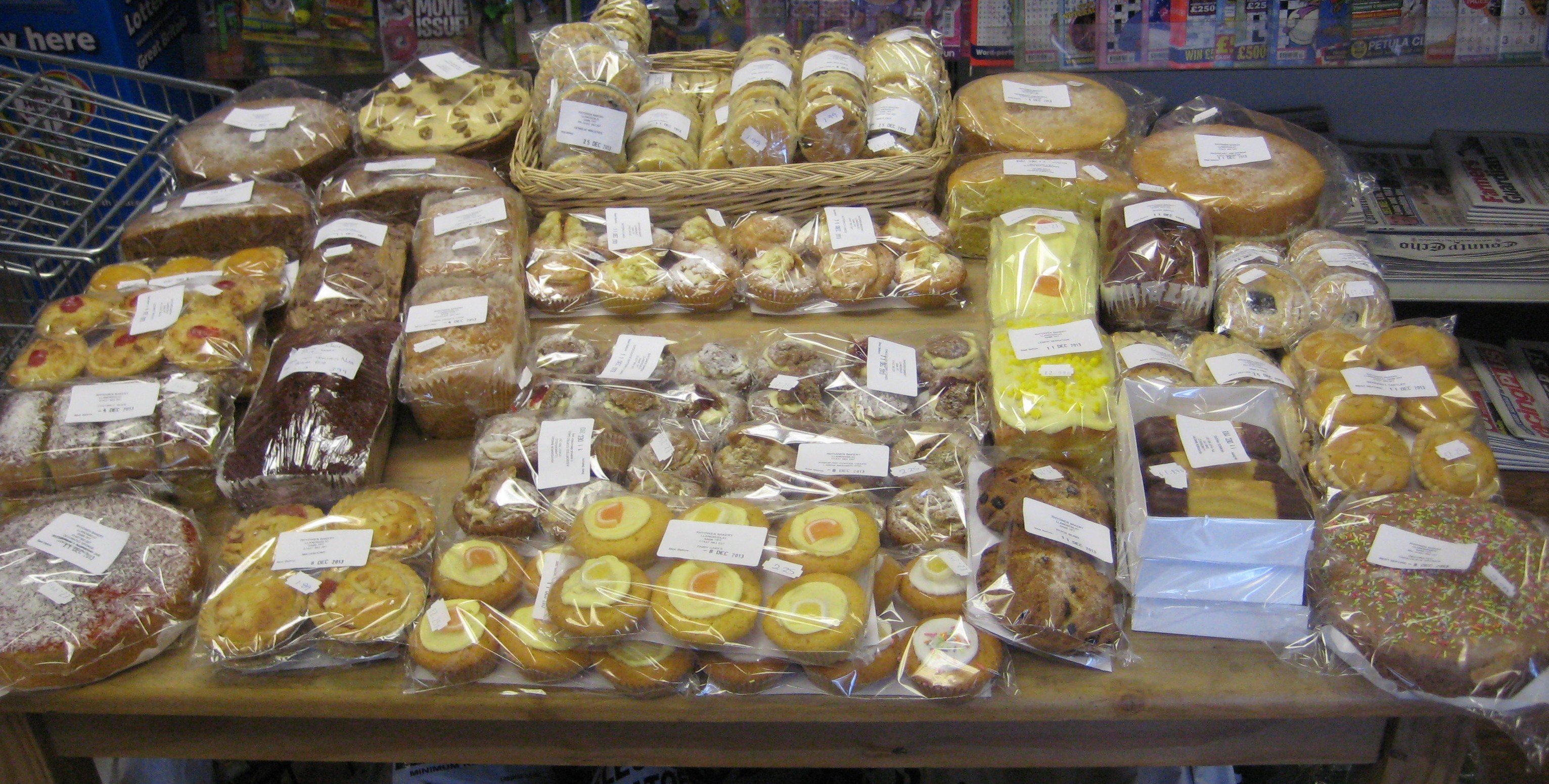
One minute’s walk from Kiel house, behind the petrol pumps, is another small shop. At one end is the post office; the rest of the shop has a range of everyday essentials and wonderful treats –  such as home-made bara brith, sponges and cup cakes.

Dinas Petrol Station shop

And for anyone who needs more than a hint from me to change the habit of a life-time, I suggest Dr Thomas Hastings’ report at the Saïd Business School (University of Oxford). If you can tolerate wide-spacing and big margins on the screen, his work on The social and economic importance of convenience stores makes for interesting reading.

Posted in Food | Tagged , , , , , , , | 1 Comment

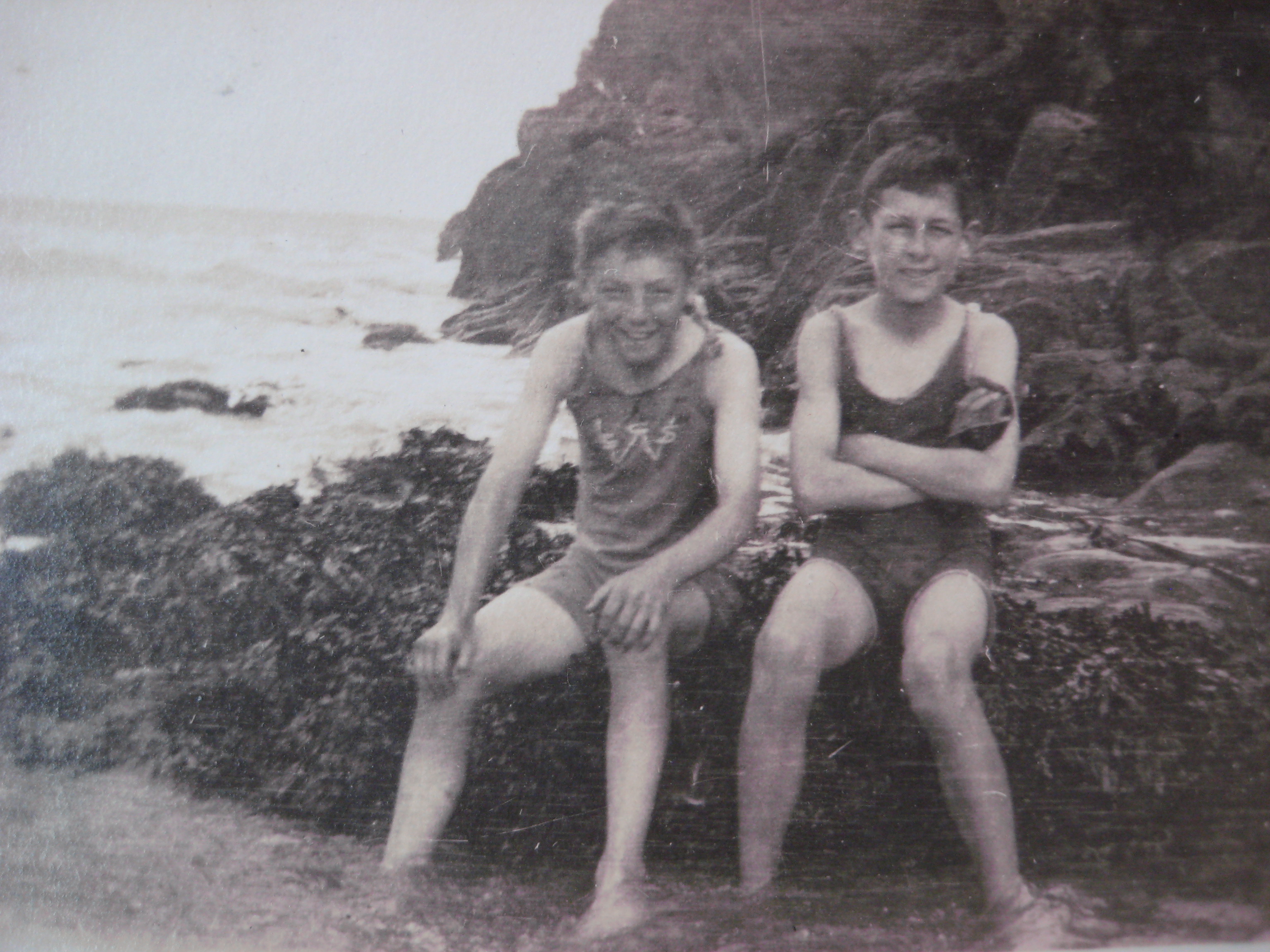
Aberbach in 1930

Aberbach c1930

I think this photo was taken in Dinas’ Aberbach beach in about 1930. Apart from the style of boys’ swimming costumes, nothing much has changed.

Posted in History, Sea | Tagged , , , , , , , , , | Leave a comment

Welsh Quilts

I’m curious to know more about these quilts. They’ve been in our family for 100 years or so.

I think they must have come from Dinas (North Pembrokeshire) at the beginning of the 20th century, or perhaps earlier. They are both the same on the back and the front. The golden yellow quilt appears to be made of a synthetic fabric that is quite shiny. Even the thread with which it is stitched is silky.  The filling is evenly distributed but seems clumped and springy as if it were unprocessed sheep’s wool. The green quilt has a smoother inner lining (perhaps a thin blanket) and is made of good quality cotton. They are both hand-stitched.

Would they have been bought in a shop or made at home? I haven’t unstitiched the edging to look inside so can anyone tell me more about them?

Posted in Crafts, History | Tagged , , , , , , , , , | 1 Comment